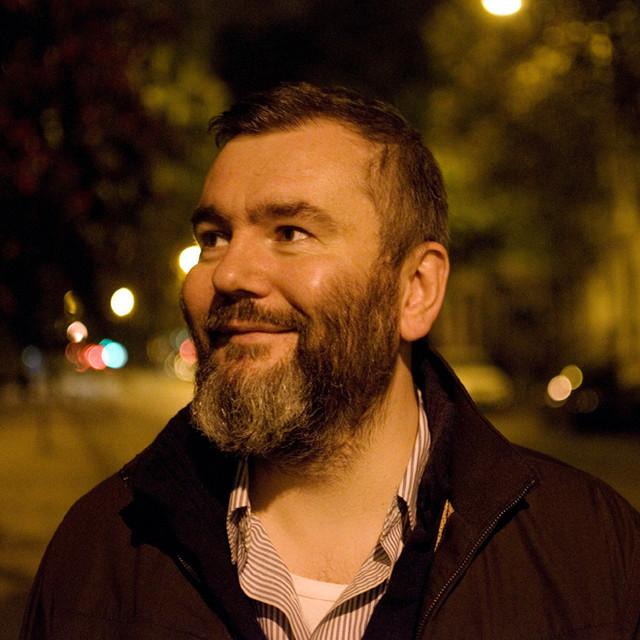
Aidan Moffat

Pop
Indie Pop
Folk Rock
 Viberate Rank: 214200
 Viberate Rank: 214200
 Monthly ListenersFollowers
 Subscribers
 Followers
 Followers
 FansTop Spotify Songs
| Track | 7-Day Streams | |
|---|---|---|
1 | 1.00K | |
2 | 459 | |
3 | 153 | |
4 | 150 | |
5 | 138 |
Top YouTube VideosMonthly ListenersFeatured in Playlists| Playlist | Followers | |
|---|---|---|
1 |  Counter Culture Rough Trade | 8.25K |
2 |  Duyster (all tracks ever played) Wike | 8.15K |
3 | New music 2026 OOR | 7.51K |
4 |  Boiler Room Robert Brown | 6.66K |
5 | Pop Mix 2026 Paul Sheppard | 5.13K |
Audience| City | Monthly Listeners | |
|---|---|---|
1 | | 251 |
2 | | 201 |
3 | | 74 |
4 | | 72 |
5 |  | 35 |
See full performance history, audience data, playlist activity, rankings, comparisons, and more in Viberate music analytics. Start with a free trial, then continue with a paid plan.
Aidan Moffat’s Spotify BioBeginning with his work in the '90s and 2000s with the dour duo Arab Strap, vocalist/multi-instrumentalist Aidan Moffat made a name for himself as a vital part of Glasgow's music scene thanks to his gruff, frequently spoken-word vocals and keen insights on the darker aspects of life and love. By the time the group disbanded in 2006, Moffat had established himself as a solo artist with his sample-driven project L. Pierre and as a versatile collaborator, teaming with Bill Wells on 2011's Scottish Album of the Year-winning Everything's Getting Older, longtime friend RM Hubbert on 2018's Here Lies the Body, and other projects that touched on jazz, poetry, and folk.
Born and raised in Falkirk, Scotland, Moffat began listening to indie music while in high school, and spent the first half of the '90s shuffling between a couple bands, including the Angry Buddhists and Bay. He and Malcolm Middleton formed Arab Strap in 1995. Together, they released six studio albums through 2006 filled with… alcohol-soaked tales of romantic relationships that tended to emphasize their lecherous aspects.
In the early 2000s, Moffat began working with others and on his own. With Colin McPherson and Mogwai's Stuart Braithwaite, he formed the Sick Anchors, who released a self-titled EP in 2002. That year, he also debuted his solo alter ego Lucky Pierre with the samples- and electronics-heavy album Hypnogogia. Moffat switched the project's name to L. Pierre on 2005's Touchpool, and followed it with 2007's instrumental album Dip. Also in 2007, Moffat released a poetry-oriented album of mostly minute-long vignettes titled I Can Hear Your Heart under his full name Aidan John Moffat. A return to downcast songs, backed by a small band dubbed the Best-Ofs, came with 2009's How to Get to Heaven from Scotland.
During the 2010s, Moffat's career became more eclectic. On 2011's Everything's Getting Older, he worked with jazz composer, multi-instrumentalist, and former Arab Strap collaborator Bill Wells. The album won the inaugural Scottish Album of the Year award. The following year, he appeared on another Scottish Album of the Year-winning album, RM Hubbert's Thirteen Lost & Found. In 2013, Moffat issued a pair of L. Pierre albums, The Island Come True and the digital release The Eternalist. Two years later, he reunited with Wells for The Most Important Place in the World. He then appeared in the 2016 documentary Where You're Meant to Be, in which he performed his own versions of traditional Scottish folk songs. Moffat bid farewell to L. Pierre with 2017's 1948-; named for the year the first 33 ⅓ rpm album was released, it featured samples of that album (a Mendelssohn concerto) and was released on vinyl without a sleeve so that surface noise and scratches would become part of the music. In 2018, Moffat teamed with Hubbert for the holiday album Ghost Stories for Christmas, and on Here Lies the Body, an album that set the arc of a couple's relationship to music, incorporating samba, synth pop, and jazz. ~ Heather Phares & Andy Kellman, Rovi
Viberate is a music analytics platform built for A&Rs, artist managers, labels, booking agents, marketers, and artists.
It helps music professionals track artist growth, analyze audience data, monitor playlist activity, compare artists, follow song performance, and identify opportunities across the music market.
Public artist pages provide a free preview of selected artist data. Paid plans provide access to deeper analytics, historical data, charts, comparisons, playlist tools, exports, alerts, reports, and additional professional features.
Yes. Public Viberate artist pages provide selected artist analytics and music data for free.
Viberate also offers a 7-day free trial of the full platform. A credit card is required to start the trial. The trial includes access to the complete product so users can test deeper artist analytics, historical views, playlist insights, comparisons, charts, exports, alerts, and reporting features before choosing a paid plan.
Viberate provides artist analytics across streaming, playlists, social media, video, radio airplay, songs, and audience markets.
Users can analyze Spotify performance, Spotify and Apple Music playlists, YouTube activity, TikTok and Instagram growth, radio spins, song performance, audience locations, demographics, rankings, and overall artist momentum.
Artist profiles also connect to music charts, similar artists, and comparison tools, helping users benchmark performance and evaluate artists in context.
Viberate updates key artist and track data daily.
For followed artists and tracks, selected data is refreshed multiple times per day. This helps teams monitor playlist changes, streaming movement, audience growth, releases, and campaign performance with more current data.
Update frequency can vary depending on the metric and data source.
Yes. Viberate lets users compare up to five artists side by side across streaming, social media, audience, and engagement metrics.
Users can compare fanbase growth, audience demographics, locations, Spotify performance, social metrics, and other artist data over selected time periods.
Artist comparison can be used for A&R scouting, benchmarking, booking decisions, campaign planning, and evaluating artists with similar audiences or market positions.