William Walton

Classical
Classical Crossover
 Viberate Rank: 100041
 Viberate Rank: 100041
 Monthly ListenersFollowers
 Subscribers
 Followers
 Followers
 FansTop Spotify Songs
| Track | 7-Day Streams | |
|---|---|---|
1 | 8.78K | |
2 | 7.68K | |
3 | 2.95K | |
4 | 2.85K | |
5 | 1.87K |
Top YouTube VideosMonthly ListenersFeatured in Playlists| Playlist | Followers | |
|---|---|---|
1 |  Classical Bangers 🎹🎻 Classical Bangers | 1.25M |
2 |  Classical Music bangers 🔥🔥 Carlijn | 241.42K |
3 |  study music that is actually motivating Study Mode Classics | 241.46K |
4 |  Best Orchestral Classics 🎻🎺🔥 Classical Vibes | 129.04K |
5 |  1000 Recordings to Hear Before You Die (Tom Moon): Album Index Ulysses' Classical | 94.29K |
Audience| City | Monthly Listeners | |
|---|---|---|
1 | | 11.79K |
2 |  | 4.65K |
3 |  | 4.60K |
4 | | 3.84K |
5 | | 3.73K |
See full performance history, audience data, playlist activity, rankings, comparisons, and more in Viberate music analytics. Start with a free trial, then continue with a paid plan.
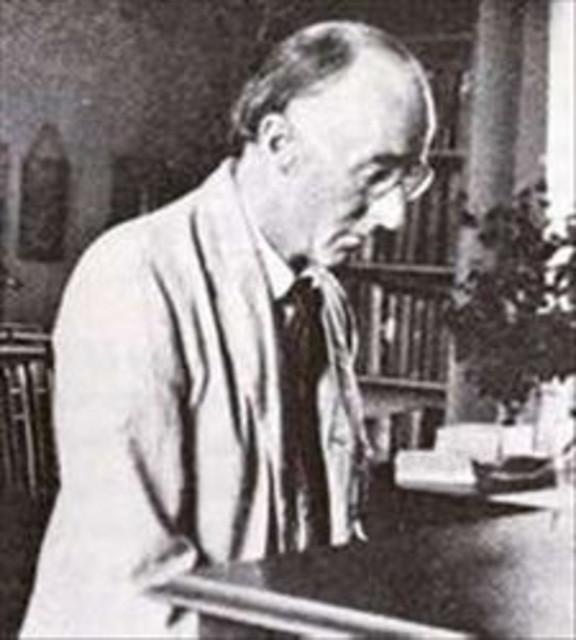
William Walton’s Spotify BioOccupying an important historical position between his better-known colleagues Ralph Vaughan Williams and Benjamin Britten, William Walton is seen by many as the first modern British composer to approach the brilliance and vitality which characterized English music during Handel's day.
Born in northwest England during the first years of the twentieth century, Walton was the son of a choirmaster, and appropriately, served as a chorister at Christ Church Cathedral at Oxford from 1912 to 1918. Studies at the university itself proved unsatisfying, and William left Oxford without a degree in 1920, relying instead upon the patronage of the Sitwell family, who had befriended the young composer. Through the influence of this affluent and well-known family, Walton was able to break into the London music scene, and by 1922 his chamber piece Façade had achieved some popularity with the concert-going public. A performance of his comic overture Portsmouth Point in Zurich in 1926, and Paul Hindemith'…s championing of his Viola Concerto in 1929 helped introduce Walton music into the European music scene. The famous Belshazzar's Feast for chorus and orchestra soon followed, and the 1930s brought with commissions from well-known musical figures, including Jascha Heifetz, who asked the composer to write him a Violin Concerto in 1939.
Walton spent much of World War II composing music for films, including Next of Kin and The Foreman Went to France. In 1948, he moved to Ischia, a small island off of Naples, and he was knighted in 1951. In 1954, after many years of effort, his grand opera Troilus and Cressida was produced at Covent Garden; unfortunately, the work has not received the attention it deserves. Walton composed prolifically until the end of his life, fulfilling commissions for such notables as George Szell, Gregor Piatigorsky and Mstislav Rostropovich. In 1973, he conducted a fiftieth anniversary performance of Facade. While never again achieving the degree of public and critical acclaim which he enjoyed before the World War II, he was nevertheless able to live comfortably on Ischia, where he died in 1983.
Although he was overshadowed in the latter half of his career by Benjamin Britten, Walton was never the old-fashioned reactionary (a frequent, but unjust, accusation). Much like his contemporaries Poulenc and Prokofiev, Walton was at heart an expressive, lyric composer who refused to subjugate this natural ability to the "modernist" tendencies that the press berated him for not embracing. His music is a sparkling synthesis of old and new, the greatest examples of which can be found in the two Symphonies (1935 and 1960), and the Viola (1929), Violin (1939) and Cello (1956) Concertos.
Viberate is a music analytics platform built for A&Rs, artist managers, labels, booking agents, marketers, and artists.
It helps music professionals track artist growth, analyze audience data, monitor playlist activity, compare artists, follow song performance, and identify opportunities across the music market.
Public artist pages provide a free preview of selected artist data. Paid plans provide access to deeper analytics, historical data, charts, comparisons, playlist tools, exports, alerts, reports, and additional professional features.
Yes. Public Viberate artist pages provide selected artist analytics and music data for free.
Viberate also offers a 7-day free trial of the full platform. A credit card is required to start the trial. The trial includes access to the complete product so users can test deeper artist analytics, historical views, playlist insights, comparisons, charts, exports, alerts, and reporting features before choosing a paid plan.
Viberate provides artist analytics across streaming, playlists, social media, video, radio airplay, songs, and audience markets.
Users can analyze Spotify performance, Spotify and Apple Music playlists, YouTube activity, TikTok and Instagram growth, radio spins, song performance, audience locations, demographics, rankings, and overall artist momentum.
Artist profiles also connect to music charts, similar artists, and comparison tools, helping users benchmark performance and evaluate artists in context.
Viberate updates key artist and track data daily.
For followed artists and tracks, selected data is refreshed multiple times per day. This helps teams monitor playlist changes, streaming movement, audience growth, releases, and campaign performance with more current data.
Update frequency can vary depending on the metric and data source.
Yes. Viberate lets users compare up to five artists side by side across streaming, social media, audience, and engagement metrics.
Users can compare fanbase growth, audience demographics, locations, Spotify performance, social metrics, and other artist data over selected time periods.
Artist comparison can be used for A&R scouting, benchmarking, booking decisions, campaign planning, and evaluating artists with similar audiences or market positions.