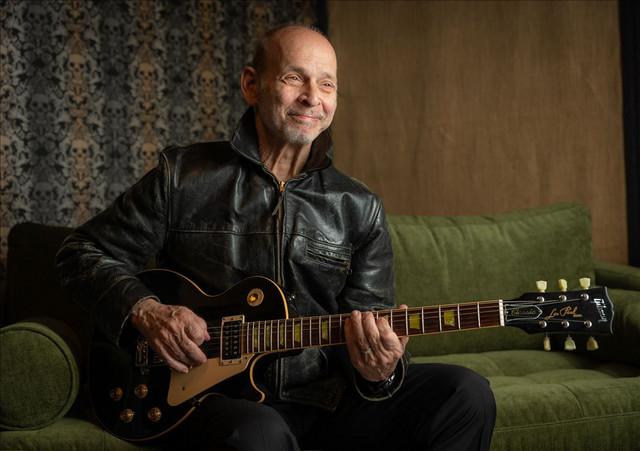
Wayne Kramer

Punk
Punk Rock
Garage Rock
Blues Rock
 Viberate Rank: 157136
 Viberate Rank: 157136
 Monthly ListenersFollowers
 Subscribers
 Followers
 Followers
 FansTop Spotify Songs
| Track | 7-Day Streams | |
|---|---|---|
1 | 1.37K | |
2 | 486 | |
3 | 438 | |
4 | 438 | |
5 | 438 |
Top YouTube Videos| Video | 7-Day Views | |
|---|---|---|
1 | 11.20K | |
2 | 1.54K | |
3 | 869 | |
4 | 659 | |
5 | 520 |
Monthly ListenersFeatured in Playlists| Playlist | Followers | |
|---|---|---|
1 |  Gothic Club Hits: Goth, Darkwave, Deathrock, EBM & Industrial netti | 29.18K |
2 |  Punk-O-Rama 1-10 CptFuzzball | 23.21K |
3 |  Dark/Wave • Post-Punk • Gothic Paddyjoe | 14.12K |
4 |  Wacken Open Air 2024 Wacken Open Air | 8.49K |
5 | Gothic rock | Deathrock | Postpunk | Darkwave by DARKLARK darklark | 8.42K |
Audience| City | Monthly Listeners | |
|---|---|---|
1 | | 201 |
2 |  | 60 |
3 |  | 59 |
4 | | 53 |
5 | | 48 |
See full performance history, audience data, playlist activity, rankings, comparisons, and more in Viberate music analytics. Start with a free trial, then continue with a paid plan.
Wayne Kramer’s Spotify BioGuitarist, songwriter, activist, and author Wayne Kramer is best remembered as guitarist with the MC5, one of the most incendiary American rock bands of the 1960s. Kramer's work with the MC5 would prove to be wildly influential, though outside of the American Midwest, their initial impact was minimal. However, their blend of blazing hard rock, free jazz-informed improvisation, and sociopolitical rabble-rousing, as documented on 1969's Kick Out the Jams, made them heroes in their hometown of Detroit, and much of what happened in hard rock, punk, alternative, and grunge in the decades that followed would owe a clear debt to the MC5. Kramer went through years of misadventure following the breakup of the MC5, but in the early '80s he began recording and touring with Was (Not Was), and in 1995 he made a belated solo debut with the acclaimed The Hard Stuff. While he would release only a few solo albums in the 2000s, he was busy as a producer, collaborator, and composer, and in 2022 he toured… with a new edition of the MC5, and an album in the works.
Wayne Kramer was born Wayne Stanley Kambes in Detroit, Michigan, on April 30, 1948. Wayne had a difficult childhood; his father, an alcoholic struggling with PTSD from serving in World War II, abandoned the family when he was young, and his mother supported the family as a beautician. Kramer's mother would remarry, and her second husband was abusive toward him -- he turned to music to deal with his emotional crises. In time, Kramer learned to play guitar and formed a teenage rock band called the Bounty Hunters. He also struck up a friendship with a fellow Detroiter, a guitarist and musical omnivore named Fred Smith, who had a band called the Vibratones. As various members of the two groups came and went, in time Kramer and Smith joined forces, initially under the name the Bounty Hunters until Rob Derminer, who possessed a strong, bold voice and was well-versed in soul and R&B, became their lead singer. Derminer adopted the stage name Rob Tyner, and Kramer gave the band a new name, the MC5; it stood for Motor City Five, but as a passionate gearhead, Kramer also thought it sounded like the name of an auto part. With the addition of bassist Michael Davis and drummer Dennis Thompson, the MC5's lineup was complete, and they became one of Detroit's busiest and toughest-sounding bands. The group's musical world view expanded when Detroit poet, jazz critic, radio host, and political activist John Sinclair became their manager; they added more blues and free jazz influences as he expanded their listening habits, and they became the house band at the Grande Ballroom, Detroit's home of psychedelic rock in the '60s.
The MC5's popularity in Detroit, their savvy self-promotion, and their political activism -- they were the only rock band to appear at the infamous protests at the 1968 Chicago Democratic Convention -- attracted the attention of Elektra Records, which signed them to a record deal. Their debut album, 1969's Kick Out the Jams, was recorded live at the Grande Ballroom, and initially sold well until some retailers discovered the title track began with Tyner shouting, "Kick out the jams, motherfuckers!" Hudson's, a successful and prestigious department store chain based in Detroit, stopped carrying the album, and the group responded by placing an ad in an underground newspaper urging their fans to kick in the door of the store if they wouldn't sell them the album. Elektra wasn't pleased that the MC5 used their logo in the ad and they dropped the band. Before they could land a new record deal, John Sinclair was arrested for giving two joints of marijuana to an undercover police officer, and in 1969 he was sentenced to ten years in prison. Sinclair's imprisonment made him a cause celebre in the counterculture media, but despite their efforts to support their mentor, it led to a falling out between Sinclair and the MC5. After signing with Atlantic, the band cut a studio album, 1970's Back in the USA, where they eased back on their experimental side in favor of short, punchy, radio-friendly songs. It was not as commercially successful as Kick Out the Jams, and the strain of life on the road was taking its toll. Several members of the band, including Kramer, had become addicted to hard drugs, and though 1971's High Time was a creative triumph, poor sales led to Atlantic dropping the band. The MC5 began to splinter, first with Michael Davis leaving the group, and then Rob Tyner and Dennis Thompson, which led to Kramer and Smith staging a shambolic European tour with poorly rehearsed ringers. After a final reunion show on December 31, 1972, the MC5 were done.
By Kramer's own admission, the collapse of the MC5, coupled with his drug use, hit him hard, and he turned to a life of crime, robbing houses and selling stolen goods to support his habit. He soon added dope dealing to his résumé, and in 1975, he was arrested on drug charges and would spend four years in prison. While incarcerated, he discovered Michael Davis was a fellow prisoner, and he became friends with Red Rodney, a musician and confidante of Charlie Parker, who coached Kramer in jazz and improvisation. While in prison, punk rock was on the rise in England and the United States, and many of the key bands in punk's formative days cited the MC5 as an inspiration. (The Clash even referred to Kramer's exploits in their song "Jail Guitar Doors.) Kramer, well aware of the very negative connotations of the word "punk" among prisoners, strove to keep that a secret from other inmates. Shortly after his release, Kramer released a pair of U.K. singles, "Ramblin' Rose" b/w "Get Some" and "The Harder They Come" b/w "East Side Girl," which attracted more positive reviews than sales, and in 1979, former New York Dolls guitarist and MC5 fan Johnny Thunders proposed they start a band together. Given that Kramer was struggling to stay clean and sober and Thunders was one of rock's most notorious and unapologetic heroin addicts, Kramer's decision to join Gang War with Thunders was ultimately not wise; outside of some touring, they never got past recording some rough demos, and by the time the band broke up, Kramer was back on drugs.
Kramer enjoyed greater success as a guitarist with Detroit mutant funkateers Was (Not Was), playing live with the group and appearing on their albums Was (Not Was) (1981) and Born to Laugh at Tornadoes (1983). He also produced projects for a number of bands on New York's rock & roll underground, and he co-wrote a musical performance piece with Mick Farren of the Deviants, The Last Words of Dutch Schultz; three songs from the musical appeared on an EP, Who Shot You, Dutch?, as well as a 1991 collection, Death Tongue. In addition to music, Kramer supported himself by doing carpentry and custom woodworking. After brief sojourns in Key West, Florida and Nashville, Tennessee, Kramer settled in Los Angeles, where he began pursuing a solo career in earnest. He signed a deal with the successful punk label Epitaph, and in 1995 released The Hard Stuff, an excellent return to form that delivered personal songs with force and intelligence. The album included guest appearances by members of Clawhammer, the Melvins, the Vandals, and the Muffs. The album was praised by critics, as was 1996's Dangerous Madness, another collection of new material that confirmed Kramer was back at full strength. After sitting in with former MC5 cohort John Sinclair and his group the Blues Scholars for an album of blues, jazz, and poetry, 1996's Full Circle, he went into the studio with David Was of Was (Not Was), who produced 1997's Citizen Wayne, a more experimental set that combined rock and electronics with an autobiographical song cycle. 1998's LLMF (Live Like a Mutherfucker), from a set of shows recorded at the Los Angeles club the Mint, closed out his era with Epitaph.
In 2001, Kramer produced a compilation for the Musicblitz label, Beyond Cyberpunk, that included one new song from Wayne, "Crawling Outta the Jungle," as well as material from Mudhoney, Pere Ubu, Richard Hell & the Voidoids, Ron Asheton, Stan Ridgway, Dee Dee Ramone, and many more. Kramer and his wife and business partner Margaret Saadi formed a label of their own, MuscleTone Records, and issued a 2001 album by Mad for the Racket (it was also released under the group name the Racketeers), a one-off group featuring Kramer and Brian James of the Damned with guest appearances from Duff McKagan, Clem Burke, and Stuart Copeland. The label also released Kramer's next solo album, 2002's Adult World, as well as expanded editions of his Epitaph titles. After the Levi's clothing brand used MC5 artwork on a T-shirt they marketed without the group's permission, Kramer negotiated a settlement with the firm that included them supporting a one-off reunion of the then-surviving members of the MC5 -- Kramer, Michael Davis, and Dennis Thompson -- for a special performance at the 100 Club in London, with guest appearances from Lemmy of Motörhead, Dave Vanian of the Damned, Ian Astbury of the Cult, and Nicke Royale of the Hellacopters. The performance was professionally recorded and videotaped, and released on DVD in 2004 under the title Sonic Revolution: A Celebration of the MC5. The release coincided with a global concert tour under the name DKT-MC5, with Davis, Kramer, and Thompson joined by a variety of vocalists and collaborators, including Marshall Crenshaw, Mark Arm of Mudhoney, Deniz Tek of Radio Birdman, and Handsome Dick Manitoba of the Dictators. (Amidst DKT's activity, filmmaker David C. Thomas completed a documentary about the MC5, MC5: A True Testimonial, that played the film festival circuit to wide acclaim. The film's full theatrical and home video release was scuttled in 2004 when Kramer, who participated in the making of the documentary, filed suit against Thomas and producer Laurel Legler, claiming he was told he would be the film's music producer. Thomas and Legler said there was no such agreement, and in 2007 a court found in their favor. The film would remain unreleased, though widely available in pirate editions.)
In 2006, Kramer launched a new career as a composer for film and television, scoring a documentary titled Hacking Democracy. He would go on to score reality TV series (Kell on Earth and Why Not?: With Shania Twain), documentaries (The Russian Five), comedies (Eastbound and Down, Bad Judge), and contributed music to Talladega Nights: The Ballad of Ricky Bobby, Step Brothers, and The Big Short. In 2009, Kramer and Saadi teamed with Billy Bragg to form an American branch of Bragg's charitable organization Jail Guitar Doors, named after the song the Clash wrote about Kramer. The group provides prison inmates with musical instruments as a means of expression and rehabilitation, as well as coordinating music education efforts behind bars and providing outreach to inmates. Film projects and his work with Jail Guitar Doors would dominate Kramer's time through much of the 2000s and 2010s, but in 2018, he staged a tour with a band he called MC-50, to celebrate the golden anniversary of the recording of Kick Out the Jams; the group included Kim Thayil of Soundgarden, Brendan Canty of Fugazi, Dug Pinnick of King's X, and Marcus Durant of Zen Guerrilla. 2018 also brought the publication of Kramer's autobiography, The Hard Stuff: Dope, Crime, the MC5, and My Life of Impossibilities. In 2022, Kramer announced he was forming a new edition of the MC5, and set out on tour with Stevie Salas on guitar, Vicki Randle on bass, Stephen Perkins on drums, and Brad Brooks on lead vocals. He also revealed he was working on a new MC5 album, produced by Bob Ezrin and featuring guest appearances from Tom Morello of Rage Against the Machine, Vernon Reid of Living Colour, and Slash of Guns N' Roses. Wayne Kramer died on February 2, 2024, after being diagnosed with pancreatic cancer; he was 75. Shortly after his passing, Bob Ezrin told reporter Gary Graff that he expected the projected MC5 album, Heavy Lifting, to be released in 2024. ~ Mark Deming, Rovi
Viberate is a music analytics platform built for A&Rs, artist managers, labels, booking agents, marketers, and artists.
It helps music professionals track artist growth, analyze audience data, monitor playlist activity, compare artists, follow song performance, and identify opportunities across the music market.
Public artist pages provide a free preview of selected artist data. Paid plans provide access to deeper analytics, historical data, charts, comparisons, playlist tools, exports, alerts, reports, and additional professional features.
Yes. Public Viberate artist pages provide selected artist analytics and music data for free.
Viberate also offers a 7-day free trial of the full platform. A credit card is required to start the trial. The trial includes access to the complete product so users can test deeper artist analytics, historical views, playlist insights, comparisons, charts, exports, alerts, and reporting features before choosing a paid plan.
Viberate provides artist analytics across streaming, playlists, social media, video, radio airplay, songs, and audience markets.
Users can analyze Spotify performance, Spotify and Apple Music playlists, YouTube activity, TikTok and Instagram growth, radio spins, song performance, audience locations, demographics, rankings, and overall artist momentum.
Artist profiles also connect to music charts, similar artists, and comparison tools, helping users benchmark performance and evaluate artists in context.
Viberate updates key artist and track data daily.
For followed artists and tracks, selected data is refreshed multiple times per day. This helps teams monitor playlist changes, streaming movement, audience growth, releases, and campaign performance with more current data.
Update frequency can vary depending on the metric and data source.
Yes. Viberate lets users compare up to five artists side by side across streaming, social media, audience, and engagement metrics.
Users can compare fanbase growth, audience demographics, locations, Spotify performance, social metrics, and other artist data over selected time periods.
Artist comparison can be used for A&R scouting, benchmarking, booking decisions, campaign planning, and evaluating artists with similar audiences or market positions.