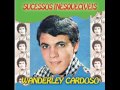
Wanderley Cardoso

Pop
Latin Pop
 Viberate Rank: 79175
 Viberate Rank: 79175
 Monthly ListenersFollowers
 Subscribers
 Followers
 Followers
 FansTop Spotify Songs
| Track | 7-Day Streams | |
|---|---|---|
1 | 14.69K | |
2 | 10.35K | |
3 | 6.34K | |
4 | 5.21K | |
5 | 5.12K |
Top YouTube VideosMonthly ListenersFeatured in Playlists| Playlist | Followers | |
|---|---|---|
1 |  This Is Roberto Carlos Spotify | 636.99K |
2 |  Jovem Guarda Spotify | 154.14K |
3 |  Roberto Carlos - Grandes Sucessos Roberto Carlos | 89.27K |
4 | BREGAS - AS MELHORES DE TODOS OS TEMPOS stenio | 41.93K |
5 | JOVEM GUARDA AS MELHORES Dani Simon | 35.67K |
Audience| City | Monthly Listeners | |
|---|---|---|
1 | | 7.88K |
2 | | 2.69K |
3 | | 2.40K |
4 | | 2.35K |
5 | | 2.13K |
See full performance history, audience data, playlist activity, rankings, comparisons, and more in Viberate music analytics. Start with a free trial, then continue with a paid plan.
Wanderley Cardoso’s Spotify BioOne of the most successful and popular singers on Jovem Guarda (after Roberto Carlos and together with Jerry Adriani and Erasmo Carlos), Wanderley Cardoso was in fact always a romantic singer and perhaps the number one romantic singer on Jovem Guarda. Yet even during those times, he recorded only a few tracks accompanied by a group, relying instead on full orchestras.
Cardoso had a hit in 1959, at 13, with "A Canção do Jornaleiro" (Heitor Dos Prazeres). Abandoning the artistic scenery for his studies in 1962 and then graduating as an accountant, he started to do TV shows again, launching in 1963 his first single with "Deu a Louca no Mundo" and "Rosana." His second single was the hit "Preste Atenção," a version by Paulo Queiroz of "Fais Attention," by Chauby-du Pac that reached fifth place on the charts and had a Spanish version for the Latin market. Around 1965, he was popular enough to be considered by Roberto Carlos his rival as a youth music singer. In that period, he participated… regularly at the TV Rio show Festa de Arromba, in the same vein as Jovem Guarda. His hit "Abraça-me Forte" (version by Genival Melo, 1965) yielded an invitation to star in the eponymous film directed by Mozael Silva and co-starring Rosemary, but Cardoso ended up abandoning the project and Jerry Adriani was invited to substitute for him. In the end, the whole thing was canceled. In 1965, Cardoso also had success with "Deus te Acompanhe" (from the LP Perdidamente Apaixonado), which reached fourth place. In the next year, he became the host of the Novos Nove Show (TV Excelsior), that also competed with the Jovem Guarda, immediately winning his own show at the outing (Excelsior A Go Go). He would let go this show due to his tight schedule of shows throughout Brazil. In the same year, he starred the film O Ídolo, that depicted his life. One of his biggest hits, "Meu Amor Brigou Comigo" (Eliza Moreira) is from his LP Juventude e Ternura (1966), on which he also recorded his first composition, "Meu Regresso" (with Genival Melo). In the same year, Rosemary recorded one of his earliest compositions, "Que Bom Seria" (with Carlos César). In 1967, (when he won a Northeastern contest with 65,000 votes, being elected "the king of the Pernambucan youth") Cardoso became known nationwide for his regular performances on the Jovem Guarda show and his hit "O Bom Rapaz" (from the eponymous LP) reached first place on the charts in April, pushing out Roberto Carlos' "Namoradinha de Um Amigo Meu." In the next year, he had success with "Socorro, Nosso Amor Está Morrendo" (Fábio). In that period, he started to focus on originals, having success with "Doce de Coco" (1968) and "Quando o Amor se Transforma em Poesia" (from the eponymous 1969 LP). In 1968, Cardoso was awarded with the Chico Viola prize.
In the '70s, Cardoso abandoned rock and dedicated himself exclusively to the romantic repertory, touring the U.S. and Latin America. In 1972, he won the Festival Piriapolis (Uruguay) as Best Singer and Best Composer with "Vivo Para Ver Você Viver." In that decade, he had success with "Minha Namorada" (Roberto Corrêa/John Lemos), "Preciso Tanto de Você" (José Augusto), and "Até Pensei" (Chico Buarque), having also done incursions in the pop-sertanejo repertory. Continuing to record and perform, in 1995 Cardoso participated in recordings (30 Anos de Jovem Guarda/Os Reis do Iê-iê-iê) and shows in commemoration of 30 years of the Jovem Guarda. ~ Alvaro Neder, Rovi
Viberate is a music analytics platform built for A&Rs, artist managers, labels, booking agents, marketers, and artists.
It helps music professionals track artist growth, analyze audience data, monitor playlist activity, compare artists, follow song performance, and identify opportunities across the music market.
Public artist pages provide a free preview of selected artist data. Paid plans provide access to deeper analytics, historical data, charts, comparisons, playlist tools, exports, alerts, reports, and additional professional features.
Yes. Public Viberate artist pages provide selected artist analytics and music data for free.
Viberate also offers a 7-day free trial of the full platform. A credit card is required to start the trial. The trial includes access to the complete product so users can test deeper artist analytics, historical views, playlist insights, comparisons, charts, exports, alerts, and reporting features before choosing a paid plan.
Viberate provides artist analytics across streaming, playlists, social media, video, radio airplay, songs, and audience markets.
Users can analyze Spotify performance, Spotify and Apple Music playlists, YouTube activity, TikTok and Instagram growth, radio spins, song performance, audience locations, demographics, rankings, and overall artist momentum.
Artist profiles also connect to music charts, similar artists, and comparison tools, helping users benchmark performance and evaluate artists in context.
Viberate updates key artist and track data daily.
For followed artists and tracks, selected data is refreshed multiple times per day. This helps teams monitor playlist changes, streaming movement, audience growth, releases, and campaign performance with more current data.
Update frequency can vary depending on the metric and data source.
Yes. Viberate lets users compare up to five artists side by side across streaming, social media, audience, and engagement metrics.
Users can compare fanbase growth, audience demographics, locations, Spotify performance, social metrics, and other artist data over selected time periods.
Artist comparison can be used for A&R scouting, benchmarking, booking decisions, campaign planning, and evaluating artists with similar audiences or market positions.