Waldik Soriano

Pop
Latin Pop
Samba
 Viberate Rank: 78780
 Viberate Rank: 78780
 Monthly ListenersFollowers
 Subscribers
 Followers
 Followers
 FansTop Spotify Songs
| Track | 7-Day Streams | |
|---|---|---|
1 | 17.62K | |
2 | 10.88K | |
3 | 7.19K | |
4 | 4.29K | |
5 | 3.34K |
Top YouTube VideosMonthly ListenersFeatured in Playlists| Playlist | Followers | |
|---|---|---|
1 |  Clássicos do Brega Spotify | 361.65K |
2 | Brega antigo Abelzancanella | 52.98K |
3 | BREGAS - AS MELHORES DE TODOS OS TEMPOS stenio | 41.93K |
4 |  SERESTA DAS ANTIGAS - Só As Melhores CEWICH | 35.35K |
5 | romulo-57 | 33.76K |
Audience| City | Monthly Listeners | |
|---|---|---|
1 | | 8.45K |
2 | | 6.41K |
3 | | 4.54K |
4 | | 3.97K |
5 | | 3.88K |
See full performance history, audience data, playlist activity, rankings, comparisons, and more in Viberate music analytics. Start with a free trial, then continue with a paid plan.
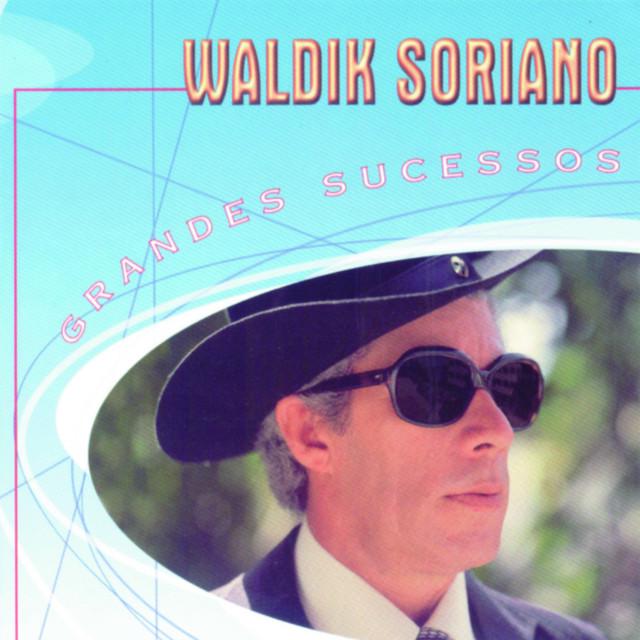
Waldik Soriano’s Spotify BioWaldick Soriano was very popular in an extremely bad-tasting formula called cafona in Brazil, which later would continue as the brega style. A synthesis of Bienvenido Granda, Anísio Silva, Nelson Gonçalves, Orlando Dias, and others, he became inspired by the film Durango Kid, and began dressing in cowboy outfits, forging his own style. Having recorded 83 albums, he also acted in the films Paixão de um Homem (after his biggest hit, a homonymous bolero) in 1972 and O Poderoso Garanhão in 1973.
He worked in the Bahian hinterlands until he was 25 years old as a truck driver, manual worker, and prospector. In 1959 he moved to São Paulo and had an opportunity at Rádio Nacional through artistic director Hélio Araújo, whom Soriano had met at the company's door. Araújo, also at that time the director of the Chantecler recording company, gave him the opportunity to record his song "Quem és Tu." Specializing in a repertory based on deeply dramatic, suffering songs, a style called dor-de-cotovelo,… he recorded the LP Quem és Tu? in 1960 through Chantecler, which was followed by Waldick Soriano in 1961. The latter featured one of his greatest hits, "Tortura de Amor." In the next year he recorded Cantor Apaixonado, with the hit "Se eu Morresse Amanhã." With 1964's O Elegante Waldick Soriano, he had the hits "A Carta" and "Eu Vou ao Casamento Dela." Como Você Mudou Pra Mim (1965) had "Mundo Cruel." In 1967, he recorded Waldick Sempre Waldick (Copacabana), which featured "Minha Última Noite." In the same year he recorded an LP devoted to boleros, Boleros Para Ouvir, Amar e Sonhar, which had "Meu Coração Está de Luto." Waldick (1968) had "Me Deixa em Paz." No Coração do Povo (1970) had "Carta de Amor." In 1972, RCA released Eu Também Sou Gente and Ele Também Precisa de Carinho, which had the big hit "Eu Não Sou Cachorro Não," and, in 1974, Segue o Teu Caminho. He also recorded several other albums, including Waldick Soriano Interpreta Bienvenido Granda, Rosas Perfumadas Para Alguém, and Waldick Soriano e Seus Amigos (1998, Indie Records). ~ Alvaro Neder, Rovi
Viberate is a music analytics platform built for A&Rs, artist managers, labels, booking agents, marketers, and artists.
It helps music professionals track artist growth, analyze audience data, monitor playlist activity, compare artists, follow song performance, and identify opportunities across the music market.
Public artist pages provide a free preview of selected artist data. Paid plans provide access to deeper analytics, historical data, charts, comparisons, playlist tools, exports, alerts, reports, and additional professional features.
Yes. Public Viberate artist pages provide selected artist analytics and music data for free.
Viberate also offers a 7-day free trial of the full platform. A credit card is required to start the trial. The trial includes access to the complete product so users can test deeper artist analytics, historical views, playlist insights, comparisons, charts, exports, alerts, and reporting features before choosing a paid plan.
Viberate provides artist analytics across streaming, playlists, social media, video, radio airplay, songs, and audience markets.
Users can analyze Spotify performance, Spotify and Apple Music playlists, YouTube activity, TikTok and Instagram growth, radio spins, song performance, audience locations, demographics, rankings, and overall artist momentum.
Artist profiles also connect to music charts, similar artists, and comparison tools, helping users benchmark performance and evaluate artists in context.
Viberate updates key artist and track data daily.
For followed artists and tracks, selected data is refreshed multiple times per day. This helps teams monitor playlist changes, streaming movement, audience growth, releases, and campaign performance with more current data.
Update frequency can vary depending on the metric and data source.
Yes. Viberate lets users compare up to five artists side by side across streaming, social media, audience, and engagement metrics.
Users can compare fanbase growth, audience demographics, locations, Spotify performance, social metrics, and other artist data over selected time periods.
Artist comparison can be used for A&R scouting, benchmarking, booking decisions, campaign planning, and evaluating artists with similar audiences or market positions.