Virginia Zeani

Classical
Opera
 Viberate Rank: 576565
 Viberate Rank: 576565
 Monthly ListenersFollowers
 Subscribers
 Followers
 Followers
 FansTop Spotify Songs
| Track | 7-Day Streams | |
|---|---|---|
1 | 21 | |
2 | 18 | |
3 | 14 | |
4 | 13 | |
5 | 10 |
Top YouTube VideosMonthly ListenersFeatured in PlaylistsAudience| City | Monthly Listeners | |
|---|---|---|
1 |  | 12 |
2 |  | 10 |
3 |  | 8 |
4 |  | 8 |
5 | | 6 |
See full performance history, audience data, playlist activity, rankings, comparisons, and more in Viberate music analytics. Start with a free trial, then continue with a paid plan.
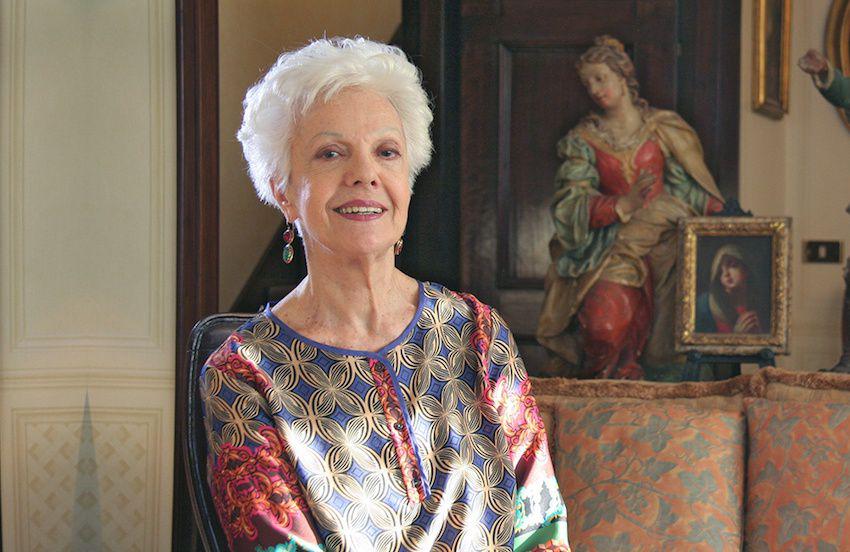
Virginia Zeani’s Spotify BioRomanian-born soprano Virginia Zeani became one of Italy's most-appreciated artists during the 1950s. Initially specializing in lyric/coloratura roles, she moved in the 1970s to more dramatic parts, maintaining nearly all of her vocal allure while adding a dimension of larger-scaled authority. Celebrated most of all for her touching Violetta, she made her career primarily in Europe. Beginning in the early '80s, however, she moved to the U.S. with her husband, Italo-Russian bass Nicola Rossi-Lemeni, to become a faculty member at Indiana University and continued to teach there following his death in 1991.
Zeani, born Zehan, pursued her interest in singing despite parental opposition. Encouraged by an endorsement from her chorus director when she was 12, the girl located a teacher and paid for her own lessons with money earned from church performances and part-time work. By the following year, her family had capitulated and she was able to undertake lessons in earnest from a new… instructor. Luise Anghel, a noted Romanian singer of the German and French repertories, believed Zeani to be a mezzo. Uncomfortable in that voice register, it was not until she became a student of Russian coloratura soprano Lydia Lipkowska (who had sung Violetta at the Metropolitan Opera during the 1909 - 1910 season) that Zeani was prepared to sing in her correct range. After work on Violetta, Mimi, Massenet's Manon, and Gounod's Marguerite, Zeani left Bucharest in 1947 to study with the celebrated Italian tenor Aureliano Pertile in Milan. His response was highly favorable as he informed her that she needed only additional coaching in pronunciation and style. Zeani also sought the counsel of Luigi Ricci in Rome and several of Toscanini's former coaches at La Scala.
By the time of her debut at Bologna in 1948, Zeani had been thoroughly prepared. The role, not surprisingly, was Violetta, the signature characterization that would carry her through several other important debuts: London (1953), Vienna (1957), Paris (1957), New York (1966), and Moscow (1969). In 1956, Zeani appeared for the first time at La Scala when her Cleopatra (Handel) appeared together with the Cesare of Rossi-Lemeni. Zeani had encountered the bass several times before, beginning with her Milanese student days. On-stage, they had met previously in Florence during Zeani's debut in I Puritani when the soprano replaced Callas at a late hour. When Zeani and Rossi-Lemeni connected in Giulio Cesare, he proposed even before rehearsals were over and marriage followed three months later.
In 1957, Zeani created the role of Blanche in Poulenc's Dialogues des Carmelites at La Scala. In contrast to her involvement with works of the bel canto composers and later, operas derived from the verismo movement, Zeani was keenly interested in contemporary works. In addition to Poulenc's Dialogues, she participated in the world premieres of Raffaello de Banfield's Alisa and Barbara Giuranna's Mayerling. Zeani was assigned roles in notable revivals as well. In 1965, she took the title role in a Neapolitan production of Donizetti's Maria di Rohan, in 1968 portrayed Desdemona in Rossini's Otello at Rome and in 1970 sang Verdi's Alzira also at Rome. By the 1970s, Zeani began to move to such spinto roles as Aida, Tosca, Fedora, and Magda Sorel. There, her histrionic mastery and command of style matched the expertise that had made her earlier work in the coloratura repertory so distinctive. Zeani retired from performing after appearing in a 1982 production of Francis Poulenc's Dialogues des Carmélites at the San Francisco Opera, and moved on to career as an educator and voice teacher. Virginia Zeani died on March 20, 2023 at the age of 97.
Viberate is a music analytics platform built for A&Rs, artist managers, labels, booking agents, marketers, and artists.
It helps music professionals track artist growth, analyze audience data, monitor playlist activity, compare artists, follow song performance, and identify opportunities across the music market.
Public artist pages provide a free preview of selected artist data. Paid plans provide access to deeper analytics, historical data, charts, comparisons, playlist tools, exports, alerts, reports, and additional professional features.
Yes. Public Viberate artist pages provide selected artist analytics and music data for free.
Viberate also offers a 7-day free trial of the full platform. A credit card is required to start the trial. The trial includes access to the complete product so users can test deeper artist analytics, historical views, playlist insights, comparisons, charts, exports, alerts, and reporting features before choosing a paid plan.
Viberate provides artist analytics across streaming, playlists, social media, video, radio airplay, songs, and audience markets.
Users can analyze Spotify performance, Spotify and Apple Music playlists, YouTube activity, TikTok and Instagram growth, radio spins, song performance, audience locations, demographics, rankings, and overall artist momentum.
Artist profiles also connect to music charts, similar artists, and comparison tools, helping users benchmark performance and evaluate artists in context.
Viberate updates key artist and track data daily.
For followed artists and tracks, selected data is refreshed multiple times per day. This helps teams monitor playlist changes, streaming movement, audience growth, releases, and campaign performance with more current data.
Update frequency can vary depending on the metric and data source.
Yes. Viberate lets users compare up to five artists side by side across streaming, social media, audience, and engagement metrics.
Users can compare fanbase growth, audience demographics, locations, Spotify performance, social metrics, and other artist data over selected time periods.
Artist comparison can be used for A&R scouting, benchmarking, booking decisions, campaign planning, and evaluating artists with similar audiences or market positions.