Vincenzo Capirola

Classical
Opera
Chamber Music
 Viberate Rank: 532471
 Viberate Rank: 532471
 Monthly ListenersFollowers
 Subscribers
 Followers
 Followers
 FansTop Spotify SongsTop YouTube VideosMonthly ListenersFeatured in Playlists
| Playlist | Followers | |
|---|---|---|
1 |  medieval vibes Spotify | 500.32K |
2 |  Relaxing Lute Music Wesley Alan | 7.60K |
3 |  Lute Music for Alchemists Ian Banks | 6.48K |
4 |  Calming Classical for Kids Prima Classic | 6.47K |
5 |  Enchanted Forest 🌲✨ LĪVA | 6.01K |
Audience| City | Monthly Listeners | |
|---|---|---|
1 |  | 131 |
2 |  | 109 |
3 |  | 101 |
4 |  | 78 |
5 |  | 76 |
See full performance history, audience data, playlist activity, rankings, comparisons, and more in Viberate music analytics. Start with a free trial, then continue with a paid plan.
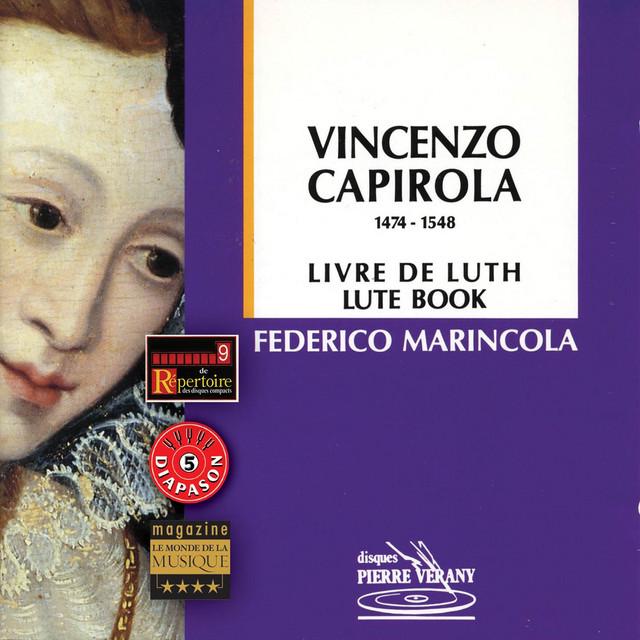
Vincenzo Capirola’s Spotify BioVincenzo Capirola is considered one of the most important composers and performers of lute music of his time. In fact, it is generally held that he was the preeminent composer/pedagogue of lute music from the second and third decades of the sixteenth century. His famous book on lute composition and playing (generally called the Capirola Lutebook), dates to the period of 1515-1520.
Not much is known about the life of Capirola, though he seems to have spent much of his life in Brescia, the city of his birth. Born in 1474, he appears to have grown up there, since the next record of his whereabouts comes from 1489, when he was a resident in that Italian city. Though he seems to have spent most, perhaps even the whole of the ensuing decade there, too, he may well have traveled and lived abroad for a good portion of the remainder of his life.
Certainly he had made a name for himself as a lutenist in Venice in 1517. By that time he had students there and was probably already at work on the… music and text that would make up his famous Lutebook. Moreover, in his authoritative book about Capirola and his works, Compositione di Meser Vincenzo Capirola: Lute-book (circa 1517), twentieth century musicologist Otto Gombosi conjectures that the composer might well have been the lute virtuoso who had performed in England before Henry VIII in 1515. What makes this speculation plausible is that Capirola was a nobleman and certainly had the means for extensive travel and a rare talent to showcase.
In any event, Capirola was a recognized master performer and composer of lute music by the mid-1510s. His lutebook was copied out by a student in the period 1515-1520. The work contains both easy pieces and difficult ones, and features lute transcriptions of popular songs of the day, as well as various other works, including original compositions. Documents show that Capirola was back in Brescia in 1548, where he most likely died a short time later.
Viberate is a music analytics platform built for A&Rs, artist managers, labels, booking agents, marketers, and artists.
It helps music professionals track artist growth, analyze audience data, monitor playlist activity, compare artists, follow song performance, and identify opportunities across the music market.
Public artist pages provide a free preview of selected artist data. Paid plans provide access to deeper analytics, historical data, charts, comparisons, playlist tools, exports, alerts, reports, and additional professional features.
Yes. Public Viberate artist pages provide selected artist analytics and music data for free.
Viberate also offers a 7-day free trial of the full platform. A credit card is required to start the trial. The trial includes access to the complete product so users can test deeper artist analytics, historical views, playlist insights, comparisons, charts, exports, alerts, and reporting features before choosing a paid plan.
Viberate provides artist analytics across streaming, playlists, social media, video, radio airplay, songs, and audience markets.
Users can analyze Spotify performance, Spotify and Apple Music playlists, YouTube activity, TikTok and Instagram growth, radio spins, song performance, audience locations, demographics, rankings, and overall artist momentum.
Artist profiles also connect to music charts, similar artists, and comparison tools, helping users benchmark performance and evaluate artists in context.
Viberate updates key artist and track data daily.
For followed artists and tracks, selected data is refreshed multiple times per day. This helps teams monitor playlist changes, streaming movement, audience growth, releases, and campaign performance with more current data.
Update frequency can vary depending on the metric and data source.
Yes. Viberate lets users compare up to five artists side by side across streaming, social media, audience, and engagement metrics.
Users can compare fanbase growth, audience demographics, locations, Spotify performance, social metrics, and other artist data over selected time periods.
Artist comparison can be used for A&R scouting, benchmarking, booking decisions, campaign planning, and evaluating artists with similar audiences or market positions.