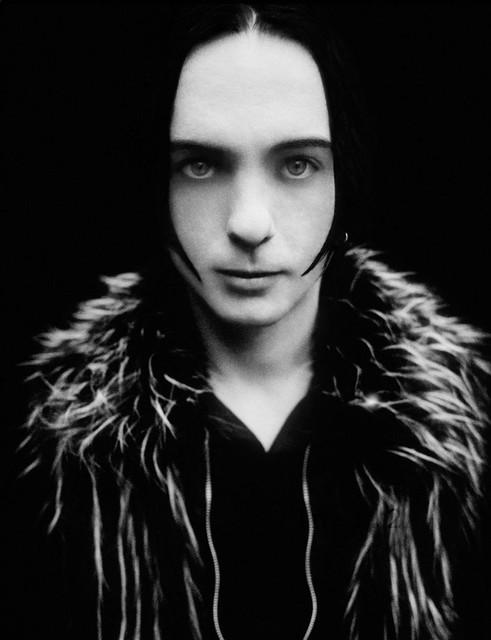
Trent Reznor

Rock
Alternative Rock
Industrial rock
 Viberate Rank: 41427
 Viberate Rank: 41427
 Monthly ListenersFollowers
 Subscribers
 Followers
 Followers
 FansTop Spotify Songs
| Track | 7-Day Streams | |
|---|---|---|
1 | 14.23K | |
2 | 13.29K | |
3 | 9.77K | |
4 | 6.33K | |
5 | 5.43K |
Top YouTube Videos| Video | 7-Day Views | |
|---|---|---|
1 | 62.54K | |
2 | 24.80K | |
3 | 10.66K | |
4 | 3.92K | |
5 | 3.11K |
Monthly ListenersFeatured in Playlists| Playlist | Followers | |
|---|---|---|
1 |  Rock Covers Spotify | 771.20K |
2 | Covers (that are better than the originals) JTG | 209.29K |
3 | GRUNGE zerubi | 80.88K |
4 |  Best of Movie, TV & Game Soundtracks by GuiguiF Guillaume Flahaut | 53.67K |
5 |  Movie Scores Study Haley Stewart | 49.97K |
Audience| City | Monthly Listeners | |
|---|---|---|
1 | | 1.35K |
2 | | 1.26K |
3 |  | 1.18K |
4 | | 1.15K |
5 | | 873 |
See full performance history, audience data, playlist activity, rankings, comparisons, and more in Viberate music analytics. Start with a free trial, then continue with a paid plan.
Trent Reznor’s Spotify BioIn the '90s, Nine Inch Nails emerged as the most popular industrial group of the time, penetrating the mainstream with 1994's The Downward Spiral and 1999's The Fragile, bringing the genre to a mass audience and inspiring a crop of imitators. Behind the moniker and famous NIN logo was singer, producer, and multi-instrumentalist Trent Reznor, who, for almost three decades, was the band's only official long-standing member. As the core figure, Reznor remained solely responsible for NIN's musical direction, even when he was supported in concert by a rotating cast of backing musicians. Unlike the majority of industrial artists, he wrote melodic, traditionally structured songs with introspective and emotive lyrics as a focal point. His pop instincts not only made the harsh electronic beats of industrial music easier to digest, but also put a human face on a style that often tried to sound as mechanical as possible. In the 2000s, he began to venture outside of the complex and perfectionist… realm of NIN and started composing film scores with musical partner Atticus Ross. The pair achieved immediate success with the Oscar-winning soundtrack to David Fincher's 2010 movie The Social Network, and continued to balance NIN and Hollywood duties into the 2020s with scores for films like Soul. Empire of Light, and Challengers.
Michael Trent Reznor was born May 17, 1965, in the small town of Mercer, Pennsylvania. He went by his middle name to avoid confusion with his father, who shared the same first name. At age five, Reznor's parents divorced and he was raised by his maternal grandparents. He began playing the piano at age five, studying classical music, and later learned tenor sax and tuba in the school band. He also acted in musicals and became an avid Kiss fan. After high school, Reznor spent some time studying music and computers at Allegheny College, but dropped out after a year to pursue music full-time, packing his bags for Cleveland with high school friend Chris Vrenna. Around the same time, he discovered new wave and assorted underground music. He became fascinated with early industrial, since it offered an edgy, aggressive way to use electronic instruments.
At age 19, he successfully auditioned to join an AOR band called the Innocent, which released one album, Livin' in the Streets. He quit the Innocent after just three months and joined the Exotic Birds soon after. That band would appear in the Michael J. Fox/Joan Jett film Light of Day as a trio dubbed the Problems. On the side, he also played keyboards with Slam Bamboo, worked in a keyboard store, and as a janitor in the local Right Track recording studio, which would prove fortuitous. Eventually, he became a studio engineer, teaching himself various computer applications and working on his own material during off hours. The studio's owner later allowed Reznor to record some demos for free. Those tracks would eventually appear on the unreleased Purest Feeling, the first incarnation of NIN's eventual breakthrough debut.
As Nine Inch Nails, Reznor began recording his own Ministry- and Skinny Puppy-influenced compositions in 1988, playing all the instruments himself. At first, he simply hoped to release a 12" single on a small European label, but when he sent demo tapes to about ten American labels, nearly every one of them offered him a deal. He wound up signing with TVT, which released NIN's debut album, Pretty Hate Machine, in 1989 (after having rejected an initial effort called Industrial Nation). Reznor quickly assembled a backing band and toured with Skinny Puppy for a short time, but soon tired of playing for strictly industrial artists. With a tighter outfit featuring Chris Vrenna on drums and Richard Patrick on guitar (plus several revolving-door keyboardists), he consciously chose to open for alt-rock acts (including, early on, the Jesus and Mary Chain and Peter Murphy), partly for the challenge of winning over fans who might not have liked industrial music. The strategy helped expand Nine Inch Nails' fan base substantially. Early single "Down in It" got some airplay in dance clubs, reaching Billboard's dance and modern rock charts, and MTV later picked up on the video for the more rock-oriented "Head Like a Hole." In 1991, after recruiting keyboardist James Woolley, Nine Inch Nails became part of the inaugural Lollapalooza tour, which expanded their fan base by leaps and bounds. Pretty Hate Machine's momentum kept building, and although it never climbed higher than number 75, it spent over two years on the album charts and eventually sold over a million copies -- one of the first indie-label rock albums to do so.
TVT had a massive hit on their hands, and to ensure that Reznor would produce another one, they attempted to take control of the follow-up's creative direction. Enraged by the outside meddling, Reznor tried to secure a release from his contract, leading to a vicious court battle. His only recording outlets were side projects; in 1990, he co-wrote and sang on "Suck," a track on Pigface's debut album, Gub, and also sang on the Al Jourgensen-led 1000 Homo DJs cover of Black Sabbath's "Supernaut." (TVT ordered Reznor's vocals removed from the track, but Jourgensen actually just altered them slightly and said he'd re-recorded it.)
Eventually, he was able to sign with Interscope, which helped him set up his own label, the Cleveland-based Nothing imprint. Reznor had been recording new material on the sly, and in 1992 Nothing released the EP Broken as well as a concurrent remix disc titled Fixed. Broken featured heavier guitars than Pretty Hate Machine, partly in response to NIN's live sound and partly as a sonic evocation of Reznor's boiling frustration in the wake of the legal wars. It also featured two bonus cuts, a version of "Suck" and the Adam Ant cover "(You're So) Physical," a nod to Reznor's new wave roots. Despite many reviews characterizing the EP as a harrowing, difficult listen, Broken -- supported by NIN's by then considerable fan base -- debuted in the Top Ten and the first single, "Wish," won a Grammy for Best Heavy Metal Performance. Reznor enhanced his reputation as a provocateur with a widely banned clip for "Happiness in Slavery," which depicted S&M performance artist Bob Flanagan being torn apart by a machine. Further buzz was built by the rumored long-form movie for Broken that was never released commercially due to its snuff-like graphic content.
In 1993, Reznor moved to Los Angeles to craft the second full-length NIN album, assembling a studio in the house where actress Sharon Tate was murdered by Charles Manson's associates. That effort, The Downward Spiral, was a highly ambitious concept album indebted to progressive rock that featured the most detailed, layered studio craft of any NIN release yet. Hugely anticipated, the album debuted at number two and became one of the bleakest multi-platinum albums ever. During this era, Richard Patrick had departed the touring band to form Filter, and Reznor revamped the group with drummer Vrenna, keyboardist Woolley, guitarist Robin Finck, and bassist Danny Lohner. NIN caused a sensation at that summer's 25th anniversary Woodstock concert, performing a ferocious set while covered in mud. Meanwhile, MTV put an edited version of the video for "Closer" in heavy rotation and NIN scored one of the year's unlikeliest hits. The subdued ballad "Hurt" gained further airplay, even though it lacked the titillating shock value of "Closer." Later in the year, Reznor delved into one of his first major film projects, assembling the soundtrack for Oliver Stone's controversial Natural Born Killers, editing the songs together to create an innovative, cross-genre collage. That year, he also guested on "Past the Mission," a track on Tori Amos' second album, Under the Pink.
In 1995, with new keyboardist Charlie Clouser, Nine Inch Nails hit the road for the Outside Tour with David Bowie, whose late-'70s albums (along with Pink Floyd) had been a major influence on The Downward Spiral. The vocalists would share the stage each night, eventually leading to a strong bond that resulted in future collaborations and reverse inspiration for Bowie's brief industrial/electronic period. Reznor also contributed a cover of Joy Division's "Dead Souls" to the soundtrack of The Crow and issued the remix album Further Down the Spiral, which nearly reached the Top 20.
Using money from The Downward Spiral, Reznor built the state-of-the-art Nothing Studios in New Orleans in a building that had once been a funeral home. While pondering his next move in the wake of his sudden stardom, he produced Nothing signee Marilyn Manson's hit album, Antichrist Superstar (his third time producing for the group), putting his jagged, industrial stamp on the Florida outfit's shock-rock sound.
In the years between album releases, Reznor produced another movie soundtrack, this time for David Lynch's Lost Highway. In addition to featuring Bowie, Manson, and the Smashing Pumpkins, and providing the American breakthrough for German industrialists Rammstein, he also contributed the NIN single "The Perfect Drug," which incorporated a skittering drum'n'bass beat that was more electronic than anything NIN had previously done. While "The Perfect Drug" returned Reznor and NIN to the public consciousness, Reznor was still unsure what kind of statement would be an appropriate follow-up to The Downward Spiral. That uncertainty resulted in a severe case of writer's block. Around this time, longtime friend Vrenna had a falling out with Reznor and was eventually replaced by Jerome Dillon. Reznor's maternal grandmother passed away that year and his friendship with Manson soon deteriorated. These personal upheavals would bear heavily on Reznor, resulting in an unexpected shift in sound for the Spiral follow-up.
During this period, as a testament to his influence, NIN were proving vastly influential on a new crop of bands, with major labels signing up industrial metal outfits like Filter, Gravity Kills, and Stabbing Westward. An assortment of traditional rock bands -- like Guns N' Roses -- also started grafting industrial production flourishes onto their music.
In 1999, Reznor finally resurrected Nine Inch Nails with the double-CD opus The Fragile. It debuted at number one with massive first week sales, but slipped down the charts rather quickly afterward. The effort included the singles "The Day the World Went Away" and "Starfuckers, Inc.," a direct reference to his soured relationships with other alt-rock icons. The remix album Things Falling Apart followed a year later, as did the extensive Fragility world tour. An album of live performances culled from the trek, And All That Could Have Been, was released in early 2002. Deluxe editions of the recording also included the fan favorite Still EP, which featured new songs and "unplugged" reimaginings of deep catalog cuts.
In the years that followed The Fragile, Reznor turned his focus toward sobriety and health. When he eventually re-emerged in 2005, NIN secured another chart-topper, With Teeth. Touring continued into 2006, with NIN spending the spring and summer on the road with various supporting acts including Saul Williams, Bauhaus, TV on the Radio, and Peaches. The EP Every Day Is Exactly the Same appeared in April 2006; it contained the title track and five various remixes (all originally from With Teeth). More touring followed before Reznor returned to the studio to begin one of the most prolific periods of his career.
In early 2007, a quiet viral marketing campaign began when USB key chains that contained new songs were found in the restrooms during NIN shows. These key chains also contained a noisy audio file that, when run through a spectrum analyzer, drew an audio wave in the shape of a phone number that dialed in to answering machines filled with conspiracy theories. Fake websites were strewn across the Net and busy Internet forums and Wikis appeared to theorize about and document the entire alternate reality game crafted by the noted video game buff. The big payoff appeared in April when the dystopian concept album Year Zero arrived. The record debuted at number two on the Billboard 200 and spawned the singles "Survivalism" and "Capital G." An extensive international tour followed, bringing NIN to locales like China for the very first time.
Breaking from his major-label deal, Reznor began experimenting with different methods of distribution when he made the Saul Williams album The Inevitable Rise and Liberation of Niggy Tardust available as a digital download. Reznor had helped produce the album and had planned to release it on his Nothing imprint, but as his distaste for the major-label system increased, so did the possibilities of digital distribution. He completely broke free from the system when he left Interscope and released the entirely instrumental four-disc album Ghosts I-IV on his own in 2008, making it available in both digital download and CD formats. The album's release also marked the end of his Interscope-distributed Nothing label and the beginning of a new imprint, Null Corporation. Two months later, Reznor released NIN's seventh album, The Slip.
On Ghosts I-IV and The Slip, Reznor collaborated with producer, composer, arranger, and engineer Atticus Ross of former Nothing signees 12 Rounds. The two worked so well together they accepted an invitation from director David Fincher to write an original score for his film The Social Network. The soundtrack was released in 2010, and the pair won an Oscar. The next year, Reznor and Ross worked with Fincher again, composing an original score for the American cinematic version of The Girl with the Dragon Tattoo.
During this time, Reznor formed How to Destroy Angels, a new band that also featured Ross and his wife, Mariqueen Maandig, releasing a pair of EPs and a full-length in the years that followed. Meanwhile, in 2013 Reznor issued Nine Inch Nails' eighth LP, Hesitation Marks, which topped the Billboard alternative and rock charts. Score work with Ross and Fincher resumed in 2014, this time for Fincher's adaptation of Gillian Flynn's novel Gone Girl.
In 2015, Reznor was named chief creative director for Apple Music; he issued new instrumental versions of NIN albums The Fragile and With Teeth as exclusive streams on the service. Reznor and Ross added to their filmography in 2016, this time composing the scores for the Boston Marathon bombing movie Patriots Day and the National Geographic film Before the Flood, which featured collaborations with Gustavo Santaolalla and Mogwai.
At this point, having worked so extensively with Ross, Reznor made him an official member of NIN. This announcement preceded the release of Not the Actual Events at the end of 2016. The EP arrived alongside the vinyl reissues of NIN's entire catalog, featuring a special limited edition of The Fragile entitled The Fragile: Deviations 1, which included 37 instrumental and unreleased tracks, many of which had not been heard beforehand. In the summer of 2017, Add Violence, the second EP of a proposed triptych, was released. The five-song set featured the song "Less Than," the band's highest-charting single since 2013's "Came Back Haunted." Months after the release of Add Violence, as NIN made a successful tour of the summer's festival circuit, Reznor and Ross debuted their score to Ken Burns' epic documentary series The Vietnam War. NIN concluded their EP trilogy with the final installment (which Reznor ended up billing as an official album), Bad Witch. An extensive tour of intimate venues followed, during which time Reznor and Ross also managed to compose works for films such as Mid90s and Bird Box. The pair continued their prolific streak into the close of the decade with Waves and the three-volume soundtrack for HBO's Watchmen series. 2020 saw Reznor and Ross apply their skills to their first Disney film, the Pixar-issued jazz/afterlife-themed animated comedy Soul. The duo continued to score additional films together including 2022's Bones and All and Empire of Light. That same year, Reznor collaborated with Danny Elfman on the track "Native Intelligence" from Elfman's solo album, Big Mess. He and Ross resumed their ongoing collaboration with Fincher for the director's 2023 film The Killer, then continued working into 2024 on films like Challengers and The Gorge. ~ Neil Z. Yeung & Steve Huey, Rovi
Viberate is a music analytics platform built for A&Rs, artist managers, labels, booking agents, marketers, and artists.
It helps music professionals track artist growth, analyze audience data, monitor playlist activity, compare artists, follow song performance, and identify opportunities across the music market.
Public artist pages provide a free preview of selected artist data. Paid plans provide access to deeper analytics, historical data, charts, comparisons, playlist tools, exports, alerts, reports, and additional professional features.
Yes. Public Viberate artist pages provide selected artist analytics and music data for free.
Viberate also offers a 7-day free trial of the full platform. A credit card is required to start the trial. The trial includes access to the complete product so users can test deeper artist analytics, historical views, playlist insights, comparisons, charts, exports, alerts, and reporting features before choosing a paid plan.
Viberate provides artist analytics across streaming, playlists, social media, video, radio airplay, songs, and audience markets.
Users can analyze Spotify performance, Spotify and Apple Music playlists, YouTube activity, TikTok and Instagram growth, radio spins, song performance, audience locations, demographics, rankings, and overall artist momentum.
Artist profiles also connect to music charts, similar artists, and comparison tools, helping users benchmark performance and evaluate artists in context.
Viberate updates key artist and track data daily.
For followed artists and tracks, selected data is refreshed multiple times per day. This helps teams monitor playlist changes, streaming movement, audience growth, releases, and campaign performance with more current data.
Update frequency can vary depending on the metric and data source.
Yes. Viberate lets users compare up to five artists side by side across streaming, social media, audience, and engagement metrics.
Users can compare fanbase growth, audience demographics, locations, Spotify performance, social metrics, and other artist data over selected time periods.
Artist comparison can be used for A&R scouting, benchmarking, booking decisions, campaign planning, and evaluating artists with similar audiences or market positions.