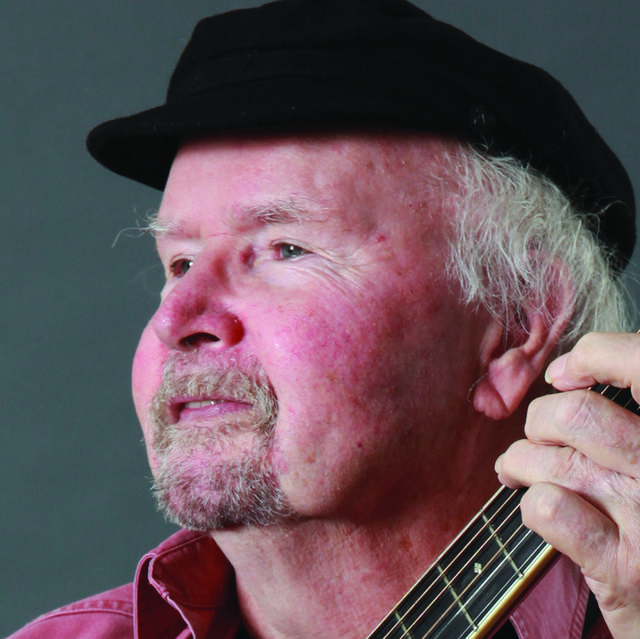
Tom Paxton

Rock
Folk Rock
Folk
 Viberate Rank: 82822
 Viberate Rank: 82822
 Monthly ListenersFollowers
 Subscribers
 Followers
 Followers
 FansTop Spotify Songs
| Track | 7-Day Streams | |
|---|---|---|
1 | 38.32K | |
2 | 20.91K | |
3 | 20.51K | |
4 | 12.25K | |
5 | 6.24K |
Top YouTube VideosMonthly ListenersFeatured in Playlists| Playlist | Followers | |
|---|---|---|
1 |  Essential Folk Spotify | 831.91K |
2 | Sit&Smile 🪵 The Sandlot Vintage | 54.23K |
3 |  oh opheliaa rileykanive | 42.53K |
4 |  Folk Rock Classics Rockoso Music | 28.59K |
5 |  The Worlds Greatest Hits 🌎 The Sandlot Vintage | 23.06K |
Audience| City | Monthly Listeners | |
|---|---|---|
1 |  | 3.12K |
2 |  | 2.31K |
3 | | 2.17K |
4 | | 2.13K |
5 |  | 2.08K |
See full performance history, audience data, playlist activity, rankings, comparisons, and more in Viberate music analytics. Start with a free trial, then continue with a paid plan.
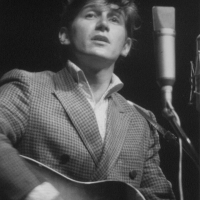
Tom Paxton’s Spotify BioTom Paxton was one of the most important, popular, and enduring songwriters to emerge from the Greenwich Village folk music scene of the early '60s. Not as celebrated as Bob Dylan and Phil Ochs, Paxton nevertheless was one of the mainstays of the folk community, a tunesmith who had a knack for topical songs and penned standards like "The Last Thing on My Mind," "I Can't Help But Wonder Where I'm Bound," and "The Marvelous Toy." His songs were recorded by Peter, Paul & Mary, the Kingston Trio, Judy Collins, Willie Nelson, Johnny Cash, and Elvis Presley. There were few major folk acts of the 1960s and '70s who didn't raid Paxton's songbook for material, and though he was less successful as a recording artist, he had a die-hard audience among folk loyalists. His way with heartfelt ballads, witty songs about fads and human failings, political commentary, and songs for children helped him maintain an audience over a span of seven decades. The warmth of his vocals and his gentle charisma as… a performer were an ideal match for the thoughtful, compassionate storytelling of his lyrics. Paxton's seminal albums of the 1960s are summarized well on the 1999 collection I Can't Help but Wonder Where I'm Bound, 1978's Heroes was one of his best albums of that decade, 1985's One Million Lawyers and Other Disasters was a collection of funny political numbers that became a surprise success, and 1997's Goin' to the Zoo ranks with the finest of his many recordings for children. 2022's All New, a collaboration with fellow folk veterans Cathy Fink and Marcy Marxer, found Paxton still writing and performing with authority at the age of 84.
Tom Paxton was born on October 31, 1937, in Chicago, Illinois. His father was a chemist whose health problems led him to move the family to warmer climates, first in Wickenberg, Arizona, and later settling in Bristow, Oklahoma. Paxton's first musical instrument was the trumpet, but he next took up the ukulele, and in the summer of 1954 an aunt gave him his first guitar. In 1955, he enrolled at the University of Oklahoma at Norman, initially as a drama major. There he became interested in folk music after discovering the work of Woody Guthrie and the Weavers, and he began writing songs. He graduated in 1959 with a BFA and acted in summer stock, though his main interest had shifted to singing. He went into the Army Reserve early in 1960, and that spring was stationed at Fort Dix, New Jersey. New York City was an easy commute from Fort Dix, and he began regularly spending his evenings in Greenwich Village, absorbing the lively folk scene and performing at amateur-night hootenannies. When he finished active duty in September 1960, he settled in New York, and was offered an audition for the Chad Mitchell Trio. He didn't get the gig, but Mitchell liked Paxton's song "The Marvelous Toy." Milt Okum, a music business veteran working with the group, offered him a publishing deal; Paxton was soon penning topical songs that were published in magazines like Sing Out! and Broadside, while his tune "Come Along Home (Tom's Song)" appeared on the trio's album At the Bitter End, released by Kapp Records in 1962.
In the fall of 1962, Paxton recorded his debut album, I'm the Man Who Built the Bridges, live at the Gaslight, and it was issued by Gaslight Records, which pressed 2,000 copies. Included on the set were the original versions of such songs as the romantic ballad "Every Time," "The Marvelous Toy," and another children's song, "Goin' to the Zoo." In early May 1963, at a reunion concert by the Weavers at Carnegie Hall, Pete Seeger performed Paxton's song "Ramblin' Boy." The tune was included on an album drawn from the show, 1963's Reunion at Carnegie Hall 1963. The following month, Seeger played a solo concert in the same venue and sang three Paxton songs, "Ramblin' Boy," "A Little Brand New Baby," and the satirical "What Did You Learn in School Today?" An LP drawn from the concert was released on Columbia Records in the fall of 1963, We Shall Overcome. "What Did You Learn in School Today?" appeared on the original edition, while all three Paxton compositions appeared on an expanded CD reissue, 1989's We Shall Overcome: The Complete Carnegie Hall Concert. Also that fall came the next Chad Mitchell Trio album, Blowin' in the Wind, which contained two Paxton compositions, both from his Gaslight LP, "The Marvelous Toy" and "Willie Seton." "The Marvelous Toy" was released as a single, and it peaked at number 43 in January 1964.
Paxton had increased his profile as a performer, appearing at the 1963 Newport Folk Festival, which was recorded by Vanguard. His Army experience was reflected in the song Vanguard chose for its Newport Broadside LP, "The Willing Conscript," a comic conversation between a drill sergeant and a recruit who has "never killed before" and is seeking advice on how to do so. Paxton's success as a performer and songwriter led Elektra Records to sign him in 1964, and his label debut, Ramblin' Boy, appeared that fall. It contained two career-making songs, the romantic ballad "The Last Thing on My Mind" and "I Can't Help But Wonder Where I'm Bound." The latter song was recorded by the Chad Mitchell Trio, the short-lived Au Go-Go Singers (featuring Stephen Stills and Richie Furay), and the Kingston Trio. The covers multiplied, with a wide variety of artists, including Dion and Tiny Tim, taking their turns.
"The Last Thing on My Mind" promptly dwarfed that success. A song of regret over the loss of a love, it quickly became a standard. In 1965 alone, covers appeared on chart albums by the Mitchell Trio, Peter, Paul & Mary, and Marianne Faithfull. After that, "The Last Thing on My Mind" spread to country artists, earning recordings by Charley Pride and Hank Locklin in 1967 before the duo of Porter Wagoner and Dolly Parton released it as a single that peaked at number seven in the country charts in early 1968. Rock acts such as the Move, the Vejtables, and Neil Diamond also cut the song (the latter recording was also issued as a single that peaked at number 56 on the pop chart). Other artists who recorded "The Last Thing on My Mind" include Joan Baez, Harry Belafonte, Glen Campbell, Judy Collins, and Willie Nelson.
Paxton had created some copyrights that would be valuable over the long term, but he had not sold many records himself. Ramblin' Boy did not sell well enough to chart, and neither did his second Elektra album, Ain't That News, released in the fall of 1965. The record was dominated by politically oriented songs, though it also featured his version of "Bottle of Wine." Two years later, the Fireballs cut a rocking cover that reached the Top Ten in March 1968. Paxton's third Elektra LP, Outward Bound, was released in September 1966, as folk-rock was sweeping through Greenwich Village and onto the pop charts. Paxton, however, continued to record in a more modest style, usually with just a couple of backing musicians. His fourth LP, Morning Again, did not turn up until the spring of 1968. By that time, the Sgt. Pepper era of pop psychedelia had arrived, and Elektra encouraged him to try the same sort of chamber pop style being used by his labelmate Judy Collins. He finally broke into the pop charts with The Things I Notice Now in the summer of 1969, and also charted with Tom Paxton 6 in the spring of 1970, a strong collection that featured the satiric "Forest Lawn" (a Los Angeles cemetery) and the environmental lament "Whose Garden Was This." Both songs were covered by former Chad Mitchell Trio member John Denver, who even titled an RCA album after the latter tune. Denver was a major Paxton booster who also recorded his songs "The Ballad of Spiro Agnew," "Bet on the Blues," and "Jimmy Newman," among others, over the course of his career.
Paxton was dissatisfied with the state of his career in the U.S., as he seemed to be more popular in Great Britain, where Tom Paxton 6 had made the Top 25. After performing a June 1970 show at the Bitter End that Elektra recorded for the two-LP set The Compleat Tom Paxton (issued in the spring of 1971), he moved his family to England. There he signed to the U.K. branch of Warner Bros. Records, which released his next album, How Come the Sun, on its Reprise imprint in the summer of 1971. The album gave him his highest chart ranking in the U.S., though it peaked at number 120, and Peace Will Come, released in the summer of 1972, barely reached the charts at all. Once again, Paxton completed his label commitment with a live album, New Songs for Old Friends, recorded at the Marquee Club in London and issued in the summer of 1973. (Among those new songs was "Wasn't That a Party?," which was covered by the Rovers for a Top 40 hit in 1981.) He moved his family back to the U.S., where they settled on Long Island.
Paxton's departure from Warner Bros. marked the end of his working for major record labels, where he never felt at home. (He was known to joke that his Warner albums were released at midnight and out of print by dawn.) He signed to the Bradley label in the U.K. and recorded his first children's album, The Tom Paxton Children's Song Book, in 1974. (Ten years later, Flying Fish Records reissued the album in the U.S. under the title The Marvelous Toy and Other Gallimaufry.) For the British MAM label, he made Something in My Life (1975; released in the U.S. on Private Stock Records) and Saturday Night (1976). Paxton next signed with Vanguard, and his first album for the label, New Songs from the Briarpatch, was recorded live in the studio, with accompaniment from Steve Goodman. The set included "Did You Hear John Hurt?," Paxton's tribute to the blues singer he had known in Greenwich Village, a song taken up by Doc & Merle Watson. Heroes (1978), his second Vanguard album, was a particularly strong collection including the harrowing "The Death of Stephen Biko," an account of the murder of the South African civil rights leader, and "Phil," about Phil Ochs, who had killed himself in 1976.
Paxton next moved to the Mountain Railroad label, working with longtime friend Bob Gibson, who produced 1979's Up & Up, which featured the baseball song "My Favorite Spring." 1980's The Paxton Report, containing many topical songs, included "I Am Changing My Name to Chrysler." In 1982, Paxton enjoyed a surprise hit in the U.K. when the Fureys revived his 20-year-old song "Every Time" under the title "I Will Love You" and reached the charts with it. Bulletin, released on Hogeye Records in 1983, also had a high quotient of satiric and topical songs, among them "A Little Bitty Gun," which tweaked First Lady Nancy Reagan, and "There's Something Wrong with the Rain," about pollution. The same year, Paxton signed to the larger independent folk label Flying Fish and issued Even a Gray Day, a collection of love songs.
For a year and a half starting in 1984, Paxton toured with Bob Gibson and Anne Hills as a trio under the name Best of Friends; in 2004 Appleseed Records released one of their concerts recorded for radio under the title Best of Friends. Paxton's 1985 Flying Fish LP One Million Lawyers and Other Disasters was a return to satiric form with the title song and "Yuppies in the Sky," both of which won radio play as novelty numbers. In 1986, he launched his own label, Pax Records, issuing A Folk Song Festival (an album of covers of traditional folk songs), A Paxton Primer (re-recordings of his own songs), Balloon-alloon-alloon (a children's collection), and A Child's Christmas. He was, however, still contracted to Flying Fish, which issued 1986's And Loving You, the live album Politics (1988), and another collection of re-recordings, The Very Best of Tom Paxton (1988). He finished off his commitment to Flying Fish with It Ain't Easy in 1991.
In the early '90s, Paxton issued a series of children's albums through Sony Kids, including A Car Full of Songs, Peanut Butter Pie, and Suzy Is a Rocker. In 1994, he signed to Sugar Hill Records and returned to adult concerns on Wearing the Time. Live: For the Record, released in June 1996, was a concert recording that found him back to writing satirical songs about topical subjects, including the Tonya Harding scandal. He pacted with Rounder Records for two 1997 children's albums, Goin' to the Zoo and I've Got a Yo-Yo. At the turn of the century, retrospective collections began to appear, including Rhino's I Can't Help But Wonder Where I'm Bound (1999) and Vanguard's Best of the Vanguard Years (2000), while his performances on the radio series Mountain Stage were collected on Blue Plate's Live from Mountain Stage (2001).
By 2001, Paxton had moved operations to the Appleseed label, which issued a duo album with Anne Hills, Under American Skies, that July. Red House Records released a new children's album, Your Shoes, My Shoes, in February 2002, and it earned Paxton his first Grammy nomination. In October 2002, Appleseed put out his first new studio album for grownups in eight years, Looking for the Moon, and it too was rewarded with a Grammy nomination for Best Contemporary Folk Recording. Drawn from a 1991 live performance and issued by Shout! Factory, Live at McCabe's Guitar Shop arrived in 2006. Paxton's next new studio recording, Comedians & Angels, was released by Appleseed in January 2008. To record 2015's Redemption Road, he turned directly to his own fan base, raising the needed funds via the Kickstarter crowdfunding platform. The album featured a duet with John Prine on the song "Skeeters'll Gitcha," while Janis Ian also contributed vocals to the sessions. An archival recording of Paxton and Bob Gibson, Navy Pier Auditorium: Chicago, August 1980, received a belated release in 2016, and the following year, Paxton delivered his 63rd album, Boat in the Water, in which he co-wrote several songs with Nashville tunesmiths Jon Vezner, Don Henry, and Pat Alger. Warner Music Group compiled a 36-track anthology of Paxton's best and best-known songs, The Essential Tom Paxton, in 2019.
2022 brought a pair of collaborative efforts: Paxton teamed with the Americana group Buffalo Rose for the country-flavored album Rabbit, and All New found him working with Cathy Fink and Marcy Marxer, songwriters who had collaborated with Paxton several times in the past. He had also begun performing with fellow songwriters Don Henry and Jon Vezner, whom he met from the Boat in the Water project. Calling the trio Tom Paxton & the Don Juans, they produced a pair of live releases that were issued by Paxton through his website. ~ William Ruhlmann & Mark Deming, Rovi
Viberate is a music analytics platform built for A&Rs, artist managers, labels, booking agents, marketers, and artists.
It helps music professionals track artist growth, analyze audience data, monitor playlist activity, compare artists, follow song performance, and identify opportunities across the music market.
Public artist pages provide a free preview of selected artist data. Paid plans provide access to deeper analytics, historical data, charts, comparisons, playlist tools, exports, alerts, reports, and additional professional features.
Yes. Public Viberate artist pages provide selected artist analytics and music data for free.
Viberate also offers a 7-day free trial of the full platform. A credit card is required to start the trial. The trial includes access to the complete product so users can test deeper artist analytics, historical views, playlist insights, comparisons, charts, exports, alerts, and reporting features before choosing a paid plan.
Viberate provides artist analytics across streaming, playlists, social media, video, radio airplay, songs, and audience markets.
Users can analyze Spotify performance, Spotify and Apple Music playlists, YouTube activity, TikTok and Instagram growth, radio spins, song performance, audience locations, demographics, rankings, and overall artist momentum.
Artist profiles also connect to music charts, similar artists, and comparison tools, helping users benchmark performance and evaluate artists in context.
Viberate updates key artist and track data daily.
For followed artists and tracks, selected data is refreshed multiple times per day. This helps teams monitor playlist changes, streaming movement, audience growth, releases, and campaign performance with more current data.
Update frequency can vary depending on the metric and data source.
Yes. Viberate lets users compare up to five artists side by side across streaming, social media, audience, and engagement metrics.
Users can compare fanbase growth, audience demographics, locations, Spotify performance, social metrics, and other artist data over selected time periods.
Artist comparison can be used for A&R scouting, benchmarking, booking decisions, campaign planning, and evaluating artists with similar audiences or market positions.