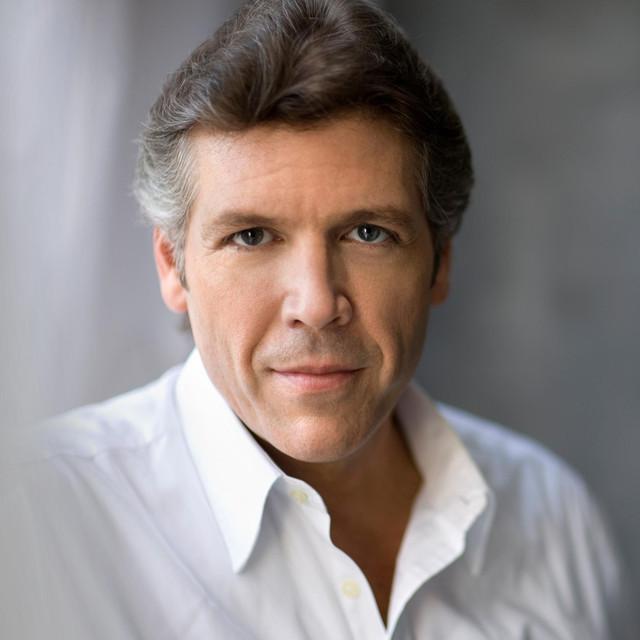
Thomas Hampson

Classical
Opera
 Viberate Rank: 106283
 Viberate Rank: 106283
 Monthly ListenersFollowers
 Subscribers
 Followers
 Followers
 FansTop Spotify Songs
| Track | 7-Day Streams | |
|---|---|---|
1 | 7.97K | |
2 | 2.49K | |
3 | 2.44K | |
4 | 2.04K | |
5 | 1.14K |
Top YouTube VideosMonthly ListenersFeatured in Playlists| Playlist | Followers | |
|---|---|---|
1 |  This Is Puccini Spotify | 86.02K |
2 |  This is Vaughan Williams Spotify | 26.86K |
3 |  Klassieke Top 400 (2026) | NPO Klassiek NPO Klassiek | 24.19K |
4 |  Unbelievable Classical Voices EMITHA | 22.52K |
5 |  Beethoven - Best - Updated Weekly classifyapp | 14.39K |
Audience| City | Monthly Listeners | |
|---|---|---|
1 |  | 551 |
2 |  | 495 |
3 |  | 452 |
4 |  | 449 |
5 | | 418 |
See full performance history, audience data, playlist activity, rankings, comparisons, and more in Viberate music analytics. Start with a free trial, then continue with a paid plan.
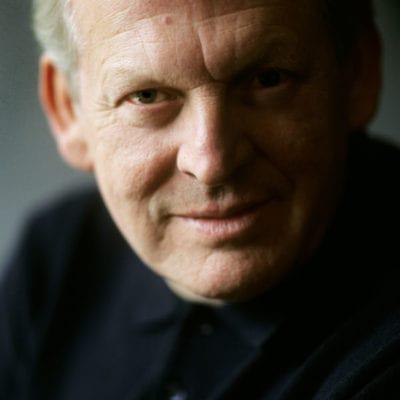
Thomas Hampson’s Spotify BioAmerican singer Thomas Hampson has been one of the world's top opera stars since the early 1990s, with more than 200 recordings to his credit. Hampson combines a mellifluous tone that has proven remarkably durable, a powerful top, and charisma that saw him named one of the world's 50 most beautiful people by the U.S. magazine People in 1993.
Hampson was born on June 28, 1955, in Elkhart, Indiana, but grew up in Spokane, Washington. He and his two older sisters sang in church, but at first, he was unsure of his career choice: he attended Eastern Washington University, graduating with a government major, but also earned a voice degree from Fort Wright College. Summer classes at the Music Academy of the West with baritone Martial Singher and a second-place finish in the Metropolitan Opera's Western Region auditions in 1980 tipped the scales. Hampson traveled to Europe for auditions, studying with contralto Elisabeth Schwarzkopf and joining the company of the Deutsche Oper am Rhein in… Düsseldorf in 1981. Engaged for bigger and better roles, he joined the Zurich Opera in 1984, gave a Wigmore Hall debut recital touted by Schwarzkopf, made his Metropolitan Opera debut as Count Almaviva in 1986, and by the late '80s was clearly one of opera's top rising stars. Performing in several famed readings of Mahler works conducted late in life by Leonard Bernstein cemented his reputation; a 1986 recording of Mahler's Symphony No. 6 in A minor with Bernstein and the Vienna Philharmonic was an early recording triumph.
Since then, there is hardly a major world opera house or concert venue in which he has not appeared. Hampson has had a flair for highly visible public performances, such as a 1991 Live from Lincoln Center television broadcast of Copland's Old American Songs with the New York Philharmonic and a 2009 recital at the Supreme Court of the United States, populated by opera-loving justices Ruth Bader Ginsburg and Antonin Scalia. Yet he has also championed new music, giving world premieres of operas by Richard Danielpour, Michael Daugherty, and others. He has a repertory of nearly 100 operas, spanning the genre's entire temporal range, taking up new darker-toned roles such as Amfortas in Wagner's Parsifal and Scarpia in Puccini's Tosca in middle age. He has continued to specialize in Mahler, whose large-scale but lyric music fits his voice beautifully.
Yet Hampson has also been clearly defined as an American singer, performing repertory from that country, teaching and serving on the board of the Manhattan School of Music, and winning induction into the elite American Academy of Arts and Sciences in 2010. That year, he participated in the first broadcast of classical music on a streaming mobile phone app, teaching a master class in Mahler song at the Manhattan School of Music. He has also been open to crossover projects, such as a CNN television musical exchange with South African vocal harmony group Ladysmith Black Mambazo in 2012. The pace of Hampson's recording career did not slow in the late 2010s and early 2020s; the year 2018 saw his debut on the Cedille label with a song recital, Songs from Chicago. In 2023, he released a pair of albums, appearing on a Capriccio recording of Kurt Weill's cantata Propheten and issuing an album of Liszt orchestral songs on Aparté. ~ James Manheim, Rovi
Viberate is a music analytics platform built for A&Rs, artist managers, labels, booking agents, marketers, and artists.
It helps music professionals track artist growth, analyze audience data, monitor playlist activity, compare artists, follow song performance, and identify opportunities across the music market.
Public artist pages provide a free preview of selected artist data. Paid plans provide access to deeper analytics, historical data, charts, comparisons, playlist tools, exports, alerts, reports, and additional professional features.
Yes. Public Viberate artist pages provide selected artist analytics and music data for free.
Viberate also offers a 7-day free trial of the full platform. A credit card is required to start the trial. The trial includes access to the complete product so users can test deeper artist analytics, historical views, playlist insights, comparisons, charts, exports, alerts, and reporting features before choosing a paid plan.
Viberate provides artist analytics across streaming, playlists, social media, video, radio airplay, songs, and audience markets.
Users can analyze Spotify performance, Spotify and Apple Music playlists, YouTube activity, TikTok and Instagram growth, radio spins, song performance, audience locations, demographics, rankings, and overall artist momentum.
Artist profiles also connect to music charts, similar artists, and comparison tools, helping users benchmark performance and evaluate artists in context.
Viberate updates key artist and track data daily.
For followed artists and tracks, selected data is refreshed multiple times per day. This helps teams monitor playlist changes, streaming movement, audience growth, releases, and campaign performance with more current data.
Update frequency can vary depending on the metric and data source.
Yes. Viberate lets users compare up to five artists side by side across streaming, social media, audience, and engagement metrics.
Users can compare fanbase growth, audience demographics, locations, Spotify performance, social metrics, and other artist data over selected time periods.
Artist comparison can be used for A&R scouting, benchmarking, booking decisions, campaign planning, and evaluating artists with similar audiences or market positions.