Thomas Chapin

Jazz
Free Jazz
Avant-garde Jazz
 Viberate Rank: 624667
 Viberate Rank: 624667
 Monthly ListenersFollowers
 Subscribers
 Followers
 Followers
 FansTop Spotify Songs
| Track | 7-Day Streams | |
|---|---|---|
1 | 43 | |
2 | 25 | |
3 | 23 | |
4 | 12 | |
5 | 11 |
Top YouTube VideosMonthly ListenersFeatured in Playlists| Playlist | Followers | |
|---|---|---|
1 |  The Sound of Free Jazz The Sounds of Spotify | 10.46K |
2 | Recommended performances from Ted Gioia's book 'The Jazz Standards' jhiggy58 | 8.57K |
3 | The Jazz Standards by Ted Gioia (Complete) Daniel O | 2.41K |
4 |  Serious Jazz Listener : modal free avant hard post bop malaparte | 2.06K |
Audience| City | Monthly Listeners | |
|---|---|---|
1 | | 11 |
2 |  | 10 |
3 |  | 8 |
4 |  | 7 |
5 |  | 6 |
See full performance history, audience data, playlist activity, rankings, comparisons, and more in Viberate music analytics. Start with a free trial, then continue with a paid plan.
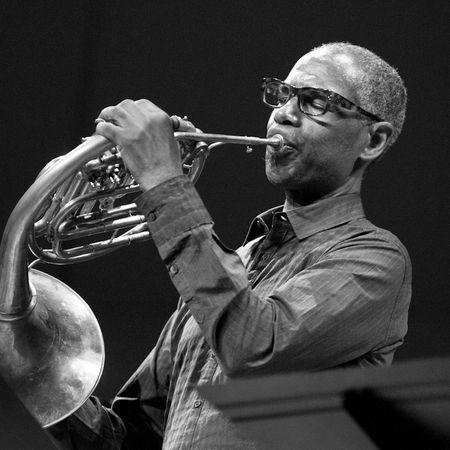
Thomas Chapin’s Spotify BioThe death of Thomas Chapin from leukemia at age 40 was one of those very cruel twists of fate that periodically mark the history of jazz. Unlike the many fine players to die of self-abuse before their time -- Charlie Parker and Bix Beiderbecke come to mind -- Chapin lived what was, by all accounts, an exemplary life. The fact that he was stricken in his late thirties by a disease that usually targets children is nearly as inexplicable as it is tragic. Fortunately, Chapin left behind an artistically significant and reasonably large body of work. Alto sax and flute were Chapin's principal instruments. He played alto with a huge, golden sound that sounded as if it had been burnished with fine-grained sandpaper. On flute, he got an edgy, near-classical sound that cut through his energetic rhythm sections like a knitting needle through pudding. Chapin's style on all his instruments was utterly personal. Although he drew from influences like Rahsaan Roland Kirk and Jackie McLean, Chapin's… voice was his own. His lines combined the linearity of classic bebop with the outward-bound, serial-like tendencies of much late-'90s free improvisation; his composition for small ensembles reflected the same traits.
Chapin was first attracted to jazz through the work of Earl Bostic and Rahsaan Roland Kirk. He attended college at Rutgers, the state university of New Jersey. There he studied with tenor saxophonist Paul Jeffrey and pianist Kenny Barron. After receiving his B.A. in music from Rutgers, he attended Hartt College of Music in Connecticut, where he studied with alto saxophonist Jackie McLean (whose bright tone and quicksilver articulation left a mark on Chapin's later work). In 1981, he went on the road with vibist Lionel Hampton's big band. He served Hampton for five years as lead alto and musical director. He later worked with drummer Chico Hamilton's quartet. In the late '80s, he began associations with fellow altoist Ned Rothenberg and the metal/free jazz outfit Machine Gun. He also began performing more often as a leader around this time. When the downtown New York club the Knitting Factory opened in 1986, Chapin was one of their first acts. When the club started their own record label, Knitting Factory Works, Chapin was the first artist signed. He formed a trio with bassist Mario Pavone and drummer Steve Johns in 1989. That outfit, with Michael Sarin replacing Johns, would form the core of his most adventurous projects until the end of his life. Chapin recorded a number of well-received albums, adding to his trio such guests as alto saxophonist John Zorn and violinist Mark Feldman. Chapin also recorded with a small string section and a brass section. These discs evidenced an even greater talent for arrangement and composition than had been previously apparent. In 1993, he led a date for Arabesque that showcased his more straight-ahead style; I've Got Your Number featured a rhythm section of the bop-oriented pianist Ronnie Matthews and bassist Ray Drummond, along with drummer Johns. The next year, he again recorded a fairly conventional jazz album for Arabesque, featuring trumpeter Tom Harrell and pianist Peter Madsen. Chapin also evinced an interest in world music. In person, he would frequently play various small hand percussion instruments and wood flutes, combining various traditions in an affectionate and non-exploitive way.
Chapin never deserted his avant-garde-ish roots, continuing to record excellent post-bop albums on the Knitting Factory house label. One of the last was Sky Piece, a trio with Sarin and Pavone, recorded in 1996 but finished and released just before his death in early 1998. Chapin was a player of great generosity and authentic spirituality. He played with rare humor, passion, and intelligence. At the end of his life, he was just beginning to receive attention outside the realm of experimental jazz. Indeed, had he lived, it's not inconceivable that Chapin's amalgam of freedom and discipline might have become a force in the jazz mainstream. ~ Chris Kelsey, Rovi
Viberate is a music analytics platform built for A&Rs, artist managers, labels, booking agents, marketers, and artists.
It helps music professionals track artist growth, analyze audience data, monitor playlist activity, compare artists, follow song performance, and identify opportunities across the music market.
Public artist pages provide a free preview of selected artist data. Paid plans provide access to deeper analytics, historical data, charts, comparisons, playlist tools, exports, alerts, reports, and additional professional features.
Yes. Public Viberate artist pages provide selected artist analytics and music data for free.
Viberate also offers a 7-day free trial of the full platform. A credit card is required to start the trial. The trial includes access to the complete product so users can test deeper artist analytics, historical views, playlist insights, comparisons, charts, exports, alerts, and reporting features before choosing a paid plan.
Viberate provides artist analytics across streaming, playlists, social media, video, radio airplay, songs, and audience markets.
Users can analyze Spotify performance, Spotify and Apple Music playlists, YouTube activity, TikTok and Instagram growth, radio spins, song performance, audience locations, demographics, rankings, and overall artist momentum.
Artist profiles also connect to music charts, similar artists, and comparison tools, helping users benchmark performance and evaluate artists in context.
Viberate updates key artist and track data daily.
For followed artists and tracks, selected data is refreshed multiple times per day. This helps teams monitor playlist changes, streaming movement, audience growth, releases, and campaign performance with more current data.
Update frequency can vary depending on the metric and data source.
Yes. Viberate lets users compare up to five artists side by side across streaming, social media, audience, and engagement metrics.
Users can compare fanbase growth, audience demographics, locations, Spotify performance, social metrics, and other artist data over selected time periods.
Artist comparison can be used for A&R scouting, benchmarking, booking decisions, campaign planning, and evaluating artists with similar audiences or market positions.