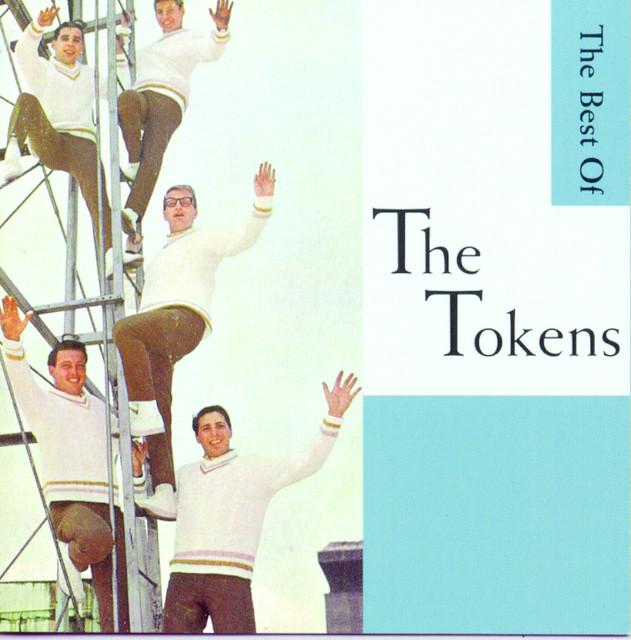
The Tokens

African
Other African Music
Soul
 Viberate Rank: 26872
 Viberate Rank: 26872
 Monthly ListenersFollowers
 Subscribers
 Followers
 Followers
 FansTop Spotify Songs
| Track | 7-Day Streams | |
|---|---|---|
1 | 420.84K | |
2 | 13.62K | |
3 | 12.98K | |
4 | 12.98K | |
5 | 12.98K |
Top YouTube VideosMonthly ListenersFeatured in Playlists| Playlist | Followers | |
|---|---|---|
1 |  All Out 60s Spotify | 3.19M |
2 |  Family Road Trip Spotify | 757.01K |
3 |  Top 100 Greatest Songs of All Time IndieMassive Hits | 390.52K |
4 |  1960s Hits 💥 Classics Filtr Sweden | 317.51K |
5 |  SUMMER HITS 2000-2022🍹 1159594076 | 277.19K |
Audience| City | Monthly Listeners | |
|---|---|---|
1 |  | 13.28K |
2 |  | 13.27K |
3 | | 12.68K |
4 | | 10.88K |
5 |  | 9.02K |
See full performance history, audience data, playlist activity, rankings, comparisons, and more in Viberate music analytics. Start with a free trial, then continue with a paid plan.
The Tokens’ Spotify BioA vocal group who first emerged in the doo wop era in the 1950s, the Tokens achieved their greatest fame when "The Lion Sleeps Tonight," their cover of a South African folk song, became a major hit in 1961. The group would never have another record go to number one, but their skillful vocal blend and savvy approach to material (adding folk and sophisticated pop accents to their doo wop harmonies) made them a popular live act into the 21st century, and 1994's Wimoweh: The Best of the Tokens documents their hit-making era. As the '60s wore on, psychedelic pop began informing their music, and they launched their own record label, producing their own releases as well as those for other artists, a period summed up on The Very Best of the Tokens 1964-1967.
The first edition of the Tokens was formed in Brooklyn, New York in 1955. The four original members were all students at Abraham Lincoln High School, and in a show of school spirit, they named the group the Linc-Tones. The group was led by …Neil Sedaka, who would go on to a distinguished career as a songwriter and performer; he was joined in the Linc-Tones by Hank Medress, Eddie Rabkin, and Cynthia Zolotin. By the time the group made their recording debut in 1956, Rabkin had left, and Jay Siegel took his place. They had also adopted the name the Tokens when "I Love My Baby" b/w "While I Dream" was issued by Melba Records that same year; Sedaka wrote both songs in collaboration with Howard Greenfield. In 1957, Zolotin dropped out of the Tokens, and Sedaka followed suit in 1958 to work as a solo act. Medress and Siegel recorded with the group Darrell & the Oxfords until 1960, when they reformed the Tokens and added two new members, tenor vocalist and instrumentalist Mitch Margo (only 13 years old at the time), and his brother Phil Margo on baritone vocals.
The new edition of the Tokens scored a deal to put out a single on Warwick Records, and "Tonight I Fell in Love" b/w "I'll Always Love You" was a hit, topping out at number 15 on the Top 100 singles chart. Following this success, the Tokens signed a new contract with RCA Victor Records, and A&R men Hugo Peretti and Luigi Creatore matched them with a song that had been a success for folk group the Weavers in 1952. "Wimoweh" was an adaptation of "Mbube," a South African folk song written by Solomon Linda, and with the addition of some new lyrics, it became "The Lion Sleeps Tonight." "The Lion Sleeps Tonight" was intended to be the B-side to "Tina," but when radio disc jockeys began spinning "Lion," it became an immediate hit, going to number one on the Top 100 and staying there for three weeks. The Tokens continued to put a vocal group sound to classic folk songs, but their cover of "La Bamba" only made it to number 85 on the singles charts, and the African-styled "B'wa Nina (Pretty Girl)" peaked at number 55. RCA had trouble scaring up another hit for the group, but the Tokens had taken on a profitable sideline: they had formed a production company called Bright Tunes, and they took their studio know-how and applied it to other artists. Hits from Bright Tunes included "He's So Fine" and "One Fine Day" by the Chiffons, "Denise" by Randy & the Rainbows, and "See You in September" and "Go Away, Little Girl" by the Happenings.
In 1964, the Tokens' deal with RCA Victor ran out, and they launched their own label, B.T. Puppy Records (the "B.T." standing for "Bright Tunes"). One of the first songs they released on their new imprint, "He's in Town," gave them their best chart placement since "The Lion Sleeps Tonight," nearly cracking the Top 40 at Number 43, and in 1966, they made it to number 30 with "I Hear the Trumpets Blow." After enjoying success as artists, producers, and label execs, the artist-friendly Warner Bros. struck a deal with the group, and they scored a hit with "Portrait of my Love," which peaked at number 36. In this period, the Tokens were changing with the times, recording songs with a faint counterculture slant and incorporating psychedelic influences into their productions (most notably 1967's "Green Plant," which was awash in backwards tape loops). Their next single for WB, "It's a Happening World," charted at number 69, and became the title track of their first album for the label. The label was sometimes perplexed with the Tokens' creative evolution, and after 1968's "Animal," a tune with a hard rock edge and copious sound effects, failed to chart, Warner Bros. opted not to release their next album. The Tokens cut ties with WB, and the album, titled Intercourse, was given a limited release on B.T. Puppy and became something of a cult favorite.
The Tokens took another stab at working with a major label when they signed with Buddah for the 1970 album Both Sides Now, but the album failed to chart, and their cover of the Beach Boys' "Don't Worry Baby," a single drawn from the LP, only made it to number 95. They returned to B.T. Puppy for the 1971 album December 5th. Meanwhile, under the Bright Tunes banner, Hank Medress had considerable success producing Dawn, a vocal group featuring Tony Orlando that scored hits with "Candida," "Knock Three Times," and "Tie a Yellow Ribbon 'Round the Old Oak Tree." Medress quit the Tokens to focus on producing, and Mitch Margo, Phil Margo, and Jay Siegel reworked the Tokens into Cross Country, a group with strong country and folk influences and harmonies that recalled Crosby, Stills & Nash. Cross Country released one self-titled album for Atco in 1973; their cover of "In the Midnight Hour" made it to number 30 on the singles chart.
The Cross Country project was short lived, and the Tokens existed primarily as a live act, though they performed the song "A Victim of Gravity" for the popular children's educational series Schoolhouse Rock. In 1988, an edition of the Tokens led by the Margo Brothers brought out the album Re-Doo-Wop, in which they re-recorded classic doo wop hits in medley form. Mitch Margo's version of the Tokens cut another album in 1993, Oldies Are Now, that included re-recorded classics and a handful of original tunes, including the hip-hop inspired "Doo Rapp." By the end of the '90s, there were two different groups known as the Tokens touring the oldies circuit, one led by Jay Siegel and the other by Mitch Margo and Phil Margo. In the 2000s, time began thinning out their ranks. Hank Medress died on June 18, 2007, after being diagnosed with lung cancer, Mitch Margo died of natural causes on November 24, 2017, and Phil Margo died following a stroke on November 13, 2021. Jay Siegel continued to perform with Jay Siegel's Tokens, and another version of the group, simply known as the Tokens, is led by Phil Margo's son Noah Margo, who had been performing alongside his father since 1993. ~ Mark Deming, Rovi
Viberate is a music analytics platform built for A&Rs, artist managers, labels, booking agents, marketers, and artists.
It helps music professionals track artist growth, analyze audience data, monitor playlist activity, compare artists, follow song performance, and identify opportunities across the music market.
Public artist pages provide a free preview of selected artist data. Paid plans provide access to deeper analytics, historical data, charts, comparisons, playlist tools, exports, alerts, reports, and additional professional features.
Yes. Public Viberate artist pages provide selected artist analytics and music data for free.
Viberate also offers a 7-day free trial of the full platform. A credit card is required to start the trial. The trial includes access to the complete product so users can test deeper artist analytics, historical views, playlist insights, comparisons, charts, exports, alerts, and reporting features before choosing a paid plan.
Viberate provides artist analytics across streaming, playlists, social media, video, radio airplay, songs, and audience markets.
Users can analyze Spotify performance, Spotify and Apple Music playlists, YouTube activity, TikTok and Instagram growth, radio spins, song performance, audience locations, demographics, rankings, and overall artist momentum.
Artist profiles also connect to music charts, similar artists, and comparison tools, helping users benchmark performance and evaluate artists in context.
Viberate updates key artist and track data daily.
For followed artists and tracks, selected data is refreshed multiple times per day. This helps teams monitor playlist changes, streaming movement, audience growth, releases, and campaign performance with more current data.
Update frequency can vary depending on the metric and data source.
Yes. Viberate lets users compare up to five artists side by side across streaming, social media, audience, and engagement metrics.
Users can compare fanbase growth, audience demographics, locations, Spotify performance, social metrics, and other artist data over selected time periods.
Artist comparison can be used for A&R scouting, benchmarking, booking decisions, campaign planning, and evaluating artists with similar audiences or market positions.