The Sonics

Rock
Garage Rock
Blues Rock
 Viberate Rank: 53744
 Viberate Rank: 53744
 Monthly ListenersFollowers
 Subscribers
 Followers
 Followers
 FansTop Spotify Songs
| Track | 7-Day Streams | |
|---|---|---|
1 | 66.36K | |
2 | 12.85K | |
3 | 12.35K | |
4 | 11.99K | |
5 | 9.06K |
Top YouTube VideosMonthly ListenersFeatured in Playlists| Playlist | Followers | |
|---|---|---|
1 |  Classic Oldies Spotify | 1.46M |
2 |  60s Rock Anthems Spotify | 1.02M |
3 |  Punk Essentials Spotify | 913.28K |
4 |  Alternative 60s Spotify | 360.55K |
5 |  60s Rock Drive Spotify | 325.61K |
Audience| City | Monthly Listeners | |
|---|---|---|
1 |  | 4.40K |
2 | | 3.90K |
3 |  | 3.48K |
4 | | 3.44K |
5 | | 3.07K |
See full performance history, audience data, playlist activity, rankings, comparisons, and more in Viberate music analytics. Start with a free trial, then continue with a paid plan.
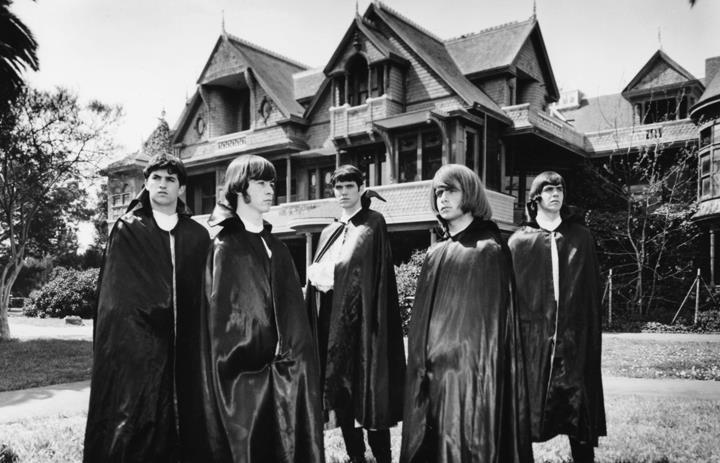
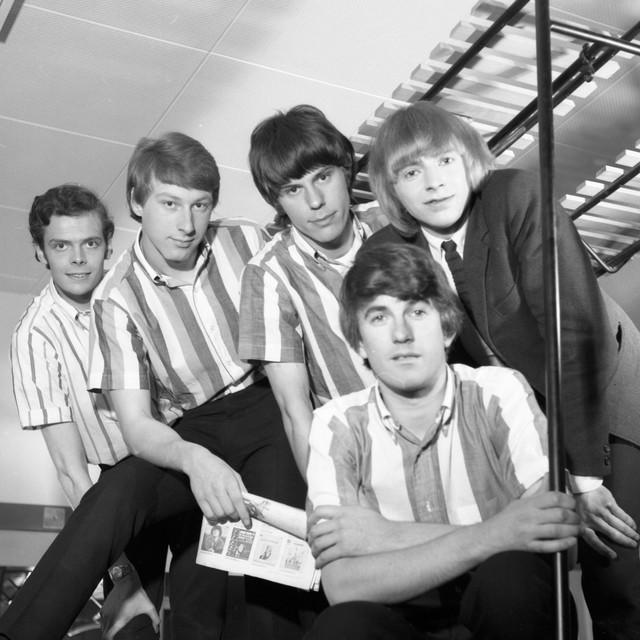
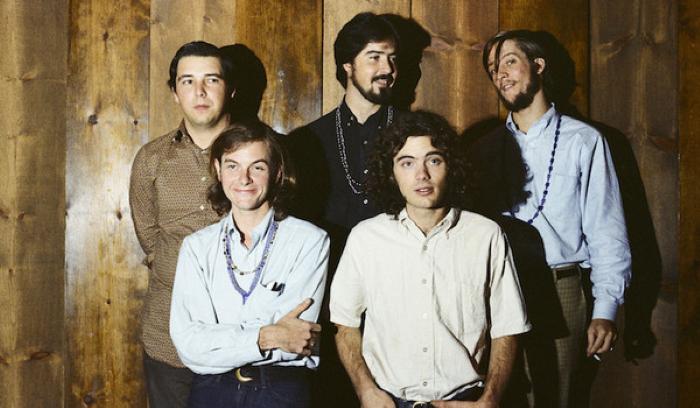
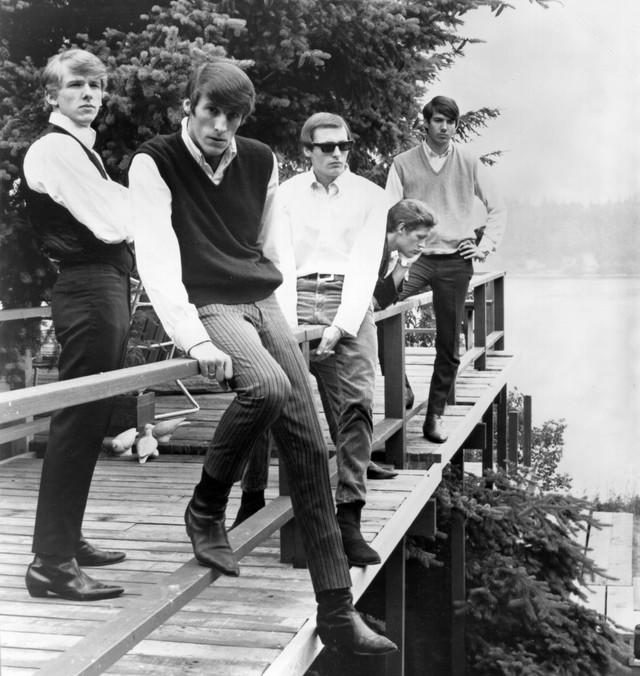
The Sonics’ Spotify BioOf all the garage bands that made a glorious racket in the 1960s, few if any were louder, wilder, or more raw than the Sonics, a Tacoma, Washington quintet whose over the top style, complete with roaring guitars, pounding drums, and the fevered howls of lead singer Gerry Roslie, anticipated the mania of punk and pushed rock & roll deep into the red zone during their 1963-1966 heyday. The Sonics were stars in Washington, but it took a while for the rest of the world to catch on, and in time they would become one of the most fabled bands on the Pacific Northwest rock scene.
The Sonics were founded in 1960 by guitarist Larry Parypa, who was introduced to the guitar by his uncle and encouraged by his parents, who both had a keen interest in music. The Sonics began as an instrumental combo that featured Larry's older brother Andy Parypa on guitar and, for a brief time, another Parypa sibling, Jerry, on sax, while their mom occasionally played bass at rehearsals. The Sonics initially… specialized in tough R&B material and guitar-based instrumentals in the mold of Link Wray and Duane Eddy. Before long, the Sonics became a fixture on the Tacoma teen club scene, a lively circuit that included the Wailers (not Bob Marley's band) and Paul Revere & the Raiders. The Sonics' early lineup shifted often, but the group's membership became stable in late 1963 with the arrival of three members of the Searchers (not to be confused with the British pop group), a band fronted by future Moby Grape guitarist Jerry Miller. Drummer Bob Bennett, sax player Rob Lind, and keyboard player Gerry Roslie jumped ship from the Searchers to become permanent members of the Sonics, with Larry remaining on lead guitar and Andy shifting to bass. Although the band had been solid before, the new lineup evolved into a powerhouse; Bennett wasn't afraid to hit the drums hard, Larry's guitar work had become sharper and more ferocious with time, and when Roslie was encouraged to sing, they discovered he could wail like a leather-lunged Little Richard, and the Sonics quickly became the most talked-about band in the Northwest.
In 1964, Buck Ormsby, who played bass with Northwest heroes the Wailers, was impressed with the Sonics' new lineup and became their manager, as well as signing them to Etiquette Records, a local label he helped run. For their first single, the Sonics took one of their few original tunes and changed it from a number about a proposed dance craze into a cautionary tale about a treacherous female; the results, "The Witch," had a dark, sinister undercurrent and between Parypa's guitar, Bennett's drumming, and Roslie's vocals, it was louder and crazier-sounding than anything else a Northwest band had committed to tape. Backed with a manic cover of Little Richard's "Keep A'Knockin'," the single was too much for many local radio stations, but eventually it broke through in enough smaller markets that the record became a major hit in the Northwest; enough so that rather than continue to pay publishing royalties to Little Richard for the B-side, the band recorded another original, "Psycho," that soon turned the 45 into a two-sided hit. In 1965, Ormsby rushed the Sonics into the studio to cut a full-length album, and Here Are the Sonics!!! was a garage rock touchstone, a loud and relentless slice of primitive thunder that caught the band at its hot-wired peak, thanks in part to the simple, elemental production by recording engineer Kearney Barton.
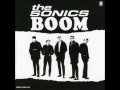
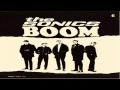
The success of "The Witch" and "Psycho" made the Sonics a major draw in the Northwest, and they were playing some of the biggest and most prestigious venues available to local rock bands of the day (including the Seattle Coliseum), as well as sharing stages with the Beach Boys and the Shangri-Las. In 1966, the Sonics cut a second LP for Etiquette with Barton, Boom, which featured several more local hits, including "Cinderella," "Don't Be Afraid of the Dark," and "Shot Down." However, it became evident that the Sonics had gone as far as a local band could go in the Northwest, while they enjoyed only scattered airplay in the rest of the United States. The Sonics signed a deal with Jerden Records, another Northwest label that had a distribution deal with ABC-Paramount Records, giving the band a better shot at national success. Unfortunately, Jerden head Jerry Dennon sent the Sonics to Los Angeles to record their third album, 1967's Introducing the Sonics, and while producer and engineer Larry Levine had an impressive résumé (including recording many of Phil Spector's classic singles), he couldn't deliver the hard-edged sound Barton had brought to their earlier work, and Introducing the Sonics sounded anemic compared to their Etiquette recordings, despite strong performances by the group. Later in 1967, the Sonics recorded a cover of Frank Zappa's "Any Way the Wind Blows" for Piccadilly Records, a Jerden offshoot, and while it was promptly reissued by Uni Records, it failed to click. Soon afterward, Bennett and Roslie left the band, and while Lind and the Parypa brothers soldiered on for a while, it wasn't long before the Sonics were history.
The Sonics' reputation in the Northwest led to a one-off reunion show in Seattle in 1972 (a handful of tunes from the show appeared on an EP from Etiquette, Live Fanz Only), and in 1980 Roslie began working with a garage rock band called the Invaders. They recorded an album dominated by old Sonics tunes and mid-'60s covers; titled Sinderella, it was released under the name the Sonics, though beyond Roslie's vocals, it didn't capture the original band's raw magic. By this time, the Sonics had gained a powerful reputation among fans of vintage garage rock, and later in the decade many bands on the burgeoning grunge scene, including Nirvana and Mudhoney, would cite the Sonics as an influence, as would such nuevo-garage acts as the Hives and the White Stripes.
In 2007, the Sonics were persuaded to do a reunion show in New York City as part of the annual Cavestomp garage rock festival; while Andy Parypa and Bob Bennett opted not to participate, citing an unwillingness to travel, Gerry Roslie, Larry Parypa, and Rob Lind were on hand, with Ricky Lynn Johnson, formerly of the Wailers, sitting in on drums and Don Wilhelm of the Daily Flash on bass. The show was a success, and the Sonics began regularly playing club and festival dates in Europe and the United Kingdom, as well as a few dates at home, with Bennett joining the new lineup of the band on-stage for a 2008 show in Seattle. In 2009, Don Wilhelm parted ways with the Sonics, and Freddie Dennis became their new bassist.
In 2010, the Sonics went into the studio with producer Jack Endino to record their first new material since the '60s; the EP, entitled 8, also saw Andy Parypa rejoining his brother Larry, Roslie, Lind, and Johnson to record four new songs, with four live tracks rounding out the release. In 2014, the Sonics -- featuring new drummer Dusty Watson, who had worked with Dick Dale, the Surfaris, Davie Allan, the Boss Martians, and the Supersuckers, as well as Gerry Roslie, Rob Lind, Larry Parypa, and Freddie Dennis -- began work on a full-length album, with producer and engineer Jim Diamond (the Dirtbombs, the White Stripes, the Fleshtones, the Pack A.D.) at the controls. The LP, This Is the Sonics, was released on the group's own Revox label in March 2015, followed by an American concert tour. ~ Mark Deming, Rovi
Viberate is a music analytics platform built for A&Rs, artist managers, labels, booking agents, marketers, and artists.
It helps music professionals track artist growth, analyze audience data, monitor playlist activity, compare artists, follow song performance, and identify opportunities across the music market.
Public artist pages provide a free preview of selected artist data. Paid plans provide access to deeper analytics, historical data, charts, comparisons, playlist tools, exports, alerts, reports, and additional professional features.
Yes. Public Viberate artist pages provide selected artist analytics and music data for free.
Viberate also offers a 7-day free trial of the full platform. A credit card is required to start the trial. The trial includes access to the complete product so users can test deeper artist analytics, historical views, playlist insights, comparisons, charts, exports, alerts, and reporting features before choosing a paid plan.
Viberate provides artist analytics across streaming, playlists, social media, video, radio airplay, songs, and audience markets.
Users can analyze Spotify performance, Spotify and Apple Music playlists, YouTube activity, TikTok and Instagram growth, radio spins, song performance, audience locations, demographics, rankings, and overall artist momentum.
Artist profiles also connect to music charts, similar artists, and comparison tools, helping users benchmark performance and evaluate artists in context.
Viberate updates key artist and track data daily.
For followed artists and tracks, selected data is refreshed multiple times per day. This helps teams monitor playlist changes, streaming movement, audience growth, releases, and campaign performance with more current data.
Update frequency can vary depending on the metric and data source.
Yes. Viberate lets users compare up to five artists side by side across streaming, social media, audience, and engagement metrics.
Users can compare fanbase growth, audience demographics, locations, Spotify performance, social metrics, and other artist data over selected time periods.
Artist comparison can be used for A&R scouting, benchmarking, booking decisions, campaign planning, and evaluating artists with similar audiences or market positions.