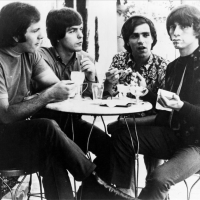
The Rascals

Rock
Pop Rock
Rockabilly
Soul
 Viberate Rank: 74116
 Viberate Rank: 74116
 Monthly ListenersFollowers
 Subscribers
 Followers
 Followers
 FansTop Spotify Songs
| Track | 7-Day Streams | |
|---|---|---|
1 | 94.91K | |
2 | 15.95K | |
3 | 10.09K | |
4 | 5.26K | |
5 | 5.06K |
Top YouTube Videos| Video | 7-Day Views | |
|---|---|---|
1 | 20.39K | |
2 | 14.12K | |
3 | 4.64K | |
4 | 4.26K | |
5 | 3.66K |
Monthly ListenersFeatured in Playlists| Playlist | Followers | |
|---|---|---|
1 | Classic Rock Greatest Hits Scott Pruden | 341.38K |
2 |  The Umbrella Academy: Complete Playlist Topsify Movies | 289.88K |
3 |  Chessy’s Denim Shirt in The Parent Trap emfelhern | 167.10K |
4 | Trevor Johnston | 110.25K |
5 |  The Lost Boys Soundtrack Sean Martin | 92.14K |
Audience| City | Monthly Listeners | |
|---|---|---|
1 | | 7.39K |
2 | | 7.24K |
3 | | 5.91K |
4 |  | 5.43K |
5 | | 4.97K |
See full performance history, audience data, playlist activity, rankings, comparisons, and more in Viberate music analytics. Start with a free trial, then continue with a paid plan.
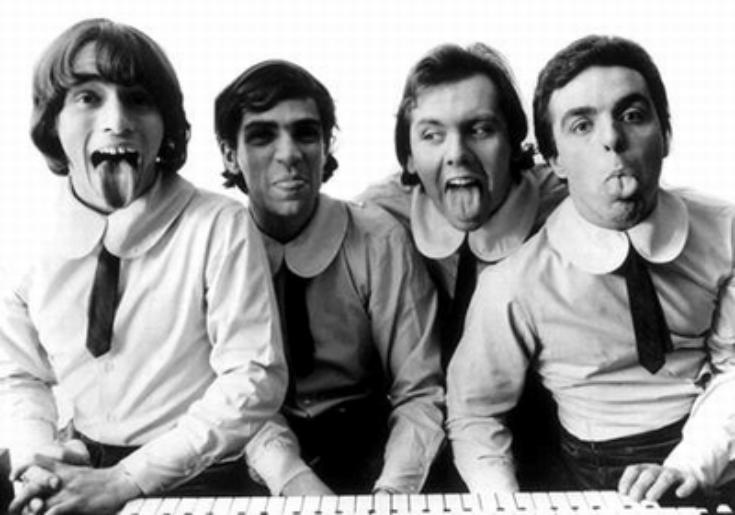
The Rascals’ Spotify BioThe Rascals were widely regarded as the finest blue-eyed soul group of the 1960s, a statement that's accurate without fully defining their importance or the breadth of their abilities. At their best, the Rascals fused the soulful passion of R&B, the tough, swaggering sound of garage rock, the chops of a top-notch show band, and a sense of musical adventure that borrowed from pop, jazz, funk, gospel, and world music. Beginning as the Young Rascals, they were a band of brash upstarts from the East Coast who on their debut album merged rock and soul with a skill and feel that was revolutionary, and with 1967's Groovin', they expanded their range to embrace psychedelia and arty pop. As the '60s gave way to the '70s and keyboard player Felix Cavaliere's leadership of the group became stronger, they advanced from ambitious, genre-spanning sets like 1969's Freedom Suite to the jazzy explorations of 1971's Peaceful World and the funk accents of 1972's The Island of Real. Throughout it all,… their music was street smart, impassioned, and brilliantly crafted, the work of artists who desire to entertain was as strong as their creative wanderlust, and it was documented in an epic scale box set, 2024's It's Wonderful: The Complete Atlantic Studio Recordings.
Keyboard player and singer Felix Cavaliere had been trained in classical piano when he developed a passion for rock and R&B sounds, joining a doo wop group while he was a student at Syracuse University. In 1964, Cavaliere landed a gig playing with Joey Dee and the Starliters, who were still reaping the rewards of the 1961 hit "Peppermint Twist." One of Cavaliere's bandmates in the Starliters was David Brigati, who introduced Felix to his younger brother, an energetic young singer named Eddie Brigati. In 1965, Canadian-born guitarist Gene Cornish joined the Starliters, and soon he and Cavaliere were comparing notes about what sort of music they wanted to play. Before long, Cavaliere decided to strike out on his own and form a new group; he persuaded Cornish to join him, and recruited a longtime friend, jazz musician Dino Danelli, to play drums. With the addition of Eddie Brigati on vocals, the new group's lineup was in place; they initially called themselves Them, but when they discovered there was already an act using the name (the Irish blues and rock band led by Van Morrison), they adopted a new moniker, the Rascals. The band began rehearsing intensively, while playing engagements at clubs like the Choo Choo in Garfield, New York and the Barge in Westhampton, New York. They honed their sound, rooted in R&B and East Coast rock, and they landed a gig backing TV star Soupy Sales at live engagements, mostly on college campuses.
The Rascals were brought to the attention of Sid Bernstein, a manager and promoter best remembered for bringing the Beatles to New York's Shea Stadium. Bernstein gave the band an important plug when, during the Fab Four's Shea Stadium concert, he put the words "The Rascals are Coming!" on the ballpark's scoreboard during the show. The stunt created enough buzz that the Rascals were signed to Atlantic Records, making them one of the first white bands to appear on the legendary R&B label. After signing with Atlantic, a group called the Harmonica Rascals demanded the new group change their name to avoid any confusion, and Bernstein changed their billing to the Young Rascals, over the objections of the group. Their first single, "I Ain't Gonna Eat Out My Heart Anymore," was issued in November 1965 and was a modest success, peaking at Number 52 on the pop chart, but it was their second, an exciting reworking of "Good Lovin'" arriving in February 1966, that established them as stars, going all the way to number one. Their debut album, 1966's The Young Rascals, was dominated by covers, but the second, 1967's Collections, made room for more group originals, and one of them, "(I've Been) Lonely Too Long," was another chart hit, topping out at number 20. Six months later, the third Young Rascals album was released, and Groovin', which found the group exploring more mature pop and psychedelic sounds, produced three more singles, the title cut (another number one hit), the accordion-accented "How Can I Be Sure" (number four), and "A Girl Like You" (number ten). It also saw the Young Rascals adding new colors to their arrangements with guest musicians including bassist Chuck Rainey and flutist Hubert Laws.
As the group's music became more mature and exploratory, the name the Young Rascals became a thorn in their side, and in April 1968, they issued the single "A Beautiful Morning," an artfully arranged exercise in soulful pop that was their first record credited to the Rascals, which would be their moniker from then on. It was soon followed by Once Upon a Dream; produced by Arif Mardin, it was conceived and arranged as an album rather than a set of singles, with the Beatles' Sgt. Pepper's Lonely Hearts Club Band as an acknowledged influence. It was the group's most sophisticated and musically diverse set to date, and was a commercial and critical success. Following the success of Once Upon a Dream, the Rascals pushed the envelope even further with 1969's Freedom Suite, their first double album, with one LP of pop- and rock-oriented songs, and a second of instrumental pieces, including a 13-minute percussion piece ("Boom") and a 15-minute proto-funk jam ("Cute"). It also included two pieces of political commentary, "People Got To Be Free" (inspired by the assassination of Dr. Martin Luther King, Jr.) and "Ray of Hope" (written in the wake of the murder of Robert Kennedy). While "People Got to Be Free" was another number one single, Freedom Suite didn't match the commercial and critical acceptance of their previous albums, and it found Cavaliere dominating the songwriting, with Brigati, one the group's primary lyricist, contributing less and less. See, which came out in December 1969, was a more straightforward song-oriented effort than Freedom Suite, but it only rose to number 45 on the Top 200 album charts, their poorest showing to date, and Brigati's songwriting contributions amounted to a co-credit with Cavaliere on "I'm Blue." Brigati would leave the Rascals during the recording of 1971's Search and Nearness, with his vocals appearing on only three cuts, and the music reflected Cavaliere's increasing interest in soulful jazz-influenced sounds. The album lasted only one week on the Top 200 chart, at number 198, and by the time it came out, Gene Cornish had joined Eddie Brigati in quitting the Rascals. It was their final album for Atlantic Records.
The Rascals landed a new record deal with Columbia, and their first LP for their new label, Peaceful World, appeared in stores just two months after Search and Nearness. A two-LP set, it was a polished collection of soul, jazz, and funk moods; all but one of the songs were written by Cavaliere, and he and Dino Danelli recorded the material with a small army of session musicians along with guitarist Howard "Buzz" Feiten and vocalist Annie Sutton. While reviews were mixed, it was a bigger seller than Search and Nearness, rising to number 122 on the Top 200, and it was followed in 1972 by The Island of Real, once again dominated by Cavaliere's jazz influences. After a tour in support of the album, the Rascals quietly broke up.
Cavaliere went on to a solo career; he also produced material for other artists and toured as part of Ringo Starr's All Starr Band. Eddie Brigati and his brother David cut an album for Elektra under the group name Brigati, Lost in the Wilderness. Gene Cornish would work as a producer and studio guitarist, and played in two bands with Dino Danelli, Bulldog, and Fotomaker. And Danelli would pursue a career as a visual artist, as well as recording and touring with Little Steven & the Disciples of Soul before his death on December 15, 2022. In 1988, Cavaliere, Cornish, and Danelli reunited as the Rascals for a concert celebrating the 40th anniversary of Atlantic Records, followed by a short concert tour. In the '90s, Cornish and Danelli were playing dates as part of a group they called the New Rascals, while their former bandleader was playing shows with a group he called Felix Cavaliere's Rascals. In 1997, the Rascals were inducted into the Rock & Roll Hall of Fame, and in 2012, longtime fan Steven Van Zandt coordinated an elaborate multi-media show, The Rascals: Once Upon a Dream, that featured performances from the four original members of the band, interviews, archival film clips, historical re-enactments, and a light show from Marc Brickman to tell the band's story. The show had a short run on Broadway before a touring production went on the road from May to November 2013. An album was released in 2013 that captured the show's music on two compact discs, with a bonus DVD documenting the visuals. In 2024, the British Now Sounds label released an ambitious box set, It's Wonderful: The Complete Atlantic Studio Recordings. The seven-disc collection brought together all seven albums the Rascals recorded during their tenure with Atlantic, with the first four presented in their stereo and mono mixes; the set also included non-LP single sides, rare alternate versions, and a handful of unreleased studio outtakes.~ Mark Deming
Viberate is a music analytics platform built for A&Rs, artist managers, labels, booking agents, marketers, and artists.
It helps music professionals track artist growth, analyze audience data, monitor playlist activity, compare artists, follow song performance, and identify opportunities across the music market.
Public artist pages provide a free preview of selected artist data. Paid plans provide access to deeper analytics, historical data, charts, comparisons, playlist tools, exports, alerts, reports, and additional professional features.
Yes. Public Viberate artist pages provide selected artist analytics and music data for free.
Viberate also offers a 7-day free trial of the full platform. A credit card is required to start the trial. The trial includes access to the complete product so users can test deeper artist analytics, historical views, playlist insights, comparisons, charts, exports, alerts, and reporting features before choosing a paid plan.
Viberate provides artist analytics across streaming, playlists, social media, video, radio airplay, songs, and audience markets.
Users can analyze Spotify performance, Spotify and Apple Music playlists, YouTube activity, TikTok and Instagram growth, radio spins, song performance, audience locations, demographics, rankings, and overall artist momentum.
Artist profiles also connect to music charts, similar artists, and comparison tools, helping users benchmark performance and evaluate artists in context.
Viberate updates key artist and track data daily.
For followed artists and tracks, selected data is refreshed multiple times per day. This helps teams monitor playlist changes, streaming movement, audience growth, releases, and campaign performance with more current data.
Update frequency can vary depending on the metric and data source.
Yes. Viberate lets users compare up to five artists side by side across streaming, social media, audience, and engagement metrics.
Users can compare fanbase growth, audience demographics, locations, Spotify performance, social metrics, and other artist data over selected time periods.
Artist comparison can be used for A&R scouting, benchmarking, booking decisions, campaign planning, and evaluating artists with similar audiences or market positions.