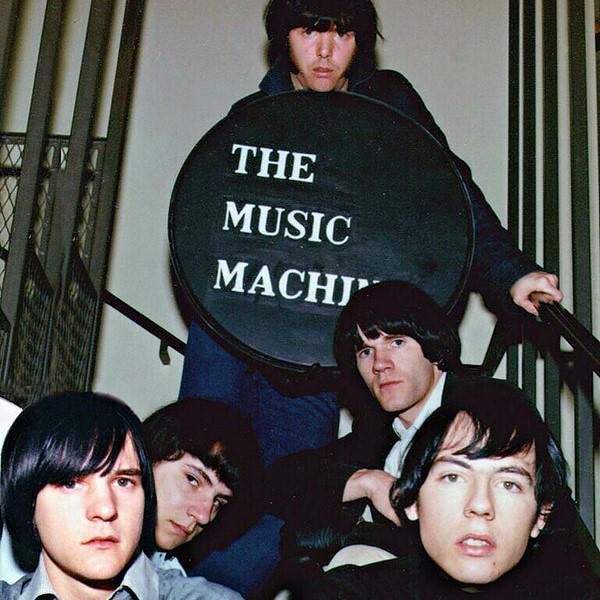
The Music Machine

Rock
Psychedelic Rock
Garage Rock
 Viberate Rank: 186200
 Viberate Rank: 186200
 Monthly ListenersFollowers
 Subscribers
 Followers
 Followers
 FansTop Spotify Songs
| Track | 7-Day Streams | |
|---|---|---|
1 | 2.44K | |
2 | 1.81K | |
3 | 1.80K | |
4 | 1.13K | |
5 | 872 |
Top YouTube VideosMonthly ListenersFeatured in Playlists| Playlist | Followers | |
|---|---|---|
1 |  Once Upon A Time In...Hollywood Radio Josh Gardner | 100.16K |
2 | 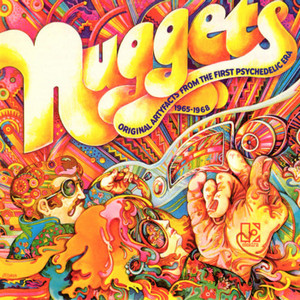 Nuggets I & II: Original Artyfacts Hans Selander | 37.11K |
3 | Unofficial Reverb Radio Jeff Ferruzzo | 21.82K |
4 |  Obscure 60s/70s Psychedelic Rock Jason LeValley | 15.24K |
5 | Garage Rock & 60's Punk Robopjokk | 14.46K |
Audience| City | Monthly Listeners | |
|---|---|---|
1 | | 509 |
2 |  | 325 |
3 | | 312 |
4 | | 285 |
5 | | 219 |
See full performance history, audience data, playlist activity, rankings, comparisons, and more in Viberate music analytics. Start with a free trial, then continue with a paid plan.
The Music Machine’s Spotify BioMost famous for "Talk Talk," a Top 20 single from 1966 that was one of the most manic '60s garage-punk hits, the Music Machine had much more depth and songwriting talent than the typical one-hit wonders of the day. Lead singer and songwriter Sean Bonniwell's strangled lyrics and dark, verbose vision paced the group's wiry psychedelic guitar lines and ominous, minor-key Farfisa organ. The San Jose, California-born Bonniwell had been inspired to form his first group in high school in the late '50s after hearing "Only You" by the Platters. He later moved into folk music, and was a guitarist with such early-'60s folk outfits as the Noblemen and the Wayfarers (who'd enjoyed a recording contract with RCA Victor). But by the mid-'60s, with the folk revival boom over (along with the Wayfarers Trio, the British Invasion cresting, and folk-rock on the edge of exploding around him) Bonniwell formed the Ragamuffins in tandem with bassist Keith Olsen and drummer Ron Edgar (late of the folk-pop… combo the Goldebriars). The trio later expanded to a quintet with organist/pianist Doug Rhodes, and second guitarist Mark Landon joining. By 1966, they'd taken on the somewhat more extreme versions of the requisite Beatles haircut, topping an image dominated by black outfits (and Bonniwell's trademarked single black leather glove), and renamed themselves far more distinctively as the Music Machine. Bonniwell was the dominant personality in the group, as a songwriter of exceptional ability and also a serious taskmaster; he'd been very serious about his playing, and also about the recording process, coming off of three LPs with the Wayfarers, and in contrast to most of their rivals of the period, pushed the group into many hours of rehearsals. Even more important, he got them to perfect their sound without getting stale in the process, and the playing by all of the members was first-rate; Rhodes' Farfisa organ and Olsen's attack on the bass were perfectly matched to Bonniwell's intense, brooding vocals. The result was a sound -- as demonstrated on their best singles and the best moments of their one and only LP -- that combined an edgy garage punk attack with playing that was studio- and radio-friendly. They were signed up by producer Brian Ross, who got their debut single, "Talk Talk," released on Original Sound. That record, a piercing one minute-and-fifty-six-second garage-punk explosion released at the end of 1966, made it to number 15 on the charts and propelled the Music Machine to national prominence (including upward of a dozen appearances on American Bandstand, according to Bonniwell). They were never able to follow it up adequately. Only one album was released with the original lineup, and the group's ferocious energy was diluted on subsequent recordings. Despite chalking up only one more minor hit single ("The People in Me"), the Music Machine recorded quite a few excellent, imaginatively produced singles and album tracks that found them exploring the darker side of psychedelia with compelling intensity and imagination. Poor management and some incredibly bad decision-making led to their dissolution at the time, but Bonniwell is still something of a musical legend in the 21st century, and "Talk Talk" is regarded as a garage punk classic. Keith Olsen subsequently moved into production, and worked in that capacity with Emitt Rhodes and others before striking a multi-platinum vein with the mid-'70s incarnation (or reincarnation) of Fleetwood Mac on their self-titled 1975 album. Mark Landon seems to have vanished from music after working with Bonniwell and company, but Doug Rhodes and Ron Edgar both moved in and out of the orbit of renowned producer Curt Boettcher (also an ex-member of the Goldebriars) through groups such as Sagittarius and the Millennium, and Edgar also played drums with Bread on their self-titled album. ~ Richie Unterberger & Bruce Eder, Rovi
Viberate is a music analytics platform built for A&Rs, artist managers, labels, booking agents, marketers, and artists.
It helps music professionals track artist growth, analyze audience data, monitor playlist activity, compare artists, follow song performance, and identify opportunities across the music market.
Public artist pages provide a free preview of selected artist data. Paid plans provide access to deeper analytics, historical data, charts, comparisons, playlist tools, exports, alerts, reports, and additional professional features.
Yes. Public Viberate artist pages provide selected artist analytics and music data for free.
Viberate also offers a 7-day free trial of the full platform. A credit card is required to start the trial. The trial includes access to the complete product so users can test deeper artist analytics, historical views, playlist insights, comparisons, charts, exports, alerts, and reporting features before choosing a paid plan.
Viberate provides artist analytics across streaming, playlists, social media, video, radio airplay, songs, and audience markets.
Users can analyze Spotify performance, Spotify and Apple Music playlists, YouTube activity, TikTok and Instagram growth, radio spins, song performance, audience locations, demographics, rankings, and overall artist momentum.
Artist profiles also connect to music charts, similar artists, and comparison tools, helping users benchmark performance and evaluate artists in context.
Viberate updates key artist and track data daily.
For followed artists and tracks, selected data is refreshed multiple times per day. This helps teams monitor playlist changes, streaming movement, audience growth, releases, and campaign performance with more current data.
Update frequency can vary depending on the metric and data source.
Yes. Viberate lets users compare up to five artists side by side across streaming, social media, audience, and engagement metrics.
Users can compare fanbase growth, audience demographics, locations, Spotify performance, social metrics, and other artist data over selected time periods.
Artist comparison can be used for A&R scouting, benchmarking, booking decisions, campaign planning, and evaluating artists with similar audiences or market positions.