The Jaynetts

Pop
Mainstream Pop
Soul
 Viberate Rank: 359865
 Viberate Rank: 359865
 Monthly ListenersFollowers
 Subscribers
 Followers
 Followers
 FansTop Spotify Songs
| Track | 7-Day Streams | |
|---|---|---|
1 | 2.46K | |
2 | 2.46K | |
3 | 632 | |
4 | 65 | |
5 | 38 |
Top YouTube VideosMonthly ListenersFeatured in Playlists| Playlist | Followers | |
|---|---|---|
1 |  The Sopranos Soundtrack - Full Playlist cullen_strang | 51.42K |
2 |  The Sopranos | Official HBO | 48.06K |
3 | The Sopranos Soundtrack matthewditta1999 | 37.28K |
4 |  1001 Songs You Must Hear Before You Die (2017) Marie Delcos | 12.81K |
5 |  The NTS Breakfast Show w/ Flo - NTS NTS ᵇᵒᵗ (killed 2026/03) | 12.70K |
Audience| City | Monthly Listeners | |
|---|---|---|
1 | | 146 |
2 | | 130 |
3 |  | 120 |
4 | | 93 |
5 | | 92 |
See full performance history, audience data, playlist activity, rankings, comparisons, and more in Viberate music analytics. Start with a free trial, then continue with a paid plan.
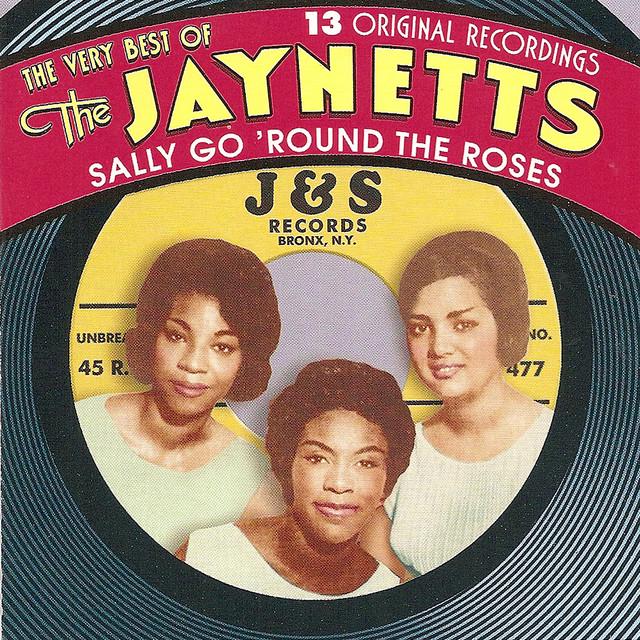
The Jaynetts’ Spotify BioThe Jaynetts, from The Bronx, NY, recorded one of the more discussed recordings of all time, the mystical-sounding "Sally Go 'Round the Roses," which shot to number two on the pop charts in 1963. Though publicity photos showed three women as the Jaynetts, five were actually in the studio on the "Sally" recording session: Johnnie Louise Richardson (formerly of Johnnie & Joe), Ethel Davis, Mary Sue Wells, Yvonne Bushnell, and Ada Ray. Zell Sanders co-wrote the song with Lona Stevens, who later married producer Abner Spector. Spector, oddly enough, was a Chicago producer who later created blues recordings by the likes of Willie Dixon, Muddy Waters, Compton & Batteau, and blue-eyed soul singer Wayne Cochran. Around the time of "Sally Go 'Round the Roses," he had worked with the Corsairs and the Tune Weavers.
Spector had worked with Zell Sanders before on a record by the Hearts entitled "Dear Abby," which received some airplay but never charted. Sanders had previously recorded the Hearts,… beginning in 1953 when the group members were Hazel Crutchfield, Louise Harris, Joyce Weiss, and at various times, Betty Harris and Baby Washington. The Hearts on "Dear Abby," however, were the same young women who sang on "Sally Go Round the Roses." Obviously, some previous members got upset at Zell using their name so Tuff labeled subsequent recordings the Jaynetts.
Johnnie Louise Richardson remembered Abner Spector (he died of a stroke on October 25, 1988) as an electronics nut. Spector sequestered the girls in the studio on a Friday and didn't allow them to leave until the following week when the recording was completed. Anybody who came in the studio during the enduring week of recording got on the track. Buddy Miles and Artie Butler are remembered as playing on the session. It's rumored Spector had about 20 voices on "Sally," and that the session cost more than $60,000 (unlikely since that was an unheard-of amount of money to spend on a single in 1963).
The song itself has a hypnotic feel, a crazy organ part, nursery rhyme-sounding lyrics, a wall of voices, and an undeniable funky beat. All kinds of theories have been tossed around about the song's meaning. Some say it's a religious experience, about a mental breakdown, about a closeted lesbian, etc.... all garbage. The song is simply a skip-rope rhyme said by girls when they jumped rope; some lyrics were added that fit the music and you had a song. With "Sally" it's not the words, it's that incessant beat, screaming organ, and the fading in and out that drives the tune. Follow-ups to "Sally Go 'Round the Roses" like "Snowman, Snowman," "Sweet Potato Nose," and "Keep an Eye on Her" did nothing. Tuff gave up on the girls, but they continued recording on Zell Sanders' J&S label, recording more non-charters: "Chicken, Chicken Crane or Crow," "Who Stole the Cookie From the Cookie Jar," and "Winky Dink." ~ Andrew Hamilton
Viberate is a music analytics platform built for A&Rs, artist managers, labels, booking agents, marketers, and artists.
It helps music professionals track artist growth, analyze audience data, monitor playlist activity, compare artists, follow song performance, and identify opportunities across the music market.
Public artist pages provide a free preview of selected artist data. Paid plans provide access to deeper analytics, historical data, charts, comparisons, playlist tools, exports, alerts, reports, and additional professional features.
Yes. Public Viberate artist pages provide selected artist analytics and music data for free.
Viberate also offers a 7-day free trial of the full platform. A credit card is required to start the trial. The trial includes access to the complete product so users can test deeper artist analytics, historical views, playlist insights, comparisons, charts, exports, alerts, and reporting features before choosing a paid plan.
Viberate provides artist analytics across streaming, playlists, social media, video, radio airplay, songs, and audience markets.
Users can analyze Spotify performance, Spotify and Apple Music playlists, YouTube activity, TikTok and Instagram growth, radio spins, song performance, audience locations, demographics, rankings, and overall artist momentum.
Artist profiles also connect to music charts, similar artists, and comparison tools, helping users benchmark performance and evaluate artists in context.
Viberate updates key artist and track data daily.
For followed artists and tracks, selected data is refreshed multiple times per day. This helps teams monitor playlist changes, streaming movement, audience growth, releases, and campaign performance with more current data.
Update frequency can vary depending on the metric and data source.
Yes. Viberate lets users compare up to five artists side by side across streaming, social media, audience, and engagement metrics.
Users can compare fanbase growth, audience demographics, locations, Spotify performance, social metrics, and other artist data over selected time periods.
Artist comparison can be used for A&R scouting, benchmarking, booking decisions, campaign planning, and evaluating artists with similar audiences or market positions.