THE GRID

Hip Hop
Contemporary Hip Hop
Alternative Hip Hop
 Viberate Rank: 108442
 Viberate Rank: 108442
 Monthly ListenersFollowers
 Subscribers
 Followers
 Followers
 FansTop Spotify Songs
| Track | 7-Day Streams | |
|---|---|---|
1 | 25.71K | |
2 | 7.33K | |
3 | 5.57K | |
4 | 1.94K | |
5 | 1.32K |
Top YouTube VideosMonthly ListenersFeatured in Playlists| Playlist | Followers | |
|---|---|---|
1 |  Generation Electronica Spotify | 178.38K |
2 |  90-tals Hits ✨ 90-talets bästa låtar Filtr Sweden | 63.29K |
3 |  800 Zomerhits Allertijden 1985-2026 Mark de Bruin | 60.22K |
4 |  Now 1 - 114 (1983 - 2023) Now That's What I Call Music 1 - 114 abundantmusic | 56.69K |
5 |  90s Hits DJ Master Mac | 51.35K |
Audience| City | Monthly Listeners | |
|---|---|---|
1 |  | 4.56K |
2 |  | 3.24K |
3 | | 3.10K |
4 | | 2.56K |
5 | | 2.04K |
See full performance history, audience data, playlist activity, rankings, comparisons, and more in Viberate music analytics. Start with a free trial, then continue with a paid plan.
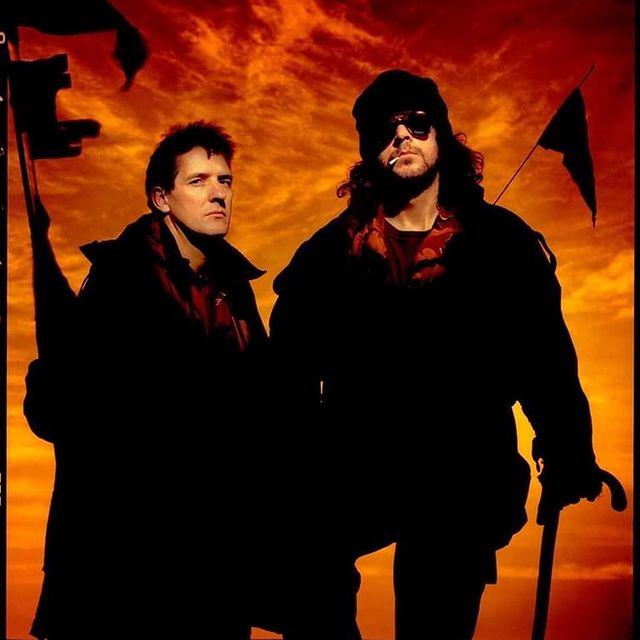
THE GRID’s Spotify BioLong-running British duo the Grid have made giddy floor-fillers as well as reflective ambient pieces, with some of their most well-known tracks featuring innovative uses of acoustic instruments in an electronic dance music context. Formed by Dave Ball (of Soft Cell) and Richard Norris when both musicians were active as members of Psychic TV in the late '80s, the pair mixed sample-based acid house with synth pop and ambient house on their 1990 debut album, Electric Head. Moving in more of a progressive house direction, the Grid scored a massive hit with "Swamp Thing" (from 1994's Evolver), a rollicking banjo-driven track that anticipated Avicii's EDM/folk fusions two decades later. The duo kept busy with additional projects, but occasionally reconvened, continuing their high-energy dance sound with 2008's Doppelgänger, then returning to ambient explorations with 2018's One Way Traffic and 2021's Leviathan, a collaboration with Robert Fripp.
Dave Ball and Richard Norris first worked… together as members of Psychic TV, co-producing tracks on the 1988 album Jack the Tab, one of the first British acid house releases, which was presented as a compilation of various artists. The pair were responsible for the track "Meet Every Situation Head On," under the moniker M.E.S.H., which was issued as a stand-alone single. The two continued working as the Grid, signing to EastWest and releasing the electro-disco single "On the Grid" in 1989. Debut album Electric Head appeared in 1990, and two of its singles, the ambient house classic "Floatation" and the dance-pop tune "A Beat Called Love" (both featuring vocalist Sacha Souter), hit the U.K. Top 100. Following the album, the Grid collaborated with LSD guru Dr. Timothy Leary on the single "Origins of Dance," issued by Evolution, a sublabel of Rhythm King.
The Grid signed with Virgin for the release of 1992's 456, their ambitious second album, which included guest appearances by Sun Ra, Robert Fripp, Yello's Dieter Meier, and others. A transparent 12" single containing the Orb's remixes of the album track "Crystal Clear" was issued, and the single became the Grid's first to hit the Top 30. Additionally, the duo racked up an impressive resumé of remixes for artists like Pet Shop Boys, Erasure, Brian Eno, David Sylvian, and many others.
Changing direction a bit, the Grid signed to Deconstruction and released the single "Texas Cowboys," featuring a distinctive sliding synth riff imitating a harmonica. The track became a hit, and set the stage for 1994's "Swamp Thing," which featured banjo playing by Roger Dinsdale. The song was a worldwide smash, reaching number three in the U.K. and earning a platinum certification in Australia. The full-length Evolver, featuring the additional hit "Rollercoaster," reached number 14 on the U.K. album charts. Music for Dancing, a collection of remixes of the duo's singles, followed in 1995.
The two musicians went their separate ways in 1996. In the early 2000s, Ball re-formed Soft Cell with Marc Almond, while Norris formed the electroclash group the Droyds and the label God Made Me Hardcore, and later published an official biography of Paul Oakenfold. Norris and Ball performed two gigs with singer Misty Woods under the name GDM in 2005. The Grid returned in 2006 with a limited white label single, "Slammer," with "Put Your Hands Together" appearing in 2007. Doppelgänger, the duo's fourth full-length, was issued by Some Bizzare, the label that introduced the world to Soft Cell in 1981.
Norris released several psychedelic albums as the Time & Space Machine, and he formed the electronic rock duo Beyond the Wizards Sleeve with Erol Alkan. In 2018, the Grid were the first band invited to play and record at the Moog Sound-Lab, an open loan studio filled with modular synthesizers. The results of their session were released in 2018 as One Way Traffic. Special Request's 13-minute remix of "Floatation" was issued as a clear 12" single in 2020, along with a shorter edit by Norris. Leviathan, the Grid's first full-length collaboration with Fripp, was released by Discipline Global Mobile in 2021. ~ Paul Simpson, Rovi
Viberate is a music analytics platform built for A&Rs, artist managers, labels, booking agents, marketers, and artists.
It helps music professionals track artist growth, analyze audience data, monitor playlist activity, compare artists, follow song performance, and identify opportunities across the music market.
Public artist pages provide a free preview of selected artist data. Paid plans provide access to deeper analytics, historical data, charts, comparisons, playlist tools, exports, alerts, reports, and additional professional features.
Yes. Public Viberate artist pages provide selected artist analytics and music data for free.
Viberate also offers a 7-day free trial of the full platform. A credit card is required to start the trial. The trial includes access to the complete product so users can test deeper artist analytics, historical views, playlist insights, comparisons, charts, exports, alerts, and reporting features before choosing a paid plan.
Viberate provides artist analytics across streaming, playlists, social media, video, radio airplay, songs, and audience markets.
Users can analyze Spotify performance, Spotify and Apple Music playlists, YouTube activity, TikTok and Instagram growth, radio spins, song performance, audience locations, demographics, rankings, and overall artist momentum.
Artist profiles also connect to music charts, similar artists, and comparison tools, helping users benchmark performance and evaluate artists in context.
Viberate updates key artist and track data daily.
For followed artists and tracks, selected data is refreshed multiple times per day. This helps teams monitor playlist changes, streaming movement, audience growth, releases, and campaign performance with more current data.
Update frequency can vary depending on the metric and data source.
Yes. Viberate lets users compare up to five artists side by side across streaming, social media, audience, and engagement metrics.
Users can compare fanbase growth, audience demographics, locations, Spotify performance, social metrics, and other artist data over selected time periods.
Artist comparison can be used for A&R scouting, benchmarking, booking decisions, campaign planning, and evaluating artists with similar audiences or market positions.