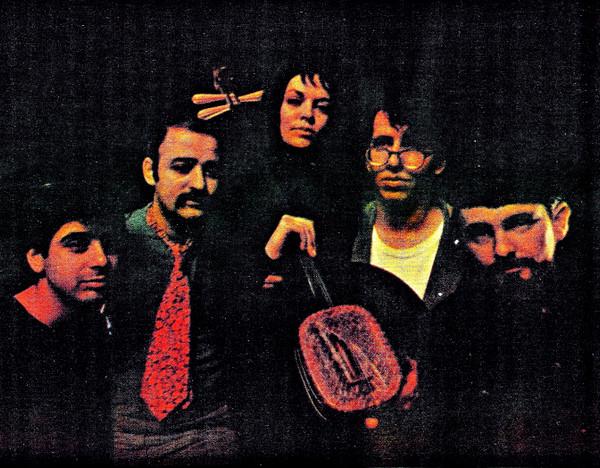
The Freak Scene

Rock
Psychedelic Rock
 Viberate Rank: 413972
 Viberate Rank: 413972
 Monthly ListenersFollowers
 Subscribers
 Followers
 Followers
 FansTop Spotify Songs
| Track | 7-Day Streams | |
|---|---|---|
1 | 261 | |
2 | 151 | |
3 | 52 | |
4 | 40 | |
5 | 36 |
Top YouTube VideosMonthly ListenersFeatured in Playlists| Playlist | Followers | |
|---|---|---|
1 |  Obscure 60s/70s Psychedelic Rock Jason LeValley | 15.24K |
2 |  🍭100 Greatest Psychedelic Rock Songs 🎸 Stamatis Stabos Playlists | 10.34K |
3 | 60s Psychedelic Trip andreas1965-71 | 8.21K |
4 | Psychedelic 60s Acid Rock & Heavy Psychadelia byggavdelningen | 5.51K |
5 | Stoner Rock/Stoner Metal/Heavy Psych/Occult (old vs new) ragazzo-gr | 5.34K |
Audience| City | Monthly Listeners | |
|---|---|---|
1 | | 23 |
2 | | 21 |
3 |  | 20 |
4 |  | 19 |
5 | | 18 |
See full performance history, audience data, playlist activity, rankings, comparisons, and more in Viberate music analytics. Start with a free trial, then continue with a paid plan.
The Freak Scene’s Spotify BioThe Freak Scene was never a "group" in the sense that the Beatles, the Rolling Stones, or the Byrds were a group -- that is, they didn't really function as a group or play as one. In fact, they had slightly more in common with the Monkees or, more correctly, perhaps the original Grass Roots, in the sense that the Freak Scene was whatever its producer-songwriter had in mind.
The Freak Scene was a studio-created ensemble, the brainchild of Rusty Evans, a one-time Greenwich Village folkie turned producer. Evans had crossed paths with Bob Dylan and Felix Pappalardi early in his career, before they went their separate ways, and he ultimately became a producer and dreamed up the Freak Scene as a project. David Bromberg was the first musician tapped for the "group," a sort of in-house psychedelic band created to record one album, Psychedelic Psoul. The one album to their credit is a period piece, an effort at making topical psychedelic music at a time when Columbia had nobody (other than the… Byrds and, in his own way, Dylan) who was really good at making those sounds. ~ Bruce Eder, Rovi
Viberate is a music analytics platform built for A&Rs, artist managers, labels, booking agents, marketers, and artists.
It helps music professionals track artist growth, analyze audience data, monitor playlist activity, compare artists, follow song performance, and identify opportunities across the music market.
Public artist pages provide a free preview of selected artist data. Paid plans provide access to deeper analytics, historical data, charts, comparisons, playlist tools, exports, alerts, reports, and additional professional features.
Yes. Public Viberate artist pages provide selected artist analytics and music data for free.
Viberate also offers a 7-day free trial of the full platform. A credit card is required to start the trial. The trial includes access to the complete product so users can test deeper artist analytics, historical views, playlist insights, comparisons, charts, exports, alerts, and reporting features before choosing a paid plan.
Viberate provides artist analytics across streaming, playlists, social media, video, radio airplay, songs, and audience markets.
Users can analyze Spotify performance, Spotify and Apple Music playlists, YouTube activity, TikTok and Instagram growth, radio spins, song performance, audience locations, demographics, rankings, and overall artist momentum.
Artist profiles also connect to music charts, similar artists, and comparison tools, helping users benchmark performance and evaluate artists in context.
Viberate updates key artist and track data daily.
For followed artists and tracks, selected data is refreshed multiple times per day. This helps teams monitor playlist changes, streaming movement, audience growth, releases, and campaign performance with more current data.
Update frequency can vary depending on the metric and data source.
Yes. Viberate lets users compare up to five artists side by side across streaming, social media, audience, and engagement metrics.
Users can compare fanbase growth, audience demographics, locations, Spotify performance, social metrics, and other artist data over selected time periods.
Artist comparison can be used for A&R scouting, benchmarking, booking decisions, campaign planning, and evaluating artists with similar audiences or market positions.