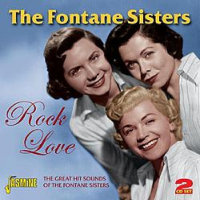
The Fontane Sisters

Jazz
Vocal jazz
Mainstream Pop
 Viberate Rank: 33805
 Viberate Rank: 33805
 Monthly ListenersFollowers
 Subscribers
 Followers
 Followers
 FansTop Spotify Songs
| Track | 7-Day Streams | |
|---|---|---|
1 | 5.62M | |
2 | 11.09K | |
3 | 3.43K | |
4 | 2.57K | |
5 | 2.57K |
Top YouTube Videos| Video | 7-Day Views | |
|---|---|---|
1 | 66.11K | |
2 | 270 | |
3 | 173 | |
4 | 102 | |
5 | 53 |
Monthly ListenersFeatured in Playlists| Playlist | Followers | |
|---|---|---|
1 |  Christmas Hits Spotify | 8.14M |
2 |  Christmas Classics Spotify | 3.71M |
3 |  Top 50 - USA Spotify | 3.23M |
4 |  POPULAR CHRISTMAS MUSIC 🎅🏻🎄🎁 HITS 2026 Clark Shipley | 1.33M |
5 |  World’s Best Christmas Playlist Henry Janzen | 1.27M |
Audience| City | Monthly Listeners | |
|---|---|---|
1 |  | 60.14K |
2 | | 58.44K |
3 | | 52.50K |
4 |  | 51.27K |
5 | | 45.93K |
See full performance history, audience data, playlist activity, rankings, comparisons, and more in Viberate music analytics. Start with a free trial, then continue with a paid plan.
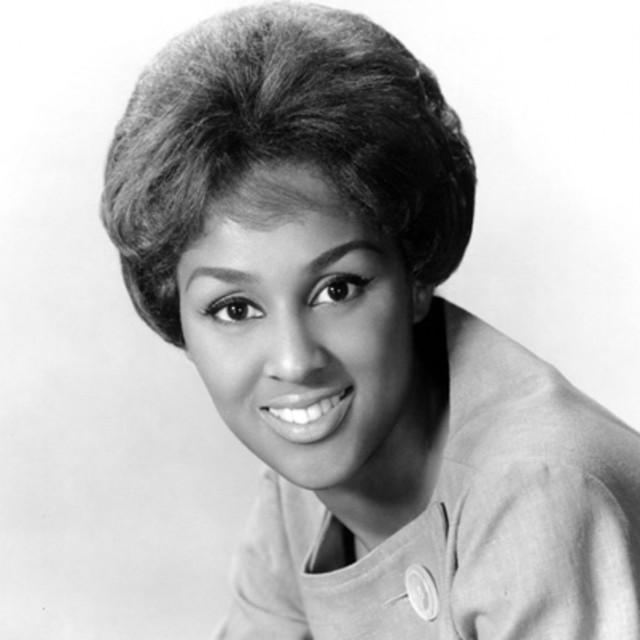
The Fontane Sisters’ Spotify BioThe line-up of this close-harmony 50s US vocal group, whose initial success was achieved by making cover versions of Black R&B records, comprised Marge Rosse (b. New Milford, New Jersey, USA; lead), Bea Rosse (b. New Milford, New Jersey, USA; low harmony) and Geri Rosse (b. New Milford, New Jersey, USA; harmony). Their mother was a choral director and organist. After leaving high school they joined an all-girl troupe and went on an eight-month tour. Later, they were joined by their brother Frank on guitar, and appeared on radio and in theatres and clubs. After Frank was killed in World War II, the girls re-formed in 1944 as a trio and worked for several years on Perry Como’s radio and television shows; they also backed him on several records, including the US number 1 hits ‘You’re Adorable’ and ‘Hoop-Dee-Doo’. Signed to RCA - Victor Records in 1949, they had several minor hits in the early 50s, including ‘Tennessee Waltz’, ‘Let Me In’ (with Texas Jim Robertson) and ‘Cold, Cold Heart’.
I…n 1954 the group switched to Dot Records, a label that specialized in making cover versions of established hits, and came under the influence of Dot’s musical director, Billy Vaughn, who, with his orchestra, provided the backing for most of their successful records. Early that year, they made the US charts with ‘Happy Days And Lonely Nights’, a 1929 song by Fred Fisher and Billy Rose, and in December 1954 they went to number 1 with ‘Hearts Of Stone’. The original version was the debut disc of the R&B Cincinnati group Otis Williams And The Charms. Other successful cover versions of Black artists’ records included ‘Rock Love’, ‘Rollin’ Stone’ (original by the Marigolds) and ‘Eddie My Love’ (originally by the Teen Queens). Other ‘white’ cover versions included Boyd Bennett And His Rockets’ ‘Seventeen’, which the Fontanes took to number 3 in the US chart, and ‘Daddy-O’, a song said to have been inspired by a character in the 1955 movie Blackboard Jungle, and which was originally a US Top 20 hit for Bonnie Lou. The Fontanes’ 1957 version of ‘Banana Boat Song’ also made the Top 20, but was prevented from rising higher by a version by the Tarriers; another version, by Steve Lawrence, was his first chart entry. By the late 50s, with more and more Black artists reaching the charts themselves, the Fontanes faded from their position as one of the top girl groups of the 50s. Their last two hits, ‘Chanson D’Amour’ and ‘Jealous Heart’, came in 1958.
Viberate is a music analytics platform built for A&Rs, artist managers, labels, booking agents, marketers, and artists.
It helps music professionals track artist growth, analyze audience data, monitor playlist activity, compare artists, follow song performance, and identify opportunities across the music market.
Public artist pages provide a free preview of selected artist data. Paid plans provide access to deeper analytics, historical data, charts, comparisons, playlist tools, exports, alerts, reports, and additional professional features.
Yes. Public Viberate artist pages provide selected artist analytics and music data for free.
Viberate also offers a 7-day free trial of the full platform. A credit card is required to start the trial. The trial includes access to the complete product so users can test deeper artist analytics, historical views, playlist insights, comparisons, charts, exports, alerts, and reporting features before choosing a paid plan.
Viberate provides artist analytics across streaming, playlists, social media, video, radio airplay, songs, and audience markets.
Users can analyze Spotify performance, Spotify and Apple Music playlists, YouTube activity, TikTok and Instagram growth, radio spins, song performance, audience locations, demographics, rankings, and overall artist momentum.
Artist profiles also connect to music charts, similar artists, and comparison tools, helping users benchmark performance and evaluate artists in context.
Viberate updates key artist and track data daily.
For followed artists and tracks, selected data is refreshed multiple times per day. This helps teams monitor playlist changes, streaming movement, audience growth, releases, and campaign performance with more current data.
Update frequency can vary depending on the metric and data source.
Yes. Viberate lets users compare up to five artists side by side across streaming, social media, audience, and engagement metrics.
Users can compare fanbase growth, audience demographics, locations, Spotify performance, social metrics, and other artist data over selected time periods.
Artist comparison can be used for A&R scouting, benchmarking, booking decisions, campaign planning, and evaluating artists with similar audiences or market positions.