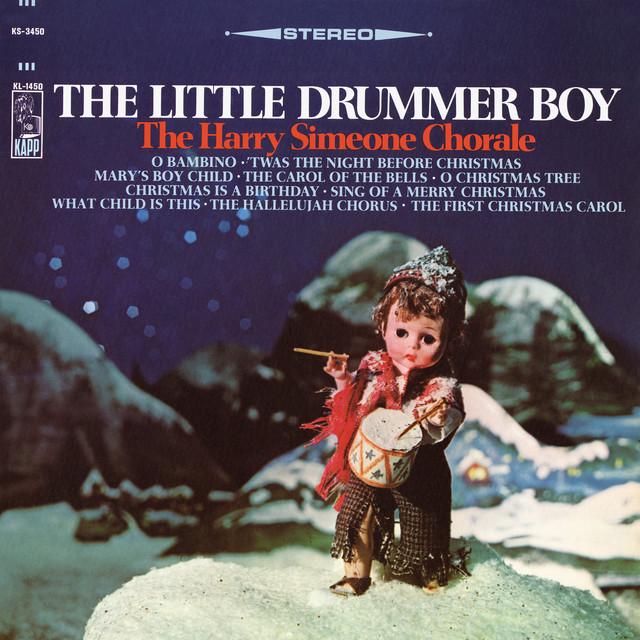
Harry Simeone Chorale

Classical
Choral
 Viberate Rank: 178754
 Viberate Rank: 178754
 Monthly ListenersFollowers
 Subscribers
 Followers
 Followers
 FansTop Spotify SongsTop YouTube VideosMonthly ListenersFeatured in Playlists
| Playlist | Followers | |
|---|---|---|
1 |  Christmas 2026 🎄 Greatest Hits & Holiday Classics Mega Hits | 272.80K |
2 |  Classic Christmas Music Filtr US | 247.80K |
3 |  Old Christmas Music 🎅🏻 Sascha Mazùr | 237.85K |
4 | Classic Christmas Songs insaneboost | 177.20K |
5 |  Chill Christmas Vibes 2026 chill vibes | 153.63K |
Audience| City | Monthly Listeners | |
|---|---|---|
1 | | 5.13K |
2 | | 4.07K |
3 | | 3.73K |
4 |  | 3.69K |
5 | | 3.65K |
See full performance history, audience data, playlist activity, rankings, comparisons, and more in Viberate music analytics. Start with a free trial, then continue with a paid plan.
Harry Simeone Chorale’s Spotify BioHoliday chorale conductor and arranger Harry Simeone was responsible for popularizing the yuletide perennial "The Little Drummer Boy." Born in Newark, NJ, on May 9, 1911, Simeone had a childhood affection for the Metropolitan Opera, which inspired him to pursue a career as a concert pianist. After graduating from the Juilliard School of Music, he went to work at CBS Radio as an arranger for popular bandleader Fred Waring, even marrying one of Waring's vocalists, Margaret McCravy. In 1939 Simeone relocated to Hollywood to work as an arranger at Paramount Pictures, collaborating with composer Victor Young on a series of films, including 1944's Bing Crosby vehicle Here Come the Waves as well as several of Crosby's "Road" movies with Bob Hope. Simeone rejoined Waring in 1945, then in 1952 signed on as the conductor and choral arranger for television's The Firestone Hour.
In 1958 Simeone contracted with the 20th Century Fox label to record a Christmas LP. In the midst of assembling the… 25-member Harry Simeone Chorale, he also began seeking material to record, discovering "The Little Drummer Boy" via friend Henry Onorati. The song, of unknown origin but presumably based on melodies of both Czech and Spanish descent, was given English-language lyrics by Katherine Davis in 1941 but not recorded until 1957, when it appeared on the Jack Halloran Singers' Onorati-arranged Christmas Is A-Comin'. Simeone loved the song, and made it the first single from his 1958 LP, Sing We Now of Christmas. "The Little Drummer Boy" was immediately hailed as a modern classic, generating some 150 cover versions and global sales topping 25 million. In 1960 Simeone returned to the charts with "Onward Christian Soldiers," and in 1962 returned to Bethlehem with a second enduring seasonal favorite, "Do You Hear What I Hear?" He died in New York City on February 22, 2005. ~ Jason Ankeny, Rovi
Viberate is a music analytics platform built for A&Rs, artist managers, labels, booking agents, marketers, and artists.
It helps music professionals track artist growth, analyze audience data, monitor playlist activity, compare artists, follow song performance, and identify opportunities across the music market.
Public artist pages provide a free preview of selected artist data. Paid plans provide access to deeper analytics, historical data, charts, comparisons, playlist tools, exports, alerts, reports, and additional professional features.
Yes. Public Viberate artist pages provide selected artist analytics and music data for free.
Viberate also offers a 7-day free trial of the full platform. A credit card is required to start the trial. The trial includes access to the complete product so users can test deeper artist analytics, historical views, playlist insights, comparisons, charts, exports, alerts, and reporting features before choosing a paid plan.
Viberate provides artist analytics across streaming, playlists, social media, video, radio airplay, songs, and audience markets.
Users can analyze Spotify performance, Spotify and Apple Music playlists, YouTube activity, TikTok and Instagram growth, radio spins, song performance, audience locations, demographics, rankings, and overall artist momentum.
Artist profiles also connect to music charts, similar artists, and comparison tools, helping users benchmark performance and evaluate artists in context.
Viberate updates key artist and track data daily.
For followed artists and tracks, selected data is refreshed multiple times per day. This helps teams monitor playlist changes, streaming movement, audience growth, releases, and campaign performance with more current data.
Update frequency can vary depending on the metric and data source.
Yes. Viberate lets users compare up to five artists side by side across streaming, social media, audience, and engagement metrics.
Users can compare fanbase growth, audience demographics, locations, Spotify performance, social metrics, and other artist data over selected time periods.
Artist comparison can be used for A&R scouting, benchmarking, booking decisions, campaign planning, and evaluating artists with similar audiences or market positions.