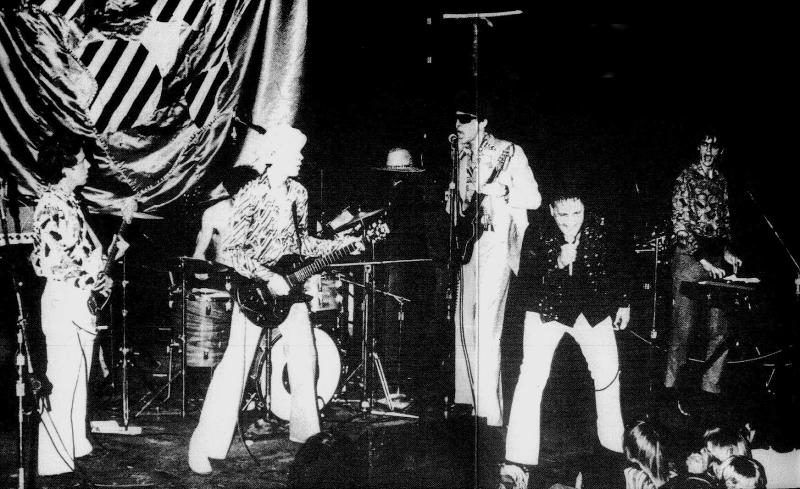
The Cravats

Punk
Punk Rock
Post Punk
 Viberate Rank: 396909
 Viberate Rank: 396909
 Monthly ListenersFollowers
 Subscribers
 Followers
 Followers
 FansTop Spotify Songs
| Track | 7-Day Streams | |
|---|---|---|
1 | 255 | |
2 | 47 | |
3 | 42 | |
4 | 36 | |
5 | 30 |
Top YouTube VideosMonthly ListenersFeatured in Playlists| Playlist | Followers | |
|---|---|---|
1 |  GOTH ULTIMATE LIST | DARK WAVE/POST-PUNK/GOTHIC ROCK/EBM/SYNTH/DEATH ROCK Annie Dark | 31.59K |
2 | Annie Dark | 13.40K |
3 |  Soul Jazz Records Martin Abrams | 5.42K |
4 |  Jarvis Cocker's Sunday Service Anders Björk | 5.09K |
5 |  Post Punk & New Wave Essentials Cherry Red Records | 3.65K |
Audience| City | Monthly Listeners | |
|---|---|---|
1 | | 31 |
2 |  | 27 |
3 |  | 21 |
4 | | 21 |
5 |  | 20 |
See full performance history, audience data, playlist activity, rankings, comparisons, and more in Viberate music analytics. Start with a free trial, then continue with a paid plan.
The Cravats’ Spotify BioFrom the Midlands town of Redditch, Worcestershire, England, the Cravats’ weird brand of rock was first heard on the classic ‘Gordon’, a co-release with Small Wonder Records and their own label in October 1978. After joining Small Wonder, the band, comprisingf Shend (b. Chris Harz; vocals, bass), Robin Dallaway (guitar, vocals), Dave Bennett (drums) and Richard London (saxophone), put out a series of entertaining singles, starting with the EP Burning Bridges in 1979. It was over a year before ‘Precinct’ appeared in 1980, alongside what proved to be their only album, The Cravats In Toytown. After releasing ‘You’re Driving Me’ and ‘Off The Beach’ in 1981, the band moved to Glass Records for ‘Terminus’ in 1982, but it was to prove a one-off single. Only the superb ‘Rub Me Out’, on the Crass label, made any headway in the UK Independent chart. A retrospective EP, The Cravats Sing Terminus And Other Hits, surfaced before the band laid low. A solitary EP, In The Land Of The Giants, on the… Reflex label some three years later, was all the band could offer before mutating into the Very Things. Pursuing an acting career, Shend later made various minor television appearances, in particular in the BBC Television soap opera EastEnders.
Viberate is a music analytics platform built for A&Rs, artist managers, labels, booking agents, marketers, and artists.
It helps music professionals track artist growth, analyze audience data, monitor playlist activity, compare artists, follow song performance, and identify opportunities across the music market.
Public artist pages provide a free preview of selected artist data. Paid plans provide access to deeper analytics, historical data, charts, comparisons, playlist tools, exports, alerts, reports, and additional professional features.
Yes. Public Viberate artist pages provide selected artist analytics and music data for free.
Viberate also offers a 7-day free trial of the full platform. A credit card is required to start the trial. The trial includes access to the complete product so users can test deeper artist analytics, historical views, playlist insights, comparisons, charts, exports, alerts, and reporting features before choosing a paid plan.
Viberate provides artist analytics across streaming, playlists, social media, video, radio airplay, songs, and audience markets.
Users can analyze Spotify performance, Spotify and Apple Music playlists, YouTube activity, TikTok and Instagram growth, radio spins, song performance, audience locations, demographics, rankings, and overall artist momentum.
Artist profiles also connect to music charts, similar artists, and comparison tools, helping users benchmark performance and evaluate artists in context.
Viberate updates key artist and track data daily.
For followed artists and tracks, selected data is refreshed multiple times per day. This helps teams monitor playlist changes, streaming movement, audience growth, releases, and campaign performance with more current data.
Update frequency can vary depending on the metric and data source.
Yes. Viberate lets users compare up to five artists side by side across streaming, social media, audience, and engagement metrics.
Users can compare fanbase growth, audience demographics, locations, Spotify performance, social metrics, and other artist data over selected time periods.
Artist comparison can be used for A&R scouting, benchmarking, booking decisions, campaign planning, and evaluating artists with similar audiences or market positions.