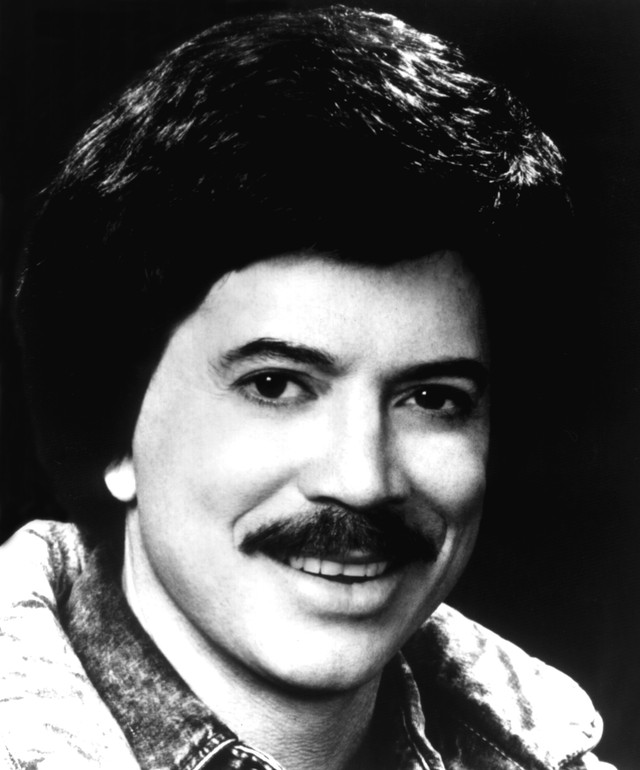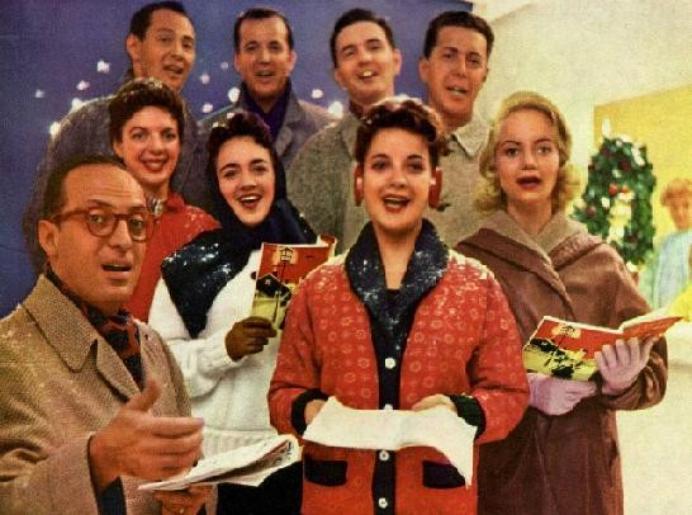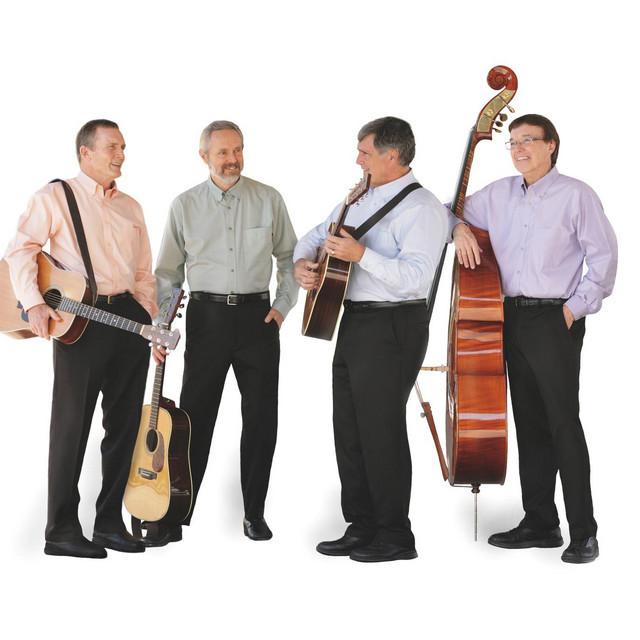
The Brothers Four

Pop
Indie Pop
Folk
 Viberate Rank: 76692
 Viberate Rank: 76692
 Monthly ListenersFollowers
 Subscribers
 Followers
 Followers
 FansTop Spotify Songs
| Track | 7-Day Streams | |
|---|---|---|
1 | 19.82K | |
2 | 19.04K | |
3 | 12.95K | |
4 | 9.80K | |
5 | 7.52K |
Top YouTube VideosMonthly ListenersFeatured in Playlists| Playlist | Followers | |
|---|---|---|
1 | Oldschool HipHop NewJT | 115.93K |
2 | Wasteland Radio Expanded Neale Christopher Zeringue | 76.98K |
3 |  sea shanties for thots naomio | 75.67K |
4 | SIARGAO VIBES 🏝 Saram | 59.89K |
5 |  60 & 70's oldies menjasa_bcn | 59.39K |
Audience| City | Monthly Listeners | |
|---|---|---|
1 |  | 2.21K |
2 |  | 1.81K |
3 |  | 1.34K |
4 |  | 1.27K |
5 | | 1.25K |
See full performance history, audience data, playlist activity, rankings, comparisons, and more in Viberate music analytics. Start with a free trial, then continue with a paid plan.
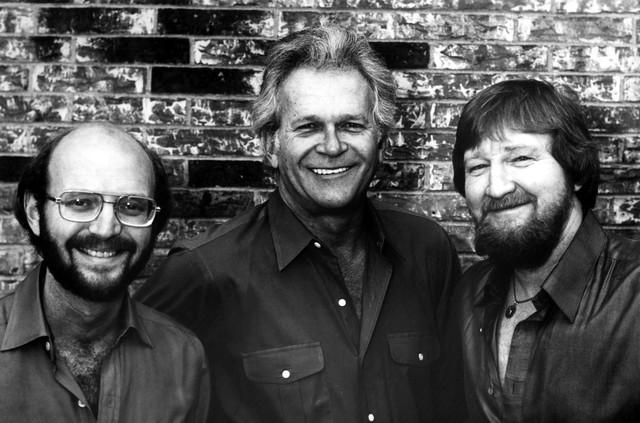
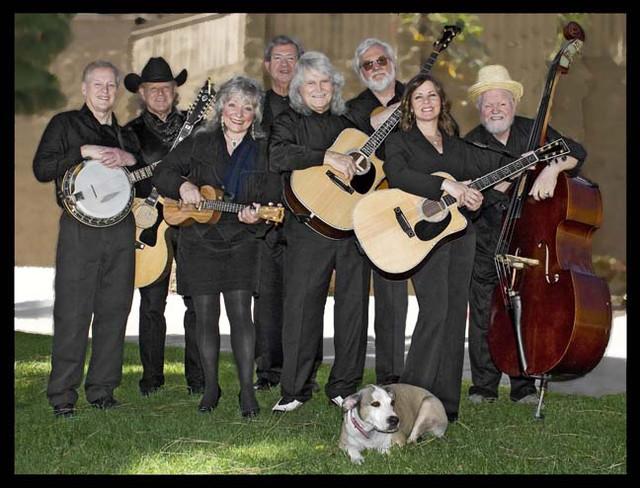
The Brothers Four’s Spotify BioThe Brothers Four bear a distinction as one of the longest surviving groups of the late-'50s/early-'60s folk revival and perhaps the longest running "accidental" music act in history -- 43 years and counting as of 2001, without any break and with two original members still in the fold. If few recognize that distinction, then it's because the Brothers Four were also part of a largely forgotten chapter in the history of folk music in America.
Most accounts of the post-WWII folk music boom focus on the political and issue-oriented branch of the music, embodied by Woody Guthrie and Bob Dylan, at the expense of the softer, more entertainment-oriented branch, embodied by the likes of the Kingston Trio, the Chad Mitchell Trio, and the Brothers Four. Those acts and the music they made -- though it sold well and, indeed, for many years defined what most Americans visualized when the phrase "folk music" was mentioned -- are scarcely mentioned in most histories; the Brothers Four aren't even… listed in the Guinness Who's Who of Folk Music.
One major misconception about the Brothers Four is that they were an attempt to emulate the Kingston Trio. Actually, Bob Flick (upright bass, baritone, bass), John Paine (guitar, baritone), Mike Kirkland (guitar, banjo, tenor), and Dick Foley (guitar, baritone) had met as undergraduates at the University of Washington in 1956 and began singing together in 1957, more than a year before the Kingston Trio made their first record. Folk music was booming at most liberal arts colleges in those days, and every campus seemed to have its share of trios and quartets, mostly drawn from the ranks of their fraternities. Flick, Paine, Kirkland, and Foley were all members of Phi Gamma Delta and aspired to careers in medicine, engineering, and diplomacy -- as amateur performers, however, they were good on their instruments and delighted campus audiences with their ability to harmonize on traditional tunes, novelty songs, and romantic ballads.
They turned professional completely by accident, as a result of a practical joke. A member of a rival fraternity arranged for a woman to telephone the group members, identifying herself as the secretary to the manager of a local Seattle venue, the Colony Club, and invite the quartet down to audition. When they got there, they discovered that there was no invitation or any audition scheduled, but since they were there anyway, the club manager asked them to do a couple of songs and ended up hiring them. The engagement lasted through most of 1958, and while they were often paid off only in beer, the experience was invaluable in that it allowed the group -- christened after their impromptu audition as the Brothers Four -- to pull its sound together as they never would have if they'd remained confined to occasional performances on campus.
As it turned out, if they'd planned for careers in music, the timing of the Brothers Four couldn't have been better. In July of 1958, the single "Tom Dooley" by the Kingston Trio began its climb to three million sales, and the folk revival boom snowballed from there. During Easter week of 1959, the Brothers Four made their move to San Francisco for some better gigs and earned a spot at the Hungry I club. It was there that they were seen by Mort Lewis, who was the manager of jazz pianist Dave Brubeck -- Lewis persuaded the group to cut a demo tape, which he brought to Columbia Records. The label liked what it heard and suddenly the quartet had a recording contract and a full-time manager.
They arrived in New York on Independence Day of 1959 and spent the next few weeks polishing their sound and repertory for their recording debut. The group's first single, "Chicka Mucha Hi Di"/"Darlin' Won't You Wait," disappeared without a trace in late 1959. Lightning struck, however, with their second single, "Greenfields," a somber, moody piece that had been written four years earlier by Terry Gilkyson, Richard Dehr, and Frank Miller of the Easy Riders. The Brothers Four version, highlighted by their elegant harmonies, was issued early in 1960, charted in February of that year, and eventually ascended to the number two spot in the course of a 20-week run in the Top 40. Suddenly, the Brothers Four were second in prominence on the burgeoning folk revival scene only to the Kingston Trio and their near-contemporaries, the Limeliters, and had concert engagements across America. A debut album, The Brothers Four, was released late that winter and reached the Top 20 nationally as well.
The group's third single, "My Tani," a piece of Hawaiian-flavored folk-pop released that spring, passed relatively unnoticed, but their fourth single, "The Green Leaves of Summer," brought them significantly greater exposure. The Brothers Four version of the song, drawn from the score of the John Wayne movie The Alamo (the soundtrack rights to which Columbia owned), only reached the lower regions of the charts, but the group performed the Oscar-nominated song on the 1961 Academy Awards television broadcast. "The Green Leaves of Summer" was only a modest success as a single, but their second album, BMOC (Best Music On/Off Campus), was released late in 1961 and made the Top Ten. The quartet's albums presented a very different and far more diverse sound than their singles had up to that point -- those first two long-players, in particular, were well-devised, featuring a wide variety of moods and sounds within a folk context; "Greenfields" and "The Green Leaves of Summer" were balanced on each by upbeat, outgoing, spirited songs such as "Hard Travellin'" and "I Am a Rovin' Gambler." Fans got real value from those LP purchases, and the albums only built up the group's concert audience.
By this time, the Brothers Four were maintaining a full-time concert schedule, with 300 shows a year, as far away as Japan, as well as appearing on such television variety showcases as The Pat Boone Chevy Showcase, Mitch Miller's Singalong (a no-brainer that, since Miller was in charge of the Artists and Repertory division at Columbia), and the Ed Sullivan Show. The Brothers Four Song Book, released later in 1961, drew on traditional material, most of it adapted with new words by Homer Sunitch or Stuart Gotz. They also charted with the single "Frogg," based on the traditional song "Froggy Went a Courtin'," with new lyrics by Bob Flick, which gave the group a chance to lighten their sound on AM radio and got to number 32 with it in April of 1961; and "Blue Water Line," which scraped the middle region of the Top 100 in early 1962. The group's concerts, which mixed a good deal of comedy into the music, proved sufficiently attractive so that two live albums were released in less than a year's time, In Person and Cross-Country Concert.
The Brothers Four reached their peak of recognition in 1963 when they recorded "Hootenanny Saturday Night," the title theme from the ABC network series Hootenanny. The song itself was no major achievement, but it gave the quartet weekly exposure on the major television venue for folk music -- the series drew a loyal audience from its debut in April of 1963, although it had a controversial 18 months of existence due to the fact that highly "political" veteran folk artists such as Pete Seeger weren't permitted to appear. That dispute seemed like a minor fissure in the folk music community, but it was also a hint of the chasm that was soon to open up, not only in musical circles but across American society.
Along with small groups like the Kingston Trio, the Limeliters, the Highwaymen, the Chad Mitchell Trio, and big-band folk ensembles like the New Christy Minstrels and the Serendipity Singers, the Brothers Four continued to draw good-sized audiences in 1963. Even as Hootenanny was running through its cycle of existence, however, and these groups were getting their bookings at some of the best venues, change was afoot around them. From Columbia Records that year came Freewheelin', the second album by Bob Dylan; made up of original songs dealing with such issues as civil rights and the threat of nuclear annihilation, it was practically a call-to-arms to a generation, an angry, stripped-down album-length message, and it was being heard, and it was motivating a more activist brand of folk listener to step forward. Freewheelin' and its follow-up, The Times They Are A-Changin', both appeared at a point when some college students were starting not only to grapple with those issues, but also question whether young men really owed the government two years of their lives in military service; and ask why, if the military could freely recruit on their campuses, they shouldn't be free to criticize, or even protest the very presence of that same military.
Dylan's direct influence might've heralded a gradual change in the folk music community. The hit single achieved by Peter, Paul & Mary in the summer of 1963 with his "Blowin' in the Wind" -- coupled with that trio's appearance at the March on Washington for civil rights that summer (which culminated with Martin Luther King's "I Have a Dream" speech) -- however, seemed to yank folk music out of its safe, apolitical niche. The New Christy Minstrels managed to stay away from politics, but their big-band folk rivals the Serendipity Singers, making their debut in 1964, included serious, issue-oriented songs like "Freedom's Star" on their first album, in between numbers like "Mud" and "Boots and Stetsons."
It can be argued that Dylan's approach to folk music, and particularly his rough-hewn, Woody Guthrie-influenced persona, were every bit as artificial and romanticized as that of the Brothers Four, but simply aimed at a different audience's expectations. There might've been room for both approaches, but for the arrival of the Beatles early in 1964. Suddenly, this huge electric sound from England was dominating the airwaves and the attention of record company executives. Worse still, a lot of teenagers were hearing what could be done with electric instruments, and it gave them something to enthuse about that was wholly different from acoustic guitars, banjos, and bongos. Soon, high school and college audiences wanted to hear those same amplified sounds, not folk songs. Or, if they did listen to folk music, they wanted what was perceived as a more authentic brand of singing, preferably with some serious political involvement somewhere in the mix. By the end of 1964, the Brothers Four and most of their colleagues were losing the youngest portion of their pop listeners, and also access to the radio stations that catered to them, and were being shunted aside in folk circles by the more highly motivated, louder, angrier listeners that Dylan was drawing. And when Dylan merged his music with electric instruments in 1965, he walked away with a huge chunk of the folk audience.
The Brothers Four had never tried to be political either in their presentation of themselves or their choice of songs. Their purpose was entertainment, not rallying the masses around causes, and they couldn't compete in this new environment. From late 1964 onward, they were relegated to the easy listening category, alongside the Lettermen and Perry Como. Luckily, Columbia was one of the few record labels that held that market in some esteem. The albums Big Folk Hits and More Big Folk Hits appeared in 1963 and 1964, respectively, and the group got some airplay with their version of "Try to Remember," which became the title track of their next LP. In 1966, they did record the album A Beatles Songbook, which conceded the dominance of the British Invasion and also yielded a hit on the easy listening charts in the guise of "If I Fell." The group kept plugging along in its own soft folk continuum and found plenty of work in America at hotels and other venues catering to adults who wanted no part of protest, political strife, or electric music, and overseas where audiences were a little less doctrinaire in their taste and simply liked American folk music done by Americans. It was in the mid- to late '60s that they began cultivating a concert and record-buying audience in Japan, in particular, that was to serve the group well in the decades to come.
The 1967 Columbia album A New World's Record was the last to feature the original lineup; co-founder Mike Kirkland left in 1969, following the death of his son, and was replaced by Mark Pearson, another alumnus of the University of Washington, who not only played banjo and 12-string guitar but added piano to their sound. The group's Columbia contract ended in 1969 with the release of Let's Get Together, and they moved to Fantasy Records for one LP in 1970. In the decades since, there have been more personnel changes -- Pearson left after two years to be replaced by Bob Haworth, who was in the group for 18 years before Pearson returned to succeed him; Bob Flick left for three years in the 1970s as well, to be replaced by Tom Coe, who brought with him the sound of the electric bass; and co-founder Dick Foley exited the lineup in 1990, after 31 years, to be succeeded by Terry Lauber. Through all of that time and right into the beginning of the 21st century, the Brothers Four never stopped working. Their record sales fell to virtually nil in the 1970s, but there were always resort hotels in the United States and foreign bookings to keep them working full-time, much as the reformed Kingston Trio works steadily and records intermittently.
During the 1990s, the Brothers Four resumed recording, this time for the Folk Era label, releasing an excellent live album from Japan, and saw the beginning of a series of reissues of most of their early Columbia Records material on CD from Collector's Choice and Collectables Records. ~ Bruce Eder, Rovi
Viberate is a music analytics platform built for A&Rs, artist managers, labels, booking agents, marketers, and artists.
It helps music professionals track artist growth, analyze audience data, monitor playlist activity, compare artists, follow song performance, and identify opportunities across the music market.
Public artist pages provide a free preview of selected artist data. Paid plans provide access to deeper analytics, historical data, charts, comparisons, playlist tools, exports, alerts, reports, and additional professional features.
Yes. Public Viberate artist pages provide selected artist analytics and music data for free.
Viberate also offers a 7-day free trial of the full platform. A credit card is required to start the trial. The trial includes access to the complete product so users can test deeper artist analytics, historical views, playlist insights, comparisons, charts, exports, alerts, and reporting features before choosing a paid plan.
Viberate provides artist analytics across streaming, playlists, social media, video, radio airplay, songs, and audience markets.
Users can analyze Spotify performance, Spotify and Apple Music playlists, YouTube activity, TikTok and Instagram growth, radio spins, song performance, audience locations, demographics, rankings, and overall artist momentum.
Artist profiles also connect to music charts, similar artists, and comparison tools, helping users benchmark performance and evaluate artists in context.
Viberate updates key artist and track data daily.
For followed artists and tracks, selected data is refreshed multiple times per day. This helps teams monitor playlist changes, streaming movement, audience growth, releases, and campaign performance with more current data.
Update frequency can vary depending on the metric and data source.
Yes. Viberate lets users compare up to five artists side by side across streaming, social media, audience, and engagement metrics.
Users can compare fanbase growth, audience demographics, locations, Spotify performance, social metrics, and other artist data over selected time periods.
Artist comparison can be used for A&R scouting, benchmarking, booking decisions, campaign planning, and evaluating artists with similar audiences or market positions.