The Angels

Rock
Indie Rock
Soul
 Viberate Rank: 68052
 Viberate Rank: 68052
 Monthly ListenersFollowers
 Subscribers
 Followers
 Followers
 FansTop Spotify Songs
| Track | 7-Day Streams | |
|---|---|---|
1 | 43.01K | |
2 | 29.29K | |
3 | 6.26K | |
4 | 1.81K | |
5 | 1.77K |
Top YouTube VideosMonthly ListenersFeatured in Playlists| Playlist | Followers | |
|---|---|---|
1 |  50s housewife bangers🍸 caera | 93.15K |
2 |  The 50s & 60s - Golden Oldies John Peter Furst | 60.27K |
3 |  2025 DANCE PARTY🕺 CDBEATS | 57.78K |
4 |  Every Track Star* Song Track Star* | 36.86K |
5 |  all the songs from the office azahlia- | 25.04K |
Audience| City | Monthly Listeners | |
|---|---|---|
1 |  | 2.12K |
2 | | 2.05K |
3 | | 2.00K |
4 |  | 1.79K |
5 |  | 1.79K |
See full performance history, audience data, playlist activity, rankings, comparisons, and more in Viberate music analytics. Start with a free trial, then continue with a paid plan.
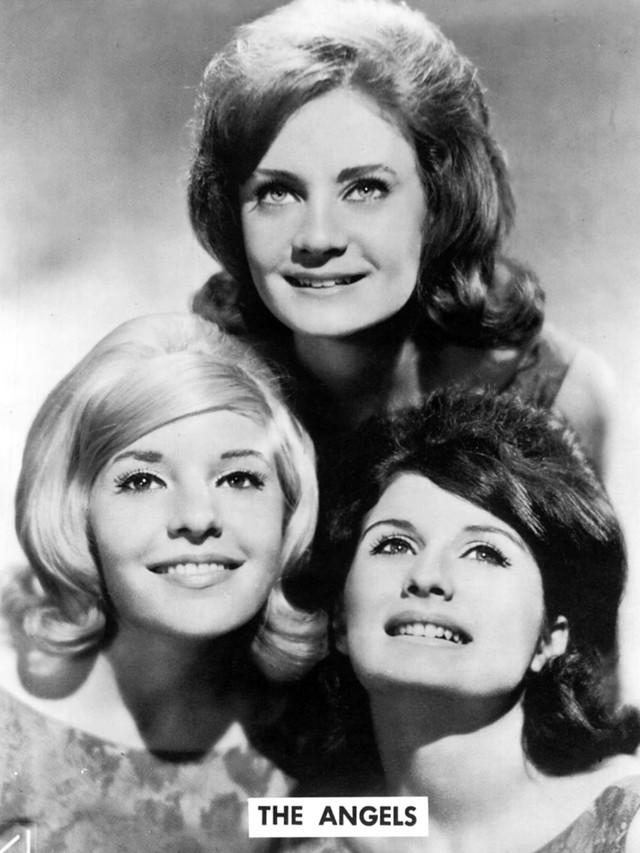
The Angels’ Spotify BioThe Angels' 1963 number one hit, "My Boyfriend's Back," is one of the half-dozen or so archetypal girl group classics. Hand clap beats, sassy vocals, slightly campy lyrics, and an arrangement paced by wailing horns and streetcorner harmonies; it was a surefire hit and one that the group could never live up to, although they continued to record for some time.
The Angels had actually been around for a while before "My Boyfriend's Back," making the Top 20 in 1961 with the ballad "'Till," and the Top 40 with a follow-up, "Cry Baby Cry." Featuring sisters Barbara and Phyllis Allbut, along with lead singer Linda Jansen, the group was at this time much more inclined toward lush doo-wop, somewhat in the mold of Little Anthony & the Imperials. Jansen left near the end of 1962, to be replaced by Peggy Santiglia, who gave the trio a tougher sound. In 1963, they hooked up with the songwriting/production team of Feldman-Goldstein-Gottehrer (later to oversee the McCoys and the Strangeloves), who… penned and produced material more in line with the Spectorian Wall of Sound gracing the airwaves at the peak of the girl group era.
"My Boyfriend's Back" was originally cut as a demo that music publishers hoped to shop to the Shirelles, but it turned out so well that it was released as an Angels single, after they had been freed from their prior contract to sign with Smash. Surprisingly, they would never make the Top 20 again, although they had minor hits with "Thank You and Goodnight," "I Adore Him," and "Wow Wow Wee (He's the Boy for Me)." They were decent, ebullient singers, the best of their efforts standing up well to other New York-produced groups like the Shirelles, but could never latch on to a tune as surefire as "My Boyfriend's Back" again, despite (or maybe because of) a steady supply of material from the Feldman-Goldstein-Gottehrer consortium. They worked often as session vocalists in the '60s, most notably on Lou Christie's "Lightnin' Strikes," and continued to record, unsuccessfully, throughout the '60s. ~ Richie Unterberger, Rovi
Viberate is a music analytics platform built for A&Rs, artist managers, labels, booking agents, marketers, and artists.
It helps music professionals track artist growth, analyze audience data, monitor playlist activity, compare artists, follow song performance, and identify opportunities across the music market.
Public artist pages provide a free preview of selected artist data. Paid plans provide access to deeper analytics, historical data, charts, comparisons, playlist tools, exports, alerts, reports, and additional professional features.
Yes. Public Viberate artist pages provide selected artist analytics and music data for free.
Viberate also offers a 7-day free trial of the full platform. A credit card is required to start the trial. The trial includes access to the complete product so users can test deeper artist analytics, historical views, playlist insights, comparisons, charts, exports, alerts, and reporting features before choosing a paid plan.
Viberate provides artist analytics across streaming, playlists, social media, video, radio airplay, songs, and audience markets.
Users can analyze Spotify performance, Spotify and Apple Music playlists, YouTube activity, TikTok and Instagram growth, radio spins, song performance, audience locations, demographics, rankings, and overall artist momentum.
Artist profiles also connect to music charts, similar artists, and comparison tools, helping users benchmark performance and evaluate artists in context.
Viberate updates key artist and track data daily.
For followed artists and tracks, selected data is refreshed multiple times per day. This helps teams monitor playlist changes, streaming movement, audience growth, releases, and campaign performance with more current data.
Update frequency can vary depending on the metric and data source.
Yes. Viberate lets users compare up to five artists side by side across streaming, social media, audience, and engagement metrics.
Users can compare fanbase growth, audience demographics, locations, Spotify performance, social metrics, and other artist data over selected time periods.
Artist comparison can be used for A&R scouting, benchmarking, booking decisions, campaign planning, and evaluating artists with similar audiences or market positions.