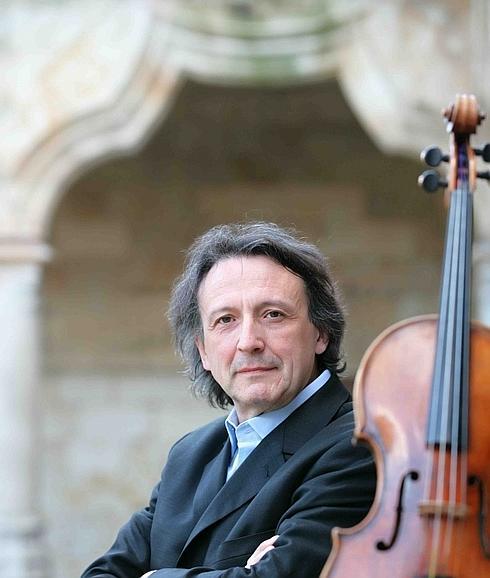
Tabea Zimmermann

Classical
Chamber Music
Orchestral
 Viberate Rank: 108149
 Viberate Rank: 108149
 Monthly ListenersFollowers
 Subscribers
 Followers
 Followers
 FansTop Spotify Songs
| Track | 7-Day Streams | |
|---|---|---|
1 | 4.28K | |
2 | 3.67K | |
3 | 1.64K | |
4 | 1.59K | |
5 | 1.42K |
Top YouTube VideosMonthly ListenersFeatured in Playlists| Playlist | Followers | |
|---|---|---|
1 |  Chilled Classical Spotify | 888.62K |
2 |  Classical Study Music for Focus 🎻🎶 Prime Feelings | 191.75K |
3 |  The Sound of Everything The Sounds of Spotify | 53.81K |
4 |  Классическая музыка ANAFE | 35.26K |
5 |  Schubert - Best of Deutsche Grammophon (DG) | 31.35K |
Audience| City | Monthly Listeners | |
|---|---|---|
1 |  | 578 |
2 |  | 559 |
3 | | 531 |
4 |  | 453 |
5 |  | 409 |
See full performance history, audience data, playlist activity, rankings, comparisons, and more in Viberate music analytics. Start with a free trial, then continue with a paid plan.
Tabea Zimmermann’s Spotify BioTabea Zimmermann is among the relatively few violists to have achieved both international critical acclaim and a large following of enthusiastic admirers. The winner of several major competitions and numerous awards, she has appeared as a soloist with many of the world's leading orchestras and has been the dedicatee of several new works.
Zimmermann was born in Lahr, Germany, on October 8, 1966. She began studies on the viola at three and the piano at five. At the Musikhochschule Freiburg, she studied with Ulrich Koch, from age 13. She later enrolled at the Mozarteum University in Salzburg, where her most important teacher was Sándor Végh. From 1982, she captured first prize in a string of prestigious competitions: the Geneva International Music Competition, the Maurice Vieux Competition in Paris (1983), and the Budapest International Competition (1984).
Zimmermann was quickly recognized as one of the leading German violists, performing with major European and Israeli orchestras,… including the Berlin Philharmonic, Leipzig Gewandhaus, and Orchestre de la Suisse Romande, and in chamber groups with such artists as Gidon Kremer, Pamela Frank, and Steven Isserlis. While her solo career achieved meteoric status, so did her chamber activity, especially as a member of the Arcanto Quartet, drawing international acclaim: the Arcanto Quartet's 2004 Stuttgart debut and later debuts at the Beethovenhaus Bonn, Wigmore Hall in London, and the Amsterdam Concertgebouw were great successes, leading to the ensemble's highly praised 2007 recording of the Bartók Fifth and Sixth quartets for Harmonia Mundi.
Zimmermann has performed major works specifically written for her, such as the Ligeti Sonata for solo viola (premiered 1994) and other pieces by Heinz Holliger, Wolfgang Rihm, Sally Beamish, and Josef Tal. Her repertory is not only rich in contemporary works but takes in music from most periods, including works by J.S. Bach, Mozart, Beethoven, Richard Strauss, and countless others. She has made dozens of recordings, spread over many labels, including Capriccio, Deutsche Grammophon, EMI, Harmonia Mundi, and Naxos, among others. Her more acclaimed recordings as a soloist include her 2009 Myrios Classics album of viola sonatas by Reger and J.S. Bach (the latter transcribed from cello originals). In 2020, Zimmermann was accompanied by Javier Perianes on the Harmonia Mundi album Cantilena. Also that year, Zimmermann was awarded the Ernst von Siemens Music Prize and served as the artist in residence with the Berlin Philharmonic for the 2020-2021 season.
Zimmermann joined the faculty at the Musikhochschule Saarbrücken in 1987, serving for two years. She would later teach at the Frankfurt University of Music (1994-2002) and has been a professor at the Berlin-based Hanns Eisler Academy of Music since 2002.
Viberate is a music analytics platform built for A&Rs, artist managers, labels, booking agents, marketers, and artists.
It helps music professionals track artist growth, analyze audience data, monitor playlist activity, compare artists, follow song performance, and identify opportunities across the music market.
Public artist pages provide a free preview of selected artist data. Paid plans provide access to deeper analytics, historical data, charts, comparisons, playlist tools, exports, alerts, reports, and additional professional features.
Yes. Public Viberate artist pages provide selected artist analytics and music data for free.
Viberate also offers a 7-day free trial of the full platform. A credit card is required to start the trial. The trial includes access to the complete product so users can test deeper artist analytics, historical views, playlist insights, comparisons, charts, exports, alerts, and reporting features before choosing a paid plan.
Viberate provides artist analytics across streaming, playlists, social media, video, radio airplay, songs, and audience markets.
Users can analyze Spotify performance, Spotify and Apple Music playlists, YouTube activity, TikTok and Instagram growth, radio spins, song performance, audience locations, demographics, rankings, and overall artist momentum.
Artist profiles also connect to music charts, similar artists, and comparison tools, helping users benchmark performance and evaluate artists in context.
Viberate updates key artist and track data daily.
For followed artists and tracks, selected data is refreshed multiple times per day. This helps teams monitor playlist changes, streaming movement, audience growth, releases, and campaign performance with more current data.
Update frequency can vary depending on the metric and data source.
Yes. Viberate lets users compare up to five artists side by side across streaming, social media, audience, and engagement metrics.
Users can compare fanbase growth, audience demographics, locations, Spotify performance, social metrics, and other artist data over selected time periods.
Artist comparison can be used for A&R scouting, benchmarking, booking decisions, campaign planning, and evaluating artists with similar audiences or market positions.