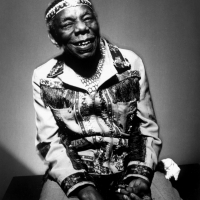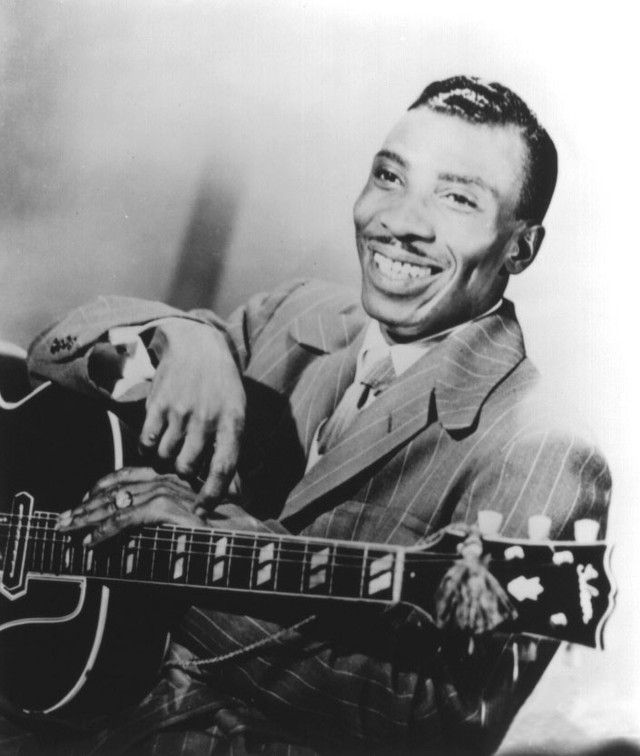
T-Bone Walker

Blues
Classic Blues
 Viberate Rank: 44084
 Viberate Rank: 44084
 Monthly ListenersFollowers
 Subscribers
 Followers
 Followers
 FansTop Spotify Songs
| Track | 7-Day Streams | |
|---|---|---|
1 | 76.13K | |
2 | 27.94K | |
3 | 16.81K | |
4 | 13.61K | |
5 | 8.94K |
Top YouTube VideosMonthly ListenersFeatured in Playlists| Playlist | Followers | |
|---|---|---|
1 |  Blues Classics Spotify | 2.33M |
2 |  Blues Masters Filtr Legacy Sweden | 226.82K |
3 |  Roots of Rock & Roll Spotify | 95.16K |
4 |  Whiskey Blues 🥃 Тhe Original | The Best Slow Blues / Blues Rock Don's Tunes | 85.92K |
5 | Wasteland Radio Expanded Neale Christopher Zeringue | 76.99K |
Audience| City | Monthly Listeners | |
|---|---|---|
1 |  | 6.89K |
2 |  | 3.79K |
3 |  | 3.46K |
4 | | 3.29K |
5 |  | 3.24K |
See full performance history, audience data, playlist activity, rankings, comparisons, and more in Viberate music analytics. Start with a free trial, then continue with a paid plan.
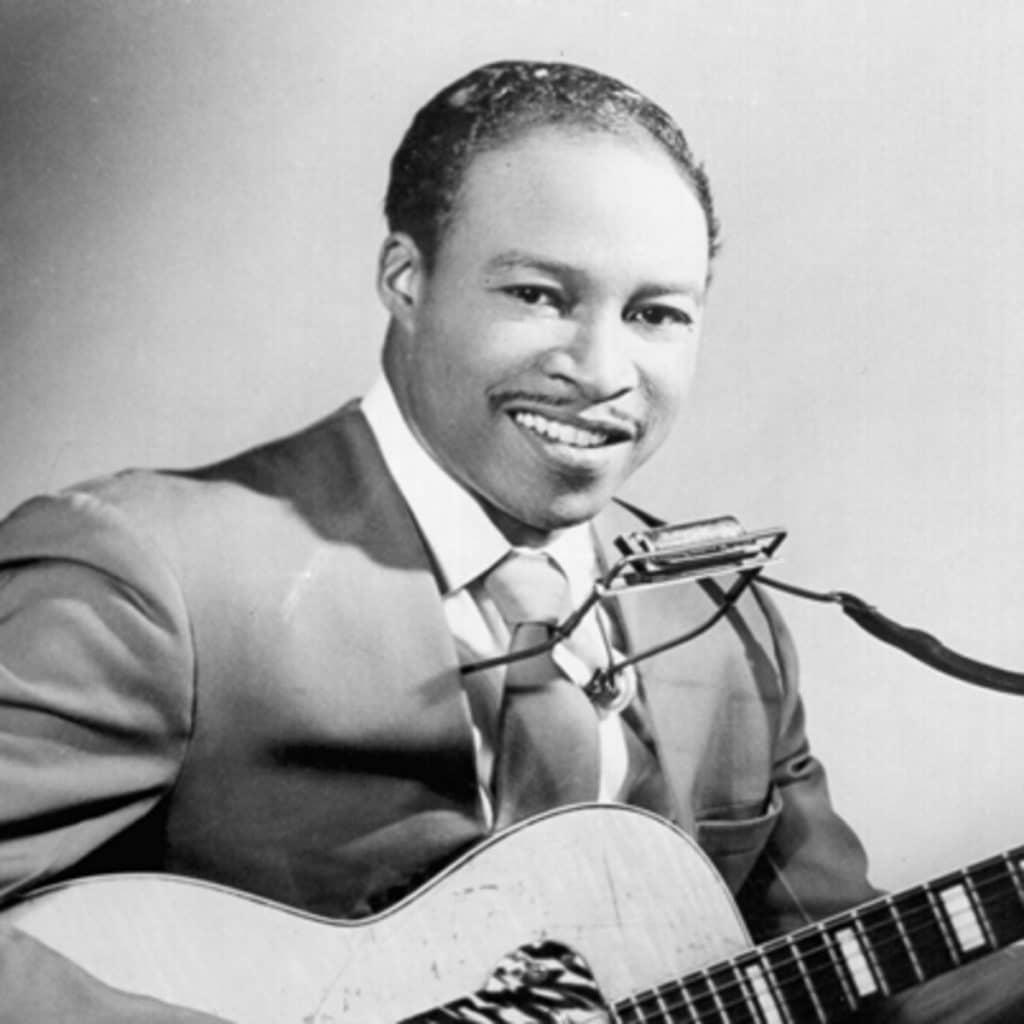
T-Bone Walker’s Spotify BioModern electric blues guitar can be traced directly back to this Texas-born pioneer, who began amplifying his sumptuous lead lines for public consumption circa 1940 and thus initiated a revolution so total that its tremors are still being felt today.
Few major postwar blues guitarists come to mind that don't owe T-Bone Walker an unpayable debt of gratitude. B.B. King has long cited him as a primary influence, marveling at Walker's penchant for holding the body of his guitar outward while he played it. Gatemouth Brown, Pee Wee Crayton, Goree Carter, Pete Mayes, and a wealth of other prominent Texas-bred axemen came stylistically right out of Walker during the late '40s and early '50s. Walker's nephew, guitarist R.S. Rankin, went so far as to bill himself as T-Bone Walker, Jr. for a 1962 single on Dot, "Midnight Bells Are Ringing" (with his uncle's complete blessing, of course; the two had worked up a father-and-son-type act long before that).
Aaron Thibeault Walker was a product of the… primordial Dallas blues scene. His stepfather, Marco Washington, stroked the bass fiddle with the Dallas String Band, and T-Bone followed his stepdad's example by learning the rudiments of every stringed instrument he could lay his talented hands on. One notable visitor to the band's jam sessions was the legendary Blind Lemon Jefferson. During the early '20s, Walker led the sightless guitarist from bar to bar as the older man played for tips.
In 1929, Walker made his recording debut with a single 78 for Columbia, "Wichita Falls Blues"/"Trinity River Blues," billed as Oak Cliff T-Bone. Pianist Douglas Fernell was his musical partner for the disc. Walker was exposed to some pretty outstanding guitar talent during his formative years; besides Jefferson, Charlie Christian -- who would totally transform the role of the guitar in jazz with his electrified riffs much as Walker would with blues, was one of his playing partners circa 1933.
T-Bone Walker split the Southwest for Los Angeles during the mid-'30s, earning his keep with saxophonist Big Jim Wynn's band with his feet rather than his hands as a dancer. Popular bandleader Les Hite hired Walker as his vocalist in 1939. Walker sang "T-Bone Blues"with the Hite aggregation for Varsity Records in 1940, but didn't play guitar on the outing. It was about then, though, that his fascination with electrifying his axe bore fruit; he played L.A. clubs with his daring new toy after assembling his own combo, engaging in acrobatic stage moves -- splits, playing behind his back -- to further enliven his show.
Capitol Records was a fledgling Hollywood concern in 1942, when Walker signed on and cut "Mean Old World" and "I Got a Break Baby" with boogie master Freddie Slack hammering the 88s. This was the first sign of the T-Bone Walker that blues guitar aficionados know and love, his fluid, elegant riffs and mellow, burnished vocals setting a standard that all future blues guitarists would measure themselves by.
Chicago's Rhumboogie Club served as Walker's home away from home during a good portion of the war years. He even cut a few sides for the joint's house label in 1945 under the direction of pianist Marl Young. But after a solitary session that same year for Old Swingmaster that soon made its way on to another newly established logo, Mercury, Walker signed with L.A.-based Black & White Records in 1946 and proceeded to amass a stunning legacy.
The immortal "Call It Stormy Monday (But Tuesday Is Just as Bad)" was the product of a 1947 Black & White date with Teddy Buckner on trumpet and invaluable pianist Lloyd Glenn in the backing quintet. Many of Walker's best sides were smoky after-hours blues, though an occasional up-tempo entry -- "T-Bone Jumps Again," a storming instrumental from the same date, for example -- illustrated his nimble dexterity at faster speeds.
Walker recorded prolifically for Black & White until the close of 1947, waxing classics like the often-covered "T-Bone Shuffle" and "West Side Baby," though many of the sides came out on Capitol after the demise of Black & White. In 1950, Walker turned up on Imperial. His first date for the L.A. indie elicited the after-hours gem "Glamour Girl" and perhaps the penultimate jumping instrumental in his repertoire, "Strollin' With Bones" (Snake Sims' drum kit cracks like a whip behind Walker's impeccable licks).
Walker's 1950-54 Imperial stint was studded with more classics: "The Hustle Is On," "Cold Cold Feeling," "Blue Mood," "Vida Lee" (named for his wife), "Party Girl," and, from a 1952 New Orleans jaunt, "Railroad Station Blues," which was produced by Dave Bartholomew. Atlantic was T-Bone Walker's next stop in 1955; his first date for them was an unlikely but successful collaboration with a crew of Chicago mainstays (harpist Junior Wells, guitarist Jimmy Rogers, and bassist Ransom Knowling among them). Rogers found the experience especially useful; he later adapted Walker's "Why Not" as his own Chess hit "Walking by Myself." With a slightly more sympathetic L.A. band in staunch support, Walker cut two follow-up sessions for Atlantic in 1956-57. The latter date produced some amazing instrumentals ("Two Bones and a Pick," "Blues Rock," "Shufflin' the Blues") that saw him dueling it out with his nephew, jazzman Barney Kessel (Walker emerged victorious in every case).
Unfortunately, the remainder of Walker's discography isn't of the same sterling quality for the most part. As it had with so many of his peers from the postwar R&B era, rock's rise had made Walker's classy style an anachronism (at least during much of the 1960s). He journeyed overseas on the first American Folk Blues Festival in 1962, starring on the Lippmann & Rau-promoted bill across Europe with Memphis Slim, Willie Dixon, and a host of other American luminaries. A 1964 45 for Modern and an obscure LP on Brunswick preceded a pair of BluesWay albums in 1967-68 that restored this seminal pioneer to American record shelves.
European tours often beckoned. A 1968 visit to Paris resulted in one of his best latter-day albums, I Want a Little Girl, for Black & Blue (and later issued stateside on Delmark). With expatriate tenor saxophonist Hal "Cornbread" Singer and Chicago drummer S.P. Leary picking up Walker's jazz-tinged style brilliantly, the guitarist glided through a stellar set list.
Good Feelin', a 1970 release on Polydor, won a Grammy for the guitarist, though it doesn't rank with his best efforts. A five-song appearance on a 1973 set for Reprise, Very Rare, was also a disappointment. Persistent stomach woes and a 1974 stroke slowed Walker's career to a crawl, and he died in 1975.
No amount of written accolades can fully convey the monumental importance of what T-Bone Walker gave to the blues. He was the idiom's first true lead guitarist, and undeniably one of its very best. ~ Bill Dahl, Rovi
Viberate is a music analytics platform built for A&Rs, artist managers, labels, booking agents, marketers, and artists.
It helps music professionals track artist growth, analyze audience data, monitor playlist activity, compare artists, follow song performance, and identify opportunities across the music market.
Public artist pages provide a free preview of selected artist data. Paid plans provide access to deeper analytics, historical data, charts, comparisons, playlist tools, exports, alerts, reports, and additional professional features.
Yes. Public Viberate artist pages provide selected artist analytics and music data for free.
Viberate also offers a 7-day free trial of the full platform. A credit card is required to start the trial. The trial includes access to the complete product so users can test deeper artist analytics, historical views, playlist insights, comparisons, charts, exports, alerts, and reporting features before choosing a paid plan.
Viberate provides artist analytics across streaming, playlists, social media, video, radio airplay, songs, and audience markets.
Users can analyze Spotify performance, Spotify and Apple Music playlists, YouTube activity, TikTok and Instagram growth, radio spins, song performance, audience locations, demographics, rankings, and overall artist momentum.
Artist profiles also connect to music charts, similar artists, and comparison tools, helping users benchmark performance and evaluate artists in context.
Viberate updates key artist and track data daily.
For followed artists and tracks, selected data is refreshed multiple times per day. This helps teams monitor playlist changes, streaming movement, audience growth, releases, and campaign performance with more current data.
Update frequency can vary depending on the metric and data source.
Yes. Viberate lets users compare up to five artists side by side across streaming, social media, audience, and engagement metrics.
Users can compare fanbase growth, audience demographics, locations, Spotify performance, social metrics, and other artist data over selected time periods.
Artist comparison can be used for A&R scouting, benchmarking, booking decisions, campaign planning, and evaluating artists with similar audiences or market positions.