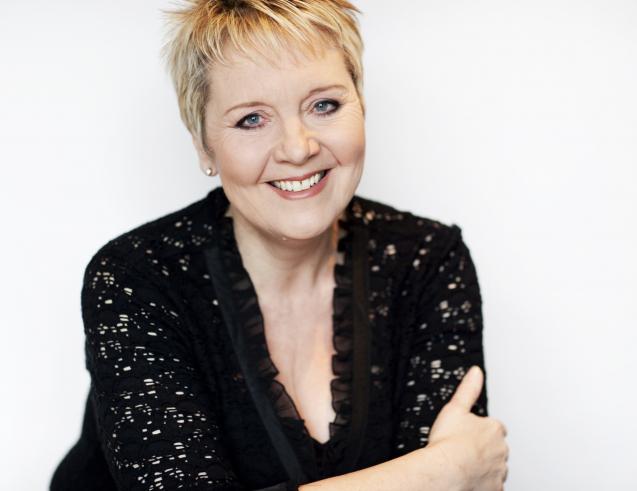
Susan Bickley

Classical
Opera
 Viberate Rank: 453240
 Viberate Rank: 453240
 Monthly ListenersFollowers
 Subscribers
 Followers
 Followers
 FansTop Spotify SongsTop YouTube VideosMonthly ListenersFeatured in Playlists
| Playlist | Followers | |
|---|---|---|
1 |  reading in a castle Spotify | 59.10K |
2 |  This Is Stravinsky Spotify | 46.00K |
3 |  This Is Purcell Spotify | 35.80K |
4 |  The Best of Arvo Pärt Arvo Pärt | 29.44K |
5 | MUSICA BARROCA para concentrarse Eva Represa | 23.46K |
Audience| City | Monthly Listeners | |
|---|---|---|
1 | | 155 |
2 |  | 103 |
3 |  | 93 |
4 |  | 80 |
5 |  | 76 |
See full performance history, audience data, playlist activity, rankings, comparisons, and more in Viberate music analytics. Start with a free trial, then continue with a paid plan.
Susan Bickley’s Spotify BioThe British mezzo-soprano Susan Bickley is unusually versatile, with a repertory ranging from the early Baroque to the contemporary period. Many of her appearances have been in substantial German and Russian roles calling for considerable stage presence and power. Bickley was born in Liverpool and grew up with music-loving parents who encouraged her talents. Her father was a school music teacher and administrator. As early as age three, she was recorded singing Christopher Robin is saying his prayers. She attended the City University, London, and as she devoted herself more seriously to music, she moved on to the Guildhall School of Music and Drama. While there, she took the school's gold medal for singers, and she began to find parts soon after graduating. Her operatic debut came in Florence at the Maggio Musicale, where she appeared as Prosperpina in Monteverdi's Orfeo. In 1991, she made her debut at the Royal Opera House in London in Mussorgsky's Boris Godunov, and she has since… returned there in Slavic roles, among others: Aksinya in Shostakovich's Lady Macbeth of the Mtsensk District and the Old Countess in his The Nose, Lyudmila in Smetana's The Bartered Bride, and Babulenka in Prokofiev's The Gambler. During the 2018-2019 season she appeared at the ROH as Marfa Ignatevna Kabanova in Janacek's Katya Kabanova. Bickley has also been associated closely with the English National Opera, where she has appeared has Herodias in Strauss' Salome, Eduige in Handel's Rodelinda, and a pair of world premieres, Ryan Wigglesworth's The Winter's Tale and Tansy Davies' Between Words. She has also appeared at other major English and Welsh houses, as well as singing the role of Countess Geschwitz in Lulu at Opera Vlaanderen. In concert she has sung Fricka in Wagner's Das Rheingold and Die Walküre, as well as Waltraute in Götterdämmerung, and in the U.S. she has appeared as Herodias in San Francisco and Dallas. Her recital appearances have involved collaborations with top-notch accompanists: Roger Vignoles at the Kennedy Center in Washington and Iain Burnside at Wigmore Hall. Bickley's large discography stretches back to an appearance on a 1996 recording of songs by Reynaldo Hahn. She has recorded for Hyperion, NMC, Chandos, Black Box Classics, Naxos, Signum Classics, Warner Classics, Delphian, and Nimbus. Her recording of songs by Debussy, Satie, Fauré, and Dove with soprano Claire Booth appeared on the latter label in 2019.
Viberate is a music analytics platform built for A&Rs, artist managers, labels, booking agents, marketers, and artists.
It helps music professionals track artist growth, analyze audience data, monitor playlist activity, compare artists, follow song performance, and identify opportunities across the music market.
Public artist pages provide a free preview of selected artist data. Paid plans provide access to deeper analytics, historical data, charts, comparisons, playlist tools, exports, alerts, reports, and additional professional features.
Yes. Public Viberate artist pages provide selected artist analytics and music data for free.
Viberate also offers a 7-day free trial of the full platform. A credit card is required to start the trial. The trial includes access to the complete product so users can test deeper artist analytics, historical views, playlist insights, comparisons, charts, exports, alerts, and reporting features before choosing a paid plan.
Viberate provides artist analytics across streaming, playlists, social media, video, radio airplay, songs, and audience markets.
Users can analyze Spotify performance, Spotify and Apple Music playlists, YouTube activity, TikTok and Instagram growth, radio spins, song performance, audience locations, demographics, rankings, and overall artist momentum.
Artist profiles also connect to music charts, similar artists, and comparison tools, helping users benchmark performance and evaluate artists in context.
Viberate updates key artist and track data daily.
For followed artists and tracks, selected data is refreshed multiple times per day. This helps teams monitor playlist changes, streaming movement, audience growth, releases, and campaign performance with more current data.
Update frequency can vary depending on the metric and data source.
Yes. Viberate lets users compare up to five artists side by side across streaming, social media, audience, and engagement metrics.
Users can compare fanbase growth, audience demographics, locations, Spotify performance, social metrics, and other artist data over selected time periods.
Artist comparison can be used for A&R scouting, benchmarking, booking decisions, campaign planning, and evaluating artists with similar audiences or market positions.