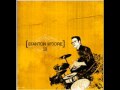
Stanton Moore

Jazz
Jazz Fusion
Funk
 Viberate Rank: 70447
 Viberate Rank: 70447
 Monthly ListenersFollowers
 Subscribers
 Followers
 Followers
 FansTop Spotify Songs
| Track | 7-Day Streams | |
|---|---|---|
1 | 4.39K | |
2 | 2.90K | |
3 | 1.20K | |
4 | 1.07K | |
5 | 1.05K |
Top YouTube Videos| Video | 7-Day Views | |
|---|---|---|
1 | 10 | |
2 | 2 |
Monthly ListenersFeatured in Playlists| Playlist | Followers | |
|---|---|---|
1 |  All Funked Up Spotify | 389.86K |
2 |  String Theory Spotify | 166.86K |
3 |  teenagers 2000's music 🎧 mp3 songs Teenfy | 117.97K |
4 |  Funky Jazz, Blues & Soul The New Funky | 74.07K |
5 |  FUNK & SOUL CLASSICS RIGHT NOW! | 72.66K |
Audience| City | Monthly Listeners | |
|---|---|---|
1 | | 303 |
2 | | 272 |
3 | | 203 |
4 |  | 195 |
5 | | 190 |
See full performance history, audience data, playlist activity, rankings, comparisons, and more in Viberate music analytics. Start with a free trial, then continue with a paid plan.
Stanton Moore’s Spotify BioA New Orleans musician in every sense of the word, drummer Stanton Moore's main gig is with his enormously popular funk band Galactic but he also plays with a wide variety of other musicians in both club and studio settings. Growing up in New Orleans, Moore was attracted to the thriving music scene, where he absorbed the work of Professor Longhair, Meters drummer Zigaboo Modeliste, and his mentor, Johnny Vidacovich. After meeting founding Galactic members Robert Mercurio and Rich Vogel in the early '90s, Moore played in a series of early versions of the group, including Galactic Prophylactic and the Ivanhoes (in which the band learned a good portion of the catalog of the legendary Meters, New Orleans' founding funk band).
In 1994, producer Dan Prothero featured the band's song "Black Eyed Pea" on his Is That Jazz compilation. The band soon recorded Coolin' Off (1996) for Fog City Records, joined in the studio (and, eventually, on the road) by vocalist Theryl Declouet. Through constant… touring, Moore met and collaborated with many established funk and jazz musicians, including Medeski, Martin & Wood keyboardist John Medeski, Karl Denson, and even the Meters' bassist George Porter, Jr. Two musicians that Moore hit it off with in particular were eight-string guitarist and T.J. Kirk founder Charlie Hunter and saxophonist Skerik. With this core, the band played a handful of live dates and, in the weeks after Mardi Gras 1998, cut what would become Moore's first solo disc, All Kooked Out! The disc also featured a handful of New Orleans horn players, including Brent Rose, Brian Seeger, Matt Perrine, Ben Ellman, and former Sun Ra trumpet player Michael Ray.
Following the recording of Crazyhorse Mongoose with Galactic, crammed in between Galactic tours, Moore traveled with Hunter and Skerik, playing incendiary live shows throughout the West. Many of Moore's songs are included in Galactic's set list. He has often played around New Orleans with a revolving cast of musicians, billed as Moore & More. He has also been a member of the New Orleans Klezmer All-Stars. He has released a handful of solo albums, following 1998's previously mentioned All Kooked Out! with Flyin' the Koop in 2001, III in 2006, and Emphasis! On Parenthesis in 2008. Moore has continued to remain active as a member of Galactic, which released their groundbreaking Ya-Ka-May on Anti in February of 2010, and as a solo artist. In April of that year he released Groove Alchemy on the Telarc Jazz imprint.
Moore is, and always has been, an in-demand session drummer. He is also a member of guitarist and songwriter Anders Osborne's recording and touring band (the latter when his own schedule accommodates it) and appeared on his celebrated albums American Patchwork in 2010 and Black Eye Galaxy in 2012. Moore also appeared with Galactic and in other settings on the HBO television drama Treme.
The drummer returned to his jazz roots for his next solo album, recording Conversations with a trio whose other members included pianist David Torkanowsky and bassist James Singleton. The set was issued by Royal Potato Family in the spring of 2014.
Besides near constant activity with Galactic, Moore's working trio with Torkanowsky and Singleton had readied material for a new album. They were set to record in 2015. A few days before sessions began, Allen Toussaint passed away, leaving the entire city of New Orleans -- and much of the music world -- in shock. The trio shelved their own record and immediately went to work selecting material and writing arrangements of material from Toussaint's immense repertoire. They also enlisted help from an elite cast of Crescent City all-stars including Donald Harrison, Jr., Cyril Neville, Trombone Shorty, Nicholas Payton, Skerik, Jolynda Kiki Chapman, Maceo Parker, and actor/musician Wendell Pierce. The finished album, titled With You in Mind: The Songs of Allen Toussaint, was issued by Cool Green Recordings in July 2017. ~ Jesse Jarnow, Rovi
Viberate is a music analytics platform built for A&Rs, artist managers, labels, booking agents, marketers, and artists.
It helps music professionals track artist growth, analyze audience data, monitor playlist activity, compare artists, follow song performance, and identify opportunities across the music market.
Public artist pages provide a free preview of selected artist data. Paid plans provide access to deeper analytics, historical data, charts, comparisons, playlist tools, exports, alerts, reports, and additional professional features.
Yes. Public Viberate artist pages provide selected artist analytics and music data for free.
Viberate also offers a 7-day free trial of the full platform. A credit card is required to start the trial. The trial includes access to the complete product so users can test deeper artist analytics, historical views, playlist insights, comparisons, charts, exports, alerts, and reporting features before choosing a paid plan.
Viberate provides artist analytics across streaming, playlists, social media, video, radio airplay, songs, and audience markets.
Users can analyze Spotify performance, Spotify and Apple Music playlists, YouTube activity, TikTok and Instagram growth, radio spins, song performance, audience locations, demographics, rankings, and overall artist momentum.
Artist profiles also connect to music charts, similar artists, and comparison tools, helping users benchmark performance and evaluate artists in context.
Viberate updates key artist and track data daily.
For followed artists and tracks, selected data is refreshed multiple times per day. This helps teams monitor playlist changes, streaming movement, audience growth, releases, and campaign performance with more current data.
Update frequency can vary depending on the metric and data source.
Yes. Viberate lets users compare up to five artists side by side across streaming, social media, audience, and engagement metrics.
Users can compare fanbase growth, audience demographics, locations, Spotify performance, social metrics, and other artist data over selected time periods.
Artist comparison can be used for A&R scouting, benchmarking, booking decisions, campaign planning, and evaluating artists with similar audiences or market positions.