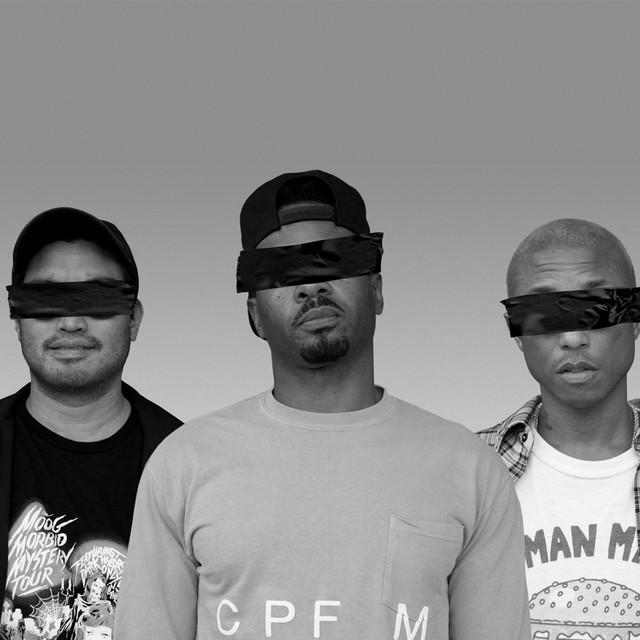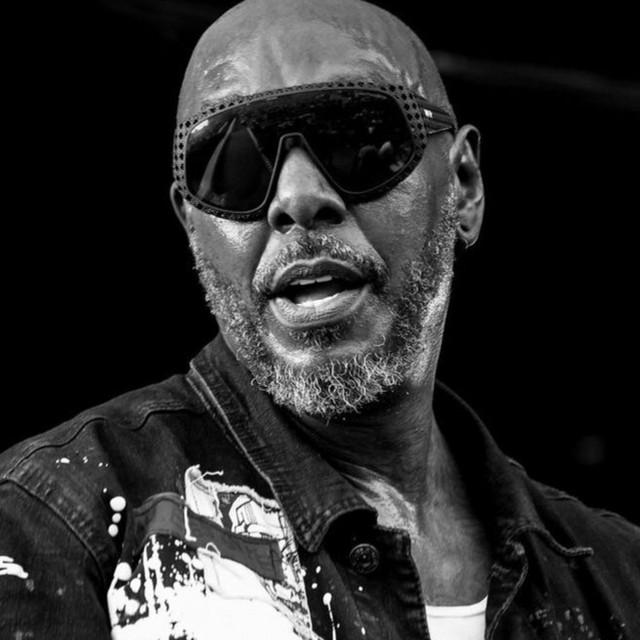
Sleepy Brown

R&B
Contemporary R&B
Trap
 Viberate Rank: 34252
 Viberate Rank: 34252
 Monthly ListenersFollowers
 Subscribers
 Followers
 Followers
 FansTop Spotify Songs
| Track | 7-Day Streams | |
|---|---|---|
1 | 873.45K | |
2 | 287.85K | |
3 | 45.93K | |
4 | 43.08K | |
5 | 27.04K |
Top YouTube Videos| Video | 7-Day Views | |
|---|---|---|
1 | 100.79K | |
2 | 16.02K | |
3 | 13.10K | |
4 | 1.69K | |
5 | 1.65K |
Monthly ListenersFeatured in Playlists| Playlist | Followers | |
|---|---|---|
1 |  Throwback Jams Spotify | 2.82M |
2 |  2000s HITS Y2K THROWBACKS Filtr US | 1.57M |
3 |  Party Hits 2000s Spotify | 1.55M |
4 |  Throwback Workout Spotify | 1.49M |
5 |  clubbing like it's the 2000's kass !! | 981.12K |
Audience| City | Monthly Listeners | |
|---|---|---|
1 | | 4.64K |
2 | | 4.57K |
3 | | 3.79K |
4 | | 3.21K |
5 | | 2.84K |
See full performance history, audience data, playlist activity, rankings, comparisons, and more in Viberate music analytics. Start with a free trial, then continue with a paid plan.
Sleepy Brown’s Spotify BioThe innately funky Sleepy Brown has been a vital part of the Atlanta music scene, and R&B and hip-hop at large, since the early 1990s. As one-third of renowned production team Organized Noize, Brown -- a singer, songwriter, producer, and multi-instrumentalist -- surfaced just after the new jack swing era with OutKast's "Player's Ball," TLC's Grammy-nominated "Waterfalls," and En Vogue's "Don't Let Go (Love)" among the first hits he helped create. It was on "Player's Ball" that Brown first wielded his effortless vocal style, a smooth falsetto evoking a mix of soul legends Curtis Mayfield and Eddie Kendricks; concurrent with his continued success behind the scenes, Brown further emphasized his singing talent later in the decade with the groups Society of Soul and Sleepy's Theme. Within a few years of topping the pop chart with OutKast's "The Way You Move" and hitting the Top 40 with his own "I Can't Wait," he released his solo debut, Mr. Brown (2006). Since then, he has continued to work… primarily with the extended Organized Noize network and Atlantans ranging from OutKast's Big Boi to Janelle Monáe and Future, the latter of whom shrewdly tapped him to open the soundtrack to Superfly (2018). Brown and Big Boi have continued to work together with a slew of singles and a full-length project entitled The Big Sleepover (2021).
The '70s influence evident throughout the discography of Patrick "Sleepy" Brown likely has something to do with Brown's father, Jimmy Brown, the lead vocalist and saxophonist of funk band Brick. Due to his father's vocation, the Savannah-born and Atlanta-raised Sleepy Brown grew up behind the stage and bumped shoulders with the likes of Barry White, Cameo, Commodores, and Parliament. Early on, he was fascinated with music and often carried around an old four-track machine and small keyboard everywhere he went. That earnestness appealed to fledgling musicians Rico Wade and Ray Murray when they met Brown around 1990. Brown's funk upbringing added an integral element to the sound the trio -- known as Organized Noize -- honed in their makeshift studio in the basement of Wade's mother's house. Dubbed the Dungeon, the space birthed the Dungeon Family, featuring Organized Noize, OutKast, and Goodie Mob, among others. Brown, a talented keyboardist and advocate for live instrumentation, developed into a savvy multi-instrumentalist and mastered various synthesizers and electric pianos, while his inclination for using samplers and drum machines kept him rooted in hip-hop. At the same time, he became an asset as a vocalist, heard on the hook of OutKast's 1993 debut single "Player's Ball," a number 37 pop hit.
After Organized Noize became reliable hitmakers, Brown occasionally indulged his funk fixation by leading retro-funk/hip-hop-themed side projects. Society of Soul, a group that also featured Rico Wade and Ray Murray among its membership, issued Brainchild on LaFace in 1995 and touched the R&B/hip-hop singles chart with "E.M.B.R.A.C.E (Da Da Dah Dah)." Three years later, Brown was leading Sleepy's Theme, who released a self-titled album and charted with the Organized Noize production "Still Smokin'." During this period, Brown earned his first Grammy nomination as co-writer and co-producer of TLC's number one pop hit "Waterfalls," which was up for Record of the Year. He was also partly responsible for En Vogue's number two hit "Don't Let Go (Love)" and got the opportunity to work on Curtis Mayfield's final album, New World Order.
Brown and Organized Noize racked up more accolades in the early 2000s. Still closely affiliated with OutKast, they earned their second Grammy nomination when Stankonia was up for Album of the Year in 2001. Brown himself was increasingly visible, singing on the Top 40 Stankonia single "So Fresh, So Clean," Ludacris' number 22 pop hit "Saturday (Oooh! Ooooh!)," and "The Way You Move," a chart-topper off OutKast's 2003 double album Speakerboxxx/The Love Below. OutKast returned the favor with a featured appearance on Brown's own "I Can't Wait," a Top 40 hit recorded for the Barbershop 2 soundtrack.
The stage was set for Brown to release his solo debut album, For the Grown and Sexy, when DreamWorks, the label to which he was signed, was absorbed into Interscope. Brown and Interscope did not see eye to eye on the direction of the album, prompting Brown to leave the label and sign with Big Boi's Purple Ribbon Records in 2005. He put together some new songs for Mr. Brown, an LP that arrived in October 2006 and entered the Billboard 200 at number 53 (number six R&B/hip-hop). Brown's Organized Noize partners contributed heavily, while the Neptunes chipped in for the single "Margarita." All along, and throughout the next decade, Brown continued to write and produce for numerous artists, including OutKast, Janelle Monáe, Big K.R.I.T., and especially Big Boi. Shortly after Brown led off the Future-presented Superfly soundtrack, he and Big Boi started releasing collaborative singles leading to the 2021 release of The Big Sleepover. ~ Andy Kellman & Cyril Cordor, Rovi
Viberate is a music analytics platform built for A&Rs, artist managers, labels, booking agents, marketers, and artists.
It helps music professionals track artist growth, analyze audience data, monitor playlist activity, compare artists, follow song performance, and identify opportunities across the music market.
Public artist pages provide a free preview of selected artist data. Paid plans provide access to deeper analytics, historical data, charts, comparisons, playlist tools, exports, alerts, reports, and additional professional features.
Yes. Public Viberate artist pages provide selected artist analytics and music data for free.
Viberate also offers a 7-day free trial of the full platform. A credit card is required to start the trial. The trial includes access to the complete product so users can test deeper artist analytics, historical views, playlist insights, comparisons, charts, exports, alerts, and reporting features before choosing a paid plan.
Viberate provides artist analytics across streaming, playlists, social media, video, radio airplay, songs, and audience markets.
Users can analyze Spotify performance, Spotify and Apple Music playlists, YouTube activity, TikTok and Instagram growth, radio spins, song performance, audience locations, demographics, rankings, and overall artist momentum.
Artist profiles also connect to music charts, similar artists, and comparison tools, helping users benchmark performance and evaluate artists in context.
Viberate updates key artist and track data daily.
For followed artists and tracks, selected data is refreshed multiple times per day. This helps teams monitor playlist changes, streaming movement, audience growth, releases, and campaign performance with more current data.
Update frequency can vary depending on the metric and data source.
Yes. Viberate lets users compare up to five artists side by side across streaming, social media, audience, and engagement metrics.
Users can compare fanbase growth, audience demographics, locations, Spotify performance, social metrics, and other artist data over selected time periods.
Artist comparison can be used for A&R scouting, benchmarking, booking decisions, campaign planning, and evaluating artists with similar audiences or market positions.