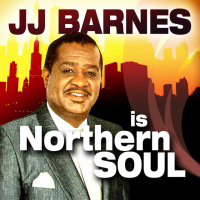
Sidney Barnes

R&B
Contemporary R&B
Soul
 Viberate Rank: 424102
 Viberate Rank: 424102
 Monthly ListenersFollowers
 Subscribers
 Followers
 Followers
 FansTop Spotify Songs
| Track | 7-Day Streams | |
|---|---|---|
1 | 378 | |
2 | 378 | |
3 | 341 | |
4 | 266 | |
5 | 50 |
Top YouTube VideosMonthly ListenersFeatured in Playlists| Playlist | Followers | |
|---|---|---|
1 |  Eccentric Soul Numero Group | 20.01K |
2 |  Dinner Jazz/Soul DeWayne Schaaf | 15.41K |
3 |  Northern Soul ajmcdonald007 | 14.67K |
4 |  ディズニーシー/パーク内BGM ちゃちゃまる子 | 5.95K |
5 | Numero Group Comps slindbo | 5.78K |
Audience| City | Monthly Listeners | |
|---|---|---|
1 |  | 125 |
2 | | 119 |
3 | | 49 |
4 | | 29 |
5 | | 27 |
See full performance history, audience data, playlist activity, rankings, comparisons, and more in Viberate music analytics. Start with a free trial, then continue with a paid plan.
Sidney Barnes’ Spotify BioSidney Barnes is one of the more enduring R&B and soul talents of the mid-20th century. A slightly younger contemporary of Smokey Robinson and Ben E. King, he's cut a lasting place for himself in soul music from the late '50s right into the 21st century, if not as well-known a legacy as some of his contemporaries. Starting as a member of the Serenaders, he moved on to become a songwriter and producer, working with acts like the Flirtations and later joining Rotary Connection, sharing the lead vocals with Minnie Riperton as well as writing songs with the group. He subsequently sang with Riperton on several of her solo projects, and also worked with such singers as Edna Wright, Terry Callier, and Deniece Williams, and the group Parliament.
Born Sidney Alexander Barnes in Welch, WV, he crossed paths in high school with Marvin Gaye, Herb Feemster (of Peaches & Herb), and Van McCoy, among other future music stars; passing through the lineups of various bands before he hooked up with the… Serenaders, a group that held a lot of promise that somehow never got fulfilled, despite a lion's share of talent in their ranks. Between 1961 and 1963, Barnes cut one single of his own on the Newark, NJ-based Gemini label and participated in three single releases by the Serenaders for various labels (including Motown), before the group decided to split up so the members could concentrate on their individual careers. Barnes passed through associations with Juggy Murray's Sue Records label, writing songs for Billy Prophet and Inez and Charles Foxx, and, at the suggestion of Jeff Barry, recorded solo for George Goldner's Red Bird label. His first two releases for Red Bird, "You'll Always Be in Style" and "I Hurt on the Other Side," both later became huge Northern soul hits in England. His biggest success with the label, however, may have been as a songwriter, when the Shangri-Las recorded his "Long Live Our Love." By 1967, he had become part of the orbit of Marshall Chess' upstart Cadet Records; within the Chess Records organization as a part of Rotary Connection; and he also saw one of his songs, "Herbert Harper's Free Press News," covered by no less a figure than Muddy Waters on the Electric Mud album. At some point, Barnes also recorded a single under the pseudonym "Johnny B. Goode." He'd also begun producing other artists' work, including the pop-soul outfit the Flirtations, who had evolved out of an earlier group with which he'd worked, the Gypsies. He also released one single under his own name, "Baloney" b/w "Old Times," on the Chess label in 1970, and cut a solo single for his own Parachute label ("Hold On I'm Coming") in 1978; but it was principally in association with other artists, as a songwriter, backup singer, and producer, that Barnes made his impact on music over the next 20 years.
By the 1970s, Barnes was riding high on the soul, disco, and funk booms, working with George Clinton, Parliament, Funkadelic, and Deniece Williams, among others, while continuing to record with Riperton. His career momentum continued into the 1980s, but slowed down in the decade that followed. By the 1990s, however, he had found his recordings and his songs embraced in England by the Northern soul boom. In March of 2001, 44 years after he started in the business, Sidney Barnes made his first visit to England as a concert artist and was accorded a hero's welcome, worthy of any Motown, Chess, or Red Bird star. ~ Bruce Eder, Rovi
Viberate is a music analytics platform built for A&Rs, artist managers, labels, booking agents, marketers, and artists.
It helps music professionals track artist growth, analyze audience data, monitor playlist activity, compare artists, follow song performance, and identify opportunities across the music market.
Public artist pages provide a free preview of selected artist data. Paid plans provide access to deeper analytics, historical data, charts, comparisons, playlist tools, exports, alerts, reports, and additional professional features.
Yes. Public Viberate artist pages provide selected artist analytics and music data for free.
Viberate also offers a 7-day free trial of the full platform. A credit card is required to start the trial. The trial includes access to the complete product so users can test deeper artist analytics, historical views, playlist insights, comparisons, charts, exports, alerts, and reporting features before choosing a paid plan.
Viberate provides artist analytics across streaming, playlists, social media, video, radio airplay, songs, and audience markets.
Users can analyze Spotify performance, Spotify and Apple Music playlists, YouTube activity, TikTok and Instagram growth, radio spins, song performance, audience locations, demographics, rankings, and overall artist momentum.
Artist profiles also connect to music charts, similar artists, and comparison tools, helping users benchmark performance and evaluate artists in context.
Viberate updates key artist and track data daily.
For followed artists and tracks, selected data is refreshed multiple times per day. This helps teams monitor playlist changes, streaming movement, audience growth, releases, and campaign performance with more current data.
Update frequency can vary depending on the metric and data source.
Yes. Viberate lets users compare up to five artists side by side across streaming, social media, audience, and engagement metrics.
Users can compare fanbase growth, audience demographics, locations, Spotify performance, social metrics, and other artist data over selected time periods.
Artist comparison can be used for A&R scouting, benchmarking, booking decisions, campaign planning, and evaluating artists with similar audiences or market positions.