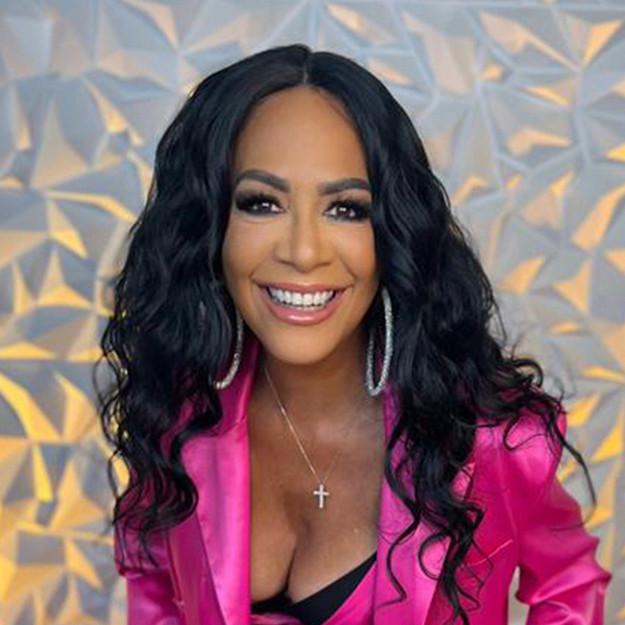
Sheila E.

Pop
Mainstream Pop
Disco
 Viberate Rank: 15474
 Viberate Rank: 15474
 Monthly ListenersFollowers
 Subscribers
 Followers
 Followers
 FansTop Spotify Songs
| Track | 7-Day Streams | |
|---|---|---|
1 | 58.15K | |
2 | 30.71K | |
3 | 25.70K | |
4 | 14.93K | |
5 | 4.83K |
Top YouTube VideosMonthly ListenersFeatured in Playlists| Playlist | Followers | |
|---|---|---|
1 |  ’80s Jam Session Spotify | 876.53K |
2 |  80s Workout Spotify | 547.88K |
3 |  I Love My 80s Funk Spotify | 316.58K |
4 |  The Greatest Hits Of Prince Serge Wenus | 129.00K |
5 | **80s R&B Hits** Chrismix | 119.20K |
Audience| City | Monthly Listeners | |
|---|---|---|
1 | | 6.04K |
2 | | 4.54K |
3 | | 4.04K |
4 |  | 3.51K |
5 | | 2.95K |
See full performance history, audience data, playlist activity, rankings, comparisons, and more in Viberate music analytics. Start with a free trial, then continue with a paid plan.
Sheila E.’s Spotify BioDuring the mid-'80s, Sheila E. (Sheila Escovedo) was the biggest and brightest of Prince's protégées. Certainly during his post-Revolution tours of the late '80s, Prince showcased Sheila E., the culmination of an association that began when Prince wrote and co-produced her 1984 breakthrough, "The Glamorous Life," and duetted on "A Love Bizarre" in 1985. This association often framed her career entirely in terms of Prince, but she was successful prior to entering his orbit. She recorded with George Duke, Mavis Staples, and Harvey Mason, and toured with Marvin Gaye. Afterwards, she continued to work steadily, touring with Ringo Starr, Joss Stone, and others. In addition to releasing solo albums such 1991's Sex Cymbal, 2013's Icon and 2017's Iconic: Message 4 America, she's amassed hundreds of session credits. In 2024, after a seven year break from recording under her own name, Escovedo issued the salsa-oriented Bailar for Sony Music.
As the daughter of legendary jazz percussionist Pete… Escovedo, Sheila E. and vocalist Juanita -- born Sheila Cecelia Escovedo on December 12, 1957 -- into a musical family that also included her cousin Alejandro Escovedo. Sheila E. began her professional career just prior to her 20th birthday, playing percussion on 1976 albums by Alphonso Johnson (Yesterday's Dreams) and Merl Saunders (You Can Leave Your Hat On) and her father's 1977 session, Solo Two. She joined George Duke's band in 1977 and moonlighted on sessions by Con Funk Shun, the Rowans, and Herbie Hancock. During the early '80s, she continued to play studio sessions, then landed a spot in Marvin Gaye's touring band in 1983.
Sheila Escovedo began her professional association with Prince -- and adopted the stage name Sheila E. -- in 1984. The Prince-produced The Glamorous Life appeared in June 1985 and soon its title track -- which was the only cut on the six-track album to be written solely by Prince -- became a Billboard Top Ten hit; its second single, "The Belle of St. Mark," peaked at 34. During that year, Sheila E. was part of Prince's orbit, opening for the Revolution on the Purple Rain tour and singing on "Erotic City," the flip to the hit "Let's Go Crazy." Prince co-produced Sheila E.'s 1985 album, Romance 1600, and co-wrote its hit, "A Love Bizarre," with her. In 1986, Sheila E. appeared on the Krush Groove soundtrack playing "Holly Rock," and released an eponymous album that was her first not to be co-produced by Prince (instead, she produced the record with Revolution associate David Z.). "Hold Me" went to three on Billboard's R&B charts but her pop momentum slowed. Sheila E. played percussion on Prince's Sign 'O' the Times and Lovesexy tours, then parted ways with his organization.
Sheila E. collaborated with Peter Michael for her 1991 album, Sex Cymbal, her first record cut without any involvement with Prince; its title track went to 32 on the Billboard R&B charts. Not long after its release, Sheila E. suffered a variety of health problems that kept her from the spotlight for several years. During the next few years, she did a few studio sessions, then played in Namie Amuro's touring band in 1996. In 1998, she was the bandleader and sidekick on Magic Johnson's ill-fated syndicated talk show, The Magic Hour. Sheila E. returned to recording in 2000 with Writes of Passage, the first of two albums for Concord Records. Heaven followed the next year, and also in 2001 she did her first of three stints in Ringo Starr's All-Starr Band.
Throughout the 2000s, Sheila E. worked steadily on-stage and in the studio, notably playing on Cyndi Lauper's standards album, At Last. In 2006, she mended fences with Prince and appeared on his One Nite Alone...Live! album. That same year, she formed C.O.E.D. -- an acronym for Chronicles of Every Diva -- with Cassandra O'Neal, Kat Dyson, and Rhonda Smith. C.O.E.D. toured and put out a self-released album on the Web. In 2007, she returned to television as a judge on Fox's music competition The Next Great American Band and, two years later, she was a winning contestant on CMT's reality music show Gone Country. As the 2010s began, Sheila E. continued to perform live in various contexts, including rejoining Prince for two tours. In 2013, she released Icon, her first album in 12 years; initially it appeared only in the U.K., but it saw international release in 2014. It was quickly followed by the 2014 publication of her memoir, Beat of My Own Drum. Three years later, Sheila E. returned with Iconic: Message 4 America, a new album featuring cameos from Ringo Starr, George Clinton, and Candy Dulfer. Later that year she was a featured soloist on the Pacific Mambo Orchestra's Live From Stern Grove Festival. Over the next seven years, Escovedo worked with her father's Latin jazz orchestra and played on his Rhythm Of The Night, and played recording sessions with everyone from Beyonce to Kelly Clarkson.
In 2024, she released Bailar ("dance"), her first salsa album for Sony. The star-studded set included a collaboration with Gloria Estefan and Mimy Succar on first single and video, a cover of Celia Cruz's "Bemba Colore" Other high profile guests on the set included Ruben Blades, Luis Enrique, Gilberto Santa Rosa, Debi Nova, her parents, and many others. ~ Stephen Thomas Erlewine, Rovi
Viberate is a music analytics platform built for A&Rs, artist managers, labels, booking agents, marketers, and artists.
It helps music professionals track artist growth, analyze audience data, monitor playlist activity, compare artists, follow song performance, and identify opportunities across the music market.
Public artist pages provide a free preview of selected artist data. Paid plans provide access to deeper analytics, historical data, charts, comparisons, playlist tools, exports, alerts, reports, and additional professional features.
Yes. Public Viberate artist pages provide selected artist analytics and music data for free.
Viberate also offers a 7-day free trial of the full platform. A credit card is required to start the trial. The trial includes access to the complete product so users can test deeper artist analytics, historical views, playlist insights, comparisons, charts, exports, alerts, and reporting features before choosing a paid plan.
Viberate provides artist analytics across streaming, playlists, social media, video, radio airplay, songs, and audience markets.
Users can analyze Spotify performance, Spotify and Apple Music playlists, YouTube activity, TikTok and Instagram growth, radio spins, song performance, audience locations, demographics, rankings, and overall artist momentum.
Artist profiles also connect to music charts, similar artists, and comparison tools, helping users benchmark performance and evaluate artists in context.
Viberate updates key artist and track data daily.
For followed artists and tracks, selected data is refreshed multiple times per day. This helps teams monitor playlist changes, streaming movement, audience growth, releases, and campaign performance with more current data.
Update frequency can vary depending on the metric and data source.
Yes. Viberate lets users compare up to five artists side by side across streaming, social media, audience, and engagement metrics.
Users can compare fanbase growth, audience demographics, locations, Spotify performance, social metrics, and other artist data over selected time periods.
Artist comparison can be used for A&R scouting, benchmarking, booking decisions, campaign planning, and evaluating artists with similar audiences or market positions.