Scott McKenzie

Rock
Pop Rock
 Viberate Rank: 32262
 Viberate Rank: 32262
 Monthly ListenersFollowers
 Subscribers
 Followers
 Followers
 FansTop Spotify Songs
| Track | 7-Day Streams | |
|---|---|---|
1 | 431.21K | |
2 | 6.48K | |
3 | 6.48K | |
4 | 6.48K | |
5 | 1.12K |
Top YouTube VideosMonthly ListenersFeatured in Playlists| Playlist | Followers | |
|---|---|---|
1 |  All Out 60s Spotify | 3.19M |
2 |  Classic Rock Radio 70s, 80s & 90s - Mejores Clásicos del Rock en Inglés Rock Louder | 1.05M |
3 |  Mellow Classics Spotify | 881.33K |
4 |  Vietnam War Music Extra Music | 754.39K |
5 |  Soft 60s Spotify | 663.64K |
Audience| City | Monthly Listeners | |
|---|---|---|
1 |  | 23.96K |
2 |  | 11.52K |
3 |  | 10.62K |
4 |  | 10.23K |
5 |  | 9.63K |
See full performance history, audience data, playlist activity, rankings, comparisons, and more in Viberate music analytics. Start with a free trial, then continue with a paid plan.
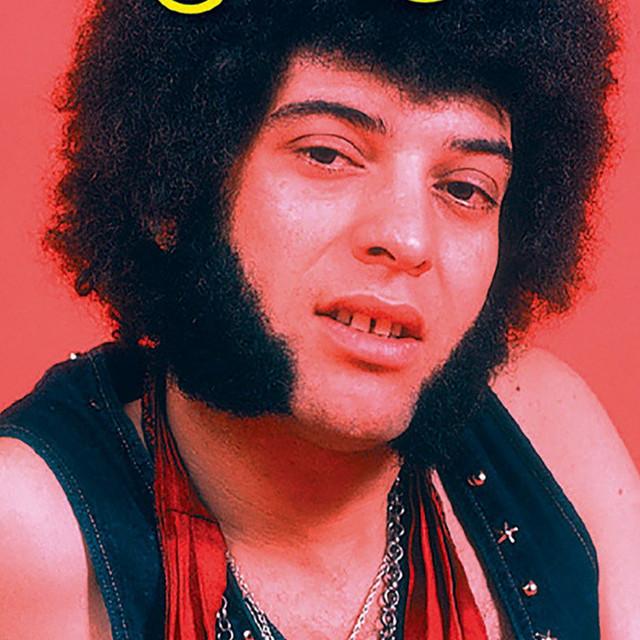
Scott McKenzie’s Spotify BioScott McKenzie was the perfect example of a one-hit wonder, although his talent and voice made him worthy of (and ultimately did earn him) somewhat more. Born Philip Wallach Blondheim in Jacksonville, Florida, in 1939, he was raised in Virginia, and was drawn to music and singing from an early age. Among the friends and acquaintances of his youth was John Phillips, who -- in addition to being a rebel from the military family in which he grew up in Alexandria, Virginia -- was also pulled toward music. The two ended up together in a late-'50s folk-influenced vocal group called the Smoothies, whose harmony-singing owed a lot to the Four Freshmen, and who enjoyed one minor hit (authored by Phillips) entitled "Softly," on the Decca label. His stage name came about from an incident while performing with the Smoothies in Ontario, as he related in a 1991 interview with Spencer Leigh. They were on a bill with a pair of comedians, and the latter suggested -- perhaps picking up on one corner of… his Anglo-Scottish ancestry -- that Blondheim resembled a Scottie dog, and started calling him Scott. Phillips added the "McKenzie" from the name he'd given to his daughter MacKenzie (born 1959) -- the two names seemed to fit together.
McKenzie and Phillips worked together again in the Journeymen, a New York-based folk trio that got far enough to cut a short string of albums for Capitol in the early '60s, none of which gave them the breakthrough they needed for a sustained living. They'd parted full-time company by the time that Phillips put together the New Journeymen, which eventually morphed into the Mamas & the Papas. McKenzie kept active in New York, even performing at one of the pavilions at the 1964 World's Fair, while the latter group assembled and later headed west to fame and fortune in 1966 and 1967 -- Phillips did produce a single for McKenzie on the Epic label that failed to chart, and the singer also failed an audition for a role as one of the Monkees (he apparently looked too old, at 24). McKenzie joined in helping to put together what was then known as the First Monterey International Pop Music Festival (there never was a second), organized by Phillips and producer Lou Adler, and at his suggestion Phillips wrote a song commemorating the event but, more importantly, embodying what it meant to celebrate. The result was "San Francisco (Be Sure to Wear Flowers in Your Hair)," perhaps the most successful pop/hippie anthem ever recorded. With McKenzie's smooth yet passionate and piercing vocal delivery (backed by the same band that had played behind the Mamas & the Papas on their records, and creating the same illusion of a unified group sound), a seductive melody, and vivid lyrics behind a languid overall tone and lush textures, the song soared to number four in America and hit number one in England and much of Europe.
And McKenzie became an overnight success that summer. Indeed, the single's success was so swift and unexpected that it caught McKenzie and those around him unawares. Lou Adler had used "San Francisco" to launch his new Ode Records label, and as a new operation, with a new artist whose work was roaring up the charts, the company was slower than it otherwise might have been getting the accompanying album recorded and released. It turned out that McKenzie was much more than a one-song artist, but by the time anyone who knew him from just the one record on the radio could find that out, interest in the song had cooled, and the album never reached the audience that it should have. Additionally, he suffered from bouts of stage fright of varying degrees at different points in his life, and never concertized as much as someone with a Top Five single might have. He charted once more with "Like an Old Time Movie," a beautiful but much more introspective, angst-ridden Phillips song that was backed by one of McKenzie's own songs, "What's the Difference - Chapter II," which made the Top 30 but never had the impact of "San Francisco." Despite a prodigious singing talent and serious (albeit oft-overlooked) ability as a songwriter, McKenzie never seemed to go out of his way to capitalize on his huge success -- he and Phillips collaborated on one more single, "Holy Man," late in 1967, which went into much more serious and complex pop/rock territory, and failed to chart. And that was most of what anyone heard from him on record until 1970.
He re-emerged that year with a country-rock album, Stained Glass Morning, that passed relatively unnoticed. He dabbled in acting but was missing in action as a pop/rock artist across most of the decade that followed. In 1984, however, John Phillips gave a concert at the Bitter End in New York where, near the end, he announced an appearance by a special guest -- and lo and behold, Scott McKenzie walked on-stage and, with Phillips strumming along on acoustic guitar, the two performed "San Francisco" to a two-thirds-filled room of mostly longtime fans. McKenzie was subsequently part of a revamped, re-formed Mamas & the Papas put together by Phillips, taking Denny Doherty's old role in the vocal mix (as Doherty had more or less finished with his role in the transition from the Journeymen to the Mamas & the Papas). And he co-wrote the latter-day chart-topping Beach Boys hit "Kokomo." He was still one of the Mamas & the Papas at the end of the 1990s, but after 2001 -- the year of Phillips' death -- was officially retired from the music business. McKenzie himself died just over ten years later, at home in Los Angeles, in August of 2012 at the age of 73. ~ Bruce Eder, Rovi
Viberate is a music analytics platform built for A&Rs, artist managers, labels, booking agents, marketers, and artists.
It helps music professionals track artist growth, analyze audience data, monitor playlist activity, compare artists, follow song performance, and identify opportunities across the music market.
Public artist pages provide a free preview of selected artist data. Paid plans provide access to deeper analytics, historical data, charts, comparisons, playlist tools, exports, alerts, reports, and additional professional features.
Yes. Public Viberate artist pages provide selected artist analytics and music data for free.
Viberate also offers a 7-day free trial of the full platform. A credit card is required to start the trial. The trial includes access to the complete product so users can test deeper artist analytics, historical views, playlist insights, comparisons, charts, exports, alerts, and reporting features before choosing a paid plan.
Viberate provides artist analytics across streaming, playlists, social media, video, radio airplay, songs, and audience markets.
Users can analyze Spotify performance, Spotify and Apple Music playlists, YouTube activity, TikTok and Instagram growth, radio spins, song performance, audience locations, demographics, rankings, and overall artist momentum.
Artist profiles also connect to music charts, similar artists, and comparison tools, helping users benchmark performance and evaluate artists in context.
Viberate updates key artist and track data daily.
For followed artists and tracks, selected data is refreshed multiple times per day. This helps teams monitor playlist changes, streaming movement, audience growth, releases, and campaign performance with more current data.
Update frequency can vary depending on the metric and data source.
Yes. Viberate lets users compare up to five artists side by side across streaming, social media, audience, and engagement metrics.
Users can compare fanbase growth, audience demographics, locations, Spotify performance, social metrics, and other artist data over selected time periods.
Artist comparison can be used for A&R scouting, benchmarking, booking decisions, campaign planning, and evaluating artists with similar audiences or market positions.