Sandy Posey

Pop
Mainstream Pop
Contemporary Country
Christian Music
 Viberate Rank: 117421
 Viberate Rank: 117421
 Monthly ListenersFollowers
 Subscribers
 Followers
 Followers
 FansTop Spotify Songs
| Track | 7-Day Streams | |
|---|---|---|
1 | 17.77K | |
2 | 11.55K | |
3 | 8.14K | |
4 | 7.86K | |
5 | 7.86K |
Top YouTube VideosMonthly ListenersFeatured in Playlists| Playlist | Followers | |
|---|---|---|
1 | Goude oude jaren 60/70 tinymath | 18.04K |
2 | Jaren 60 en 70 teuntje60 | 17.65K |
3 | Jespers favoriter Nyhetsmorgon | 14.96K |
4 |  60s Classics saintjammy | 9.83K |
5 | Country Classics 1950's to 1970's Marcia Black | 8.14K |
Audience| City | Monthly Listeners | |
|---|---|---|
1 |  | 2.59K |
2 | | 2.56K |
3 | | 2.39K |
4 | | 1.63K |
5 |  | 1.39K |
See full performance history, audience data, playlist activity, rankings, comparisons, and more in Viberate music analytics. Start with a free trial, then continue with a paid plan.
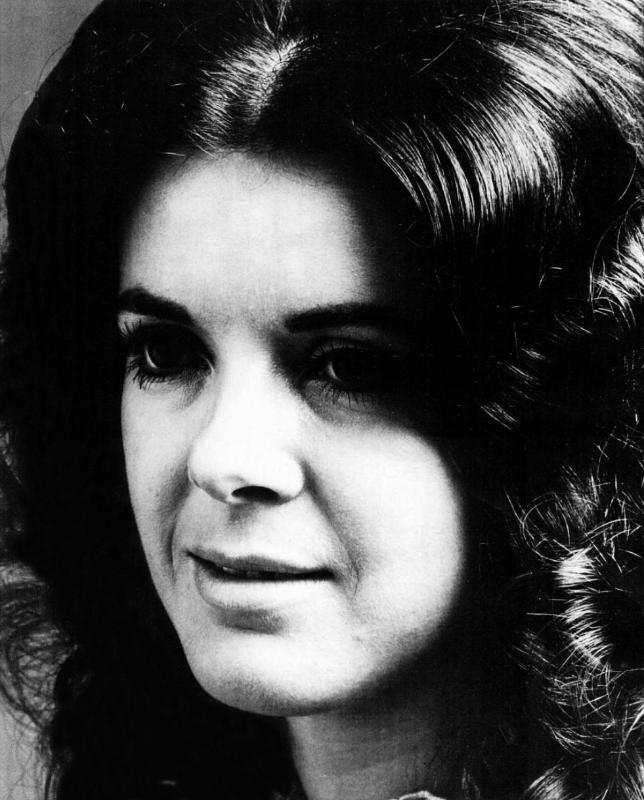
Sandy Posey’s Spotify BioWalking the line separating girl group pop and the Nashville Sound, Sandy Posey scored a pair of major hits with her first two singles, "Born a Woman" and "Single Girl," both number 12 on Billboard in 1966. Posey possessed a high, keening voice that bore only the slightest twang, a characteristic she would begin to emphasize after "I Take It Back" became her last Top 40 hit in 1967 (it, like its predecessors, peaked at 12). With the help of Tammy Wynette's producer Billy Sherrill, Posey transitioned to country music in the '70s, earning a string of country hits that ran through the decade. After several quiet years, Posey returned to the studio in the 2000s, recording an album for King Records and re-recording her hits elsewhere. Those original hits proved to be her lasting legacy: power popper Nick Lowe, in particular, was a fan, covering both "Born a Woman" and her deep cut "Halfway to Paradise" during his frenzied Jesus of Cool days.
A native of Arkansas, Sandy Posey was born in… Jasper, Alabama, on June 18, 1944. After graduating from a high school in West Memphis, Arkansas, she started to pursue a musical career in Memphis. Landing a job as a receptionist in a recording studio, she also started to work as a session singer. After issuing a single called "Kiss Me Goodnight" under the pseudonym Sandy Carmel on Bell Records in 1965, Posey came to the attention of producer Chips Moman. Hearing her demo of "Born a Woman," a song written by Martha Sharp, convinced Moman to help Posey secure a contract with MGM Records.
Moman produced "Born a Woman," which was released by MGM in the summer of 1966. The single climbed to number 12 that August, a big enough of a hit to snag Posey two Grammy nominations in 1967: one for Best Contemporary (R&R) Solo Vocal Performance and one for Best Vocal Performance, Female. "Single Girl" appeared shortly after "Born a Woman," and by January 1967, it also peaked at number 12. After "What a Woman in Love Won't Do" reached 31, Posey again occupied the number 12 position with "I Take It Back."
As quickly as she shot up the charts, Posey shot back down. "Are You Never Coming Home" topped out at 59 in 1967, with "Something I'll Remember" failing to chart in 1968. By 1971, she refashioned herself as a country singer, signing with Columbia and working with producer Billy Sherrill to achieve her first country hit with "Bring Him Safely Home to Me" that year. Over the next few years, she was modestly successful on the country charts, with "Happy Happy Birthday Baby" reaching 36 in 1972 and "Don't" peaking at 39 in 1973. Posey switched to Monument Records in 1976. "Born to Be with You" gave her a number 21 hit in 1978, a success that was nearly matched by "Love, Love, Love/Chapel of Love" later that year and "Love Is Sometimes Easy" in 1978; both singles peaked at 26.
After "Can't Get Used to Sleeping Without You" reached 88 on the country charts, Posey retreated from performing. Occasionally, she'd work as a session singer or tour with her Elvis Presley impersonator husband Wade Cummings, but by the mid-'80s, she was effectively retired. Two quiet decades passed before she returned with a new album in 2004; she also re-recorded some of her hits during this decade. Strawberry released the double-disc anthology Born a Woman: Complete MGM Recordings 1966-1968 in 2023. Sandy Posey died on July 20, 2024, at the age of 80. ~ Stephen Thomas Erlewine, Rovi
Viberate is a music analytics platform built for A&Rs, artist managers, labels, booking agents, marketers, and artists.
It helps music professionals track artist growth, analyze audience data, monitor playlist activity, compare artists, follow song performance, and identify opportunities across the music market.
Public artist pages provide a free preview of selected artist data. Paid plans provide access to deeper analytics, historical data, charts, comparisons, playlist tools, exports, alerts, reports, and additional professional features.
Yes. Public Viberate artist pages provide selected artist analytics and music data for free.
Viberate also offers a 7-day free trial of the full platform. A credit card is required to start the trial. The trial includes access to the complete product so users can test deeper artist analytics, historical views, playlist insights, comparisons, charts, exports, alerts, and reporting features before choosing a paid plan.
Viberate provides artist analytics across streaming, playlists, social media, video, radio airplay, songs, and audience markets.
Users can analyze Spotify performance, Spotify and Apple Music playlists, YouTube activity, TikTok and Instagram growth, radio spins, song performance, audience locations, demographics, rankings, and overall artist momentum.
Artist profiles also connect to music charts, similar artists, and comparison tools, helping users benchmark performance and evaluate artists in context.
Viberate updates key artist and track data daily.
For followed artists and tracks, selected data is refreshed multiple times per day. This helps teams monitor playlist changes, streaming movement, audience growth, releases, and campaign performance with more current data.
Update frequency can vary depending on the metric and data source.
Yes. Viberate lets users compare up to five artists side by side across streaming, social media, audience, and engagement metrics.
Users can compare fanbase growth, audience demographics, locations, Spotify performance, social metrics, and other artist data over selected time periods.
Artist comparison can be used for A&R scouting, benchmarking, booking decisions, campaign planning, and evaluating artists with similar audiences or market positions.