Russ Conway

Jazz
Swing
Classical Crossover
 Viberate Rank: 134277
 Viberate Rank: 134277
 Monthly ListenersFollowers
 Subscribers
 Followers
 Followers
 FansTop Spotify Songs
| Track | 7-Day Streams | |
|---|---|---|
1 | 12.71K | |
2 | 5.32K | |
3 | 5.16K | |
4 | 5.16K | |
5 | 5.11K |
Top YouTube VideosMonthly ListenersFeatured in Playlists| Playlist | Followers | |
|---|---|---|
1 |  Every Official UK Number 1 Ever Official Charts | 33.96K |
2 |  Essential Classics Essential Classics | 31.39K |
3 | 100 greatest instrumental hits Adschouten | 13.39K |
4 |  Wild West Saloon Matt Hooper | 11.64K |
5 | Screenwipe / Newswipe / How TV Ruined / Etc charliebrooker | 9.26K |
Audience| City | Monthly Listeners | |
|---|---|---|
1 |  | 1.25K |
2 |  | 1.02K |
3 |  | 761 |
4 | | 737 |
5 | | 668 |
See full performance history, audience data, playlist activity, rankings, comparisons, and more in Viberate music analytics. Start with a free trial, then continue with a paid plan.
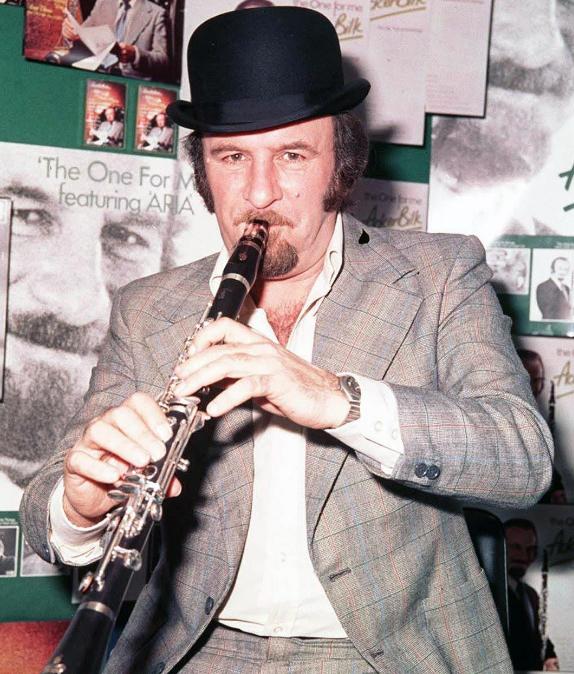
Russ Conway’s Spotify BioRuss Conway was born Trevor Herbert Stanford on September 2, 1925, in Bristol, the youngest of three brothers. His father was a commercial salesman and his mother a pianist, and despite having no formal piano training, he inherited her musical ability and went on to dominate the charts in 1959 with piano medleys, totally contrary to the genres of music prevalent at the time. As a teenager during World War II he joined the Royal Navy, winning a Distinguished Service Medal for work as a personnel signalman to the commander of minesweepers. After the war he rejoined the Merchant Navy, and while on duty he had an accident with a bread slicer that took off the tip of one of his fingers. Conway later claimed this added to his style of playing piano rather than hindering him. He remained in the Navy until 1955, and after leaving he found work playing the piano at various London nightclubs, where one night he was approached by Irving Davies, who booked him to work as backing pianist for Gracie… Fields, Dennis Lotis, Joan Regan, and Rosemary Squires. This brought him to the attention of Norman Newell, an A&R man with EMI Records, who signed him to their Columbia label.
In 1956, he co-wrote the music for a new TV production of Beauty and the Beast and by 1957, under his new name of Russ Conway, he released a medley of songs called "Party Pops." Conway was seen as the successor and the label's answer to Decca's Winifred Atwell, who had enjoyed several piano medley hits throughout the 1950s but had, since 1954, mainly settled into releasing just one each Christmas. "Party Pops" included honky tonk versions of several songs from yesteryear: "When You're Smiling," "I'm Looking Over a Four Leaf Clover," "For Me and My Girl," "Shine on Harvest Moon," and "By the Light of the Silvery Moon." In the fledgling adult-oriented album market, his singalong party medleys were ideal for older listeners who were not buying into the main genre of rock & roll, and by 1958 he had released the album Pack Up Your Troubles, which peaked at number six the following year in a recently expanded LP chart. He also secured a regular guest star appearance on the TV variety program The Billy Cotton Band Show, one of the most popular shows of the 1950s. Back on the singles chart, he placed another medley in the Top Ten, "More Party Pops," which included the songs "Music Music Music," "If You Were the Only Girl in the World," "Nobody's Sweetheart," "Yes Sir That's My Baby," and "Some of These Days," but 1959 was the year he virtually took over the charts with two number one singles, his own compositions "Side Saddle" and "Roulette"; two other Top Ten hits, "China Tea" and "Snow Coach"; and yet another medley, predictably titled "More and More Party Pops," with even more music hall songs -- "Sheik of Araby," "Who Were You with Last Night," "Any Old Iron," "Tiptoe Through the Tulips," and "If You Were the Only Girl in the World."
An extended version of More Party Pops hit number one on the new EP charts and he hit the Top Ten LP charts with a further three albums, Songs to Sing in Your Bath, Family Favourites, and Time to Celebrate. Being the biggest-selling artist of 1959 led to his own TV series and appearances at the London Palladium, but he would never attain such heights again -- his list of hit singles in 1960 was just as long but none of them broke into the Top Ten, although he did achieve a further two Top Ten albums, the Liberace-influenced classical My Concerto for You and another pop medley LP, Party Time. Ill health dominated his life throughout the rest of the 1960s, as Conway suffered a nervous breakdown and a mild stroke that stopped him performing for a while. In the 1980s he developed stomach cancer, but this led to a renewed vigor during which he set up the Russ Conway Cancer Fund with the broadcaster Richard Hope-Hawkins, which raised money for research with charity gala shows featuring Conway and many of his show business friends. Russ Conway died at his home in Eastbourne, Sussex, on November 16, 2000, at the age of 75. ~ Sharon Mawer, Rovi
Viberate is a music analytics platform built for A&Rs, artist managers, labels, booking agents, marketers, and artists.
It helps music professionals track artist growth, analyze audience data, monitor playlist activity, compare artists, follow song performance, and identify opportunities across the music market.
Public artist pages provide a free preview of selected artist data. Paid plans provide access to deeper analytics, historical data, charts, comparisons, playlist tools, exports, alerts, reports, and additional professional features.
Yes. Public Viberate artist pages provide selected artist analytics and music data for free.
Viberate also offers a 7-day free trial of the full platform. A credit card is required to start the trial. The trial includes access to the complete product so users can test deeper artist analytics, historical views, playlist insights, comparisons, charts, exports, alerts, and reporting features before choosing a paid plan.
Viberate provides artist analytics across streaming, playlists, social media, video, radio airplay, songs, and audience markets.
Users can analyze Spotify performance, Spotify and Apple Music playlists, YouTube activity, TikTok and Instagram growth, radio spins, song performance, audience locations, demographics, rankings, and overall artist momentum.
Artist profiles also connect to music charts, similar artists, and comparison tools, helping users benchmark performance and evaluate artists in context.
Viberate updates key artist and track data daily.
For followed artists and tracks, selected data is refreshed multiple times per day. This helps teams monitor playlist changes, streaming movement, audience growth, releases, and campaign performance with more current data.
Update frequency can vary depending on the metric and data source.
Yes. Viberate lets users compare up to five artists side by side across streaming, social media, audience, and engagement metrics.
Users can compare fanbase growth, audience demographics, locations, Spotify performance, social metrics, and other artist data over selected time periods.
Artist comparison can be used for A&R scouting, benchmarking, booking decisions, campaign planning, and evaluating artists with similar audiences or market positions.