Robert Aitken

Classical
Orchestral
 Viberate Rank: 577618
 Viberate Rank: 577618
 Monthly ListenersFollowers
 Subscribers
 Followers
 Followers
 FansTop Spotify Songs
| Track | 7-Day Streams | |
|---|---|---|
1 | 375 | |
2 | 217 | |
3 | 193 | |
4 | 172 | |
5 | 124 |
Top YouTube VideosMonthly ListenersFeatured in Playlists| Playlist | Followers | |
|---|---|---|
1 |  The Way of the Pagan markmcencroe | 12.06K |
2 | Music for Writing Hans-Peter Akkerman | 5.84K |
3 |  Chamber Music for Self-Renewal synergy555 | 4.21K |
4 | Carmen - Habanera lynchbc | 3.55K |
5 | Very relaxing classical Jenni | 3.25K |
Audience| City | Monthly Listeners | |
|---|---|---|
1 |  | 63 |
2 |  | 58 |
3 | | 40 |
4 |  | 39 |
5 |  | 37 |
See full performance history, audience data, playlist activity, rankings, comparisons, and more in Viberate music analytics. Start with a free trial, then continue with a paid plan.
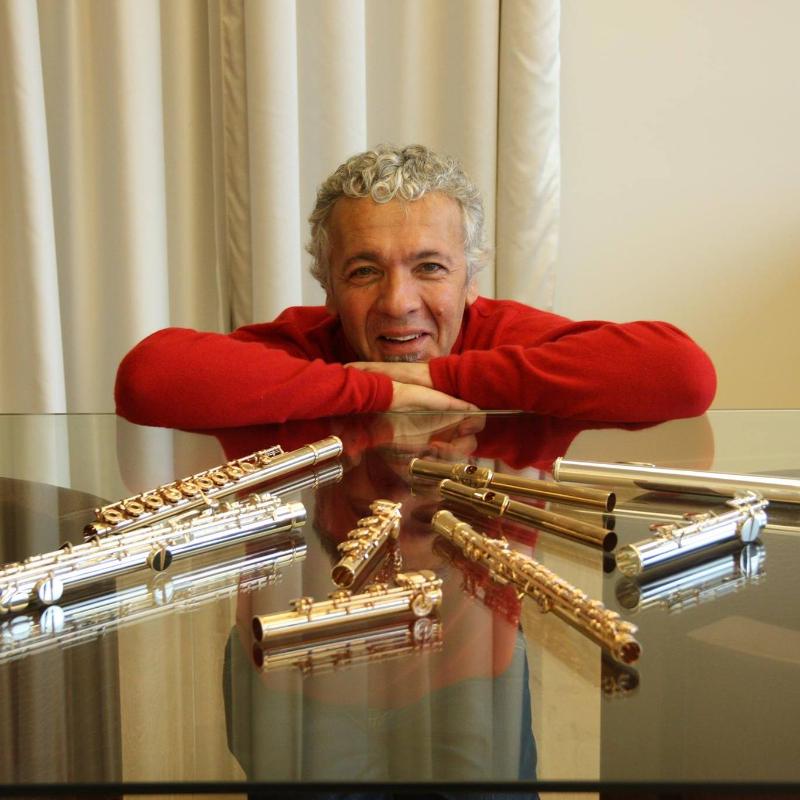
Robert Aitken’s Spotify BioCanadian flutist and composer Robert Aitken studied flute with Nicholas Fiore, Marcel Moyse, Jean-Pierre Rampal and Severino Gazzelloni; of the significant figures, Aitken regards Moyse as the teacher who had the most impact on his own playing. Aitken's composition studies were undertaken with Barbara Pentland and John Weinzweig. At the tender age of only 19, Aitken was principal flutist of the Vancouver Symphony from 1958 to 1959, and Aitken's record stands, as he still the youngest flutist to hold first chair in this symphony's history. Aitken completeed his music degrees at the University of Toronto in 1965, where he also worked in the Electronic Music Studio, composing the works Composition for flute and tape (1962), Hamlet (Incidental Music) (1963), Noesis (1964) and a Quartet for flute, oboe, viola, and contrabass (1961). Aitken's primary public debut was with his own piece, Concert for 12 Soloists and Orchestra (1968) premiered by Seiji Ozawa conducting the Toronto Symphony,… where Aitken held first flute chair from 1965 to 1970. Aitken has premiered more than 65 works of other composers, most written expressly for him, including Elliott Carter, Roger Reynolds, George Crumb, Toru Takemitsu and R. Murray Schafer, with whom Aitken has worked particularly closely, premiering Schafer's opera Patria I: Wolfman in 1987.
Robert Aitken's flute playing is noted for the clarity of his tone and a subtle sense of phrasing, and concert tours has led him all over the word. In addition to many other distinctions, Aitken was a prize-winner at the 1971 Concours International de Flûte de Paris. As a composer, he has received numerous important commissions. Aitken's earlier works, such as Spectra for four chamber groups (1969) were structured around transformations of the twelve-tone series and exhibit an interest in spatial modulation of sound. After a five-month Asian journey in 1970, Aitken was greatly influenced by his experiences there, and this is reflected in his Shadow pieces. The composition Spiral (1975) features amplification of one instrument each from several blended woodwind pairs, creating fascinating timbres. Robert Aitken's later pieces are influenced by minimalism. Aitken founded the summer chamber music festival Music at Shawnigan in 1981, which continues of under the aegis of the Johannesen International School of the Arts. Although Aitken had retired from most of his teaching posts by 2001, he remains active in other ways, and from 2003 he has appeared regularly with the New York Flute Club, leading them in the New World disc Henry Brant: Music for Massed Flutes in 2006.
Viberate is a music analytics platform built for A&Rs, artist managers, labels, booking agents, marketers, and artists.
It helps music professionals track artist growth, analyze audience data, monitor playlist activity, compare artists, follow song performance, and identify opportunities across the music market.
Public artist pages provide a free preview of selected artist data. Paid plans provide access to deeper analytics, historical data, charts, comparisons, playlist tools, exports, alerts, reports, and additional professional features.
Yes. Public Viberate artist pages provide selected artist analytics and music data for free.
Viberate also offers a 7-day free trial of the full platform. A credit card is required to start the trial. The trial includes access to the complete product so users can test deeper artist analytics, historical views, playlist insights, comparisons, charts, exports, alerts, and reporting features before choosing a paid plan.
Viberate provides artist analytics across streaming, playlists, social media, video, radio airplay, songs, and audience markets.
Users can analyze Spotify performance, Spotify and Apple Music playlists, YouTube activity, TikTok and Instagram growth, radio spins, song performance, audience locations, demographics, rankings, and overall artist momentum.
Artist profiles also connect to music charts, similar artists, and comparison tools, helping users benchmark performance and evaluate artists in context.
Viberate updates key artist and track data daily.
For followed artists and tracks, selected data is refreshed multiple times per day. This helps teams monitor playlist changes, streaming movement, audience growth, releases, and campaign performance with more current data.
Update frequency can vary depending on the metric and data source.
Yes. Viberate lets users compare up to five artists side by side across streaming, social media, audience, and engagement metrics.
Users can compare fanbase growth, audience demographics, locations, Spotify performance, social metrics, and other artist data over selected time periods.
Artist comparison can be used for A&R scouting, benchmarking, booking decisions, campaign planning, and evaluating artists with similar audiences or market positions.