Richie Furay

Country
Americana/Alt Country
Country Rock
 Viberate Rank: 245298
 Viberate Rank: 245298
 Monthly ListenersFollowers
 Subscribers
 Followers
 Followers
 FansTop Spotify Songs
| Track | 7-Day Streams | |
|---|---|---|
1 | 1.61K | |
2 | 128 | |
3 | 128 | |
4 | 98 | |
5 | 93 |
Top YouTube Videos| Video | 7-Day Views | |
|---|---|---|
1 | 257 | |
2 | 18 |
Monthly ListenersFeatured in Playlists| Playlist | Followers | |
|---|---|---|
1 |  Country Rock Classics Spotify | 208.76K |
2 |  Bluegrass Covers Ultimate List Mark Scheltgen | 4.68K |
3 | 70’s and 80’s Mellow/Soft/Yacht Rock ClipboardJesus | 4.21K |
4 |  Sunset Vibes // 80s -Esque Yatch Rock supersomom | 2.90K |
5 |  Yacht Rock Summer Topsify France | 2.23K |
Audience| City | Monthly Listeners | |
|---|---|---|
1 | | 61 |
2 | | 60 |
3 | | 57 |
4 | | 53 |
5 | | 53 |
See full performance history, audience data, playlist activity, rankings, comparisons, and more in Viberate music analytics. Start with a free trial, then continue with a paid plan.
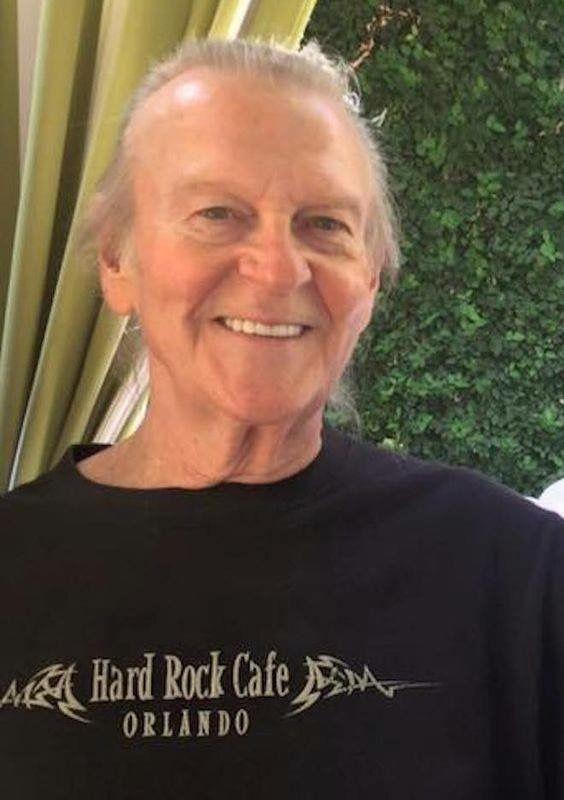
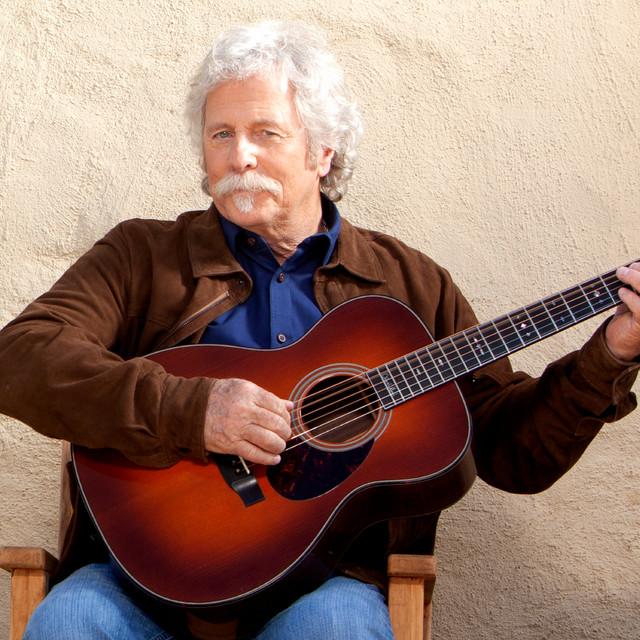
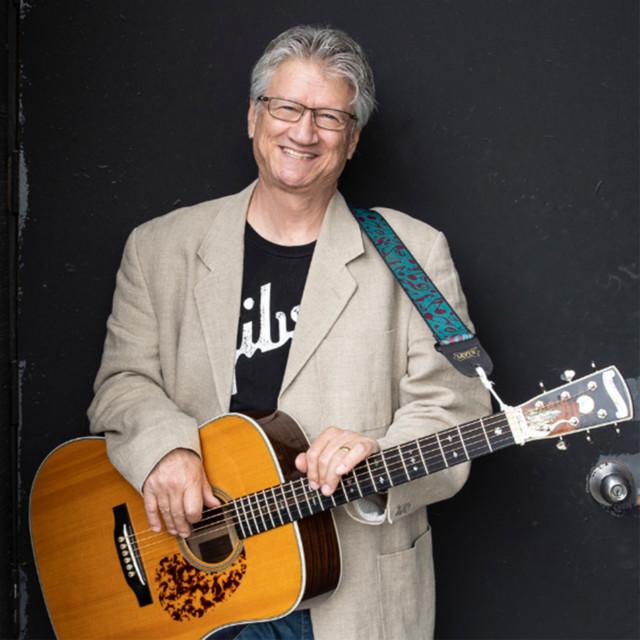
Richie Furay’s Spotify BioA pioneering figure in the history of country rock, guitarist, vocalist, and songwriter Richie Furay was a founding member of two important bands in the genre, Buffalo Springfield and Poco. Furay was also part of the country-rock supergroup the Souther-Hillman-Furay Band, and in all of his projects, he showed off his warm, graceful vocals, his sturdy guitar work, and the down-to-earth, relatable emotions of his songwriting. In addition to his work as a collaborator and sideman, Furay recorded extensively as a solo artist, beginning with 1976's I've Got a Reason, and 1978's Dance a Little Light and 2005's I Am Sure reflected his sure hand at country, folk, and rock styles as well as his deep religious faith, and 2022's In the Country saw him putting his own stamp on a program of noted country songs.
Paul Richard Furay was born in Yellow Springs, Ohio on May 9, 1944. Furay learned to play the guitar, and in his teens joined his first band, a local group called the Barons. After completing… high school, Furay enrolled at Oberlin College, and when not busy with classes, he took part in a student choral group. Their performances took the group to New York City, where Furay was drawn into the city's thriving folk music scene. He was playing folk venues in Greenwich Village when he was approached by producer and songwriter Ed E. Miller, who was putting together a Broadway show rooted in folk music. Furay joined the cast of Miller's project, America Sings, but the show closed after just two weeks. Hoping to salvage something from the failed show, Miller recruited nine members of the cast to form a commercial folk group he dubbed the Au-Go-Go Singers. The group lasted just long enough to cut an album in 1964 before breaking up, but one of Furay's bandmates was a singer from Texas named Stephen Stills, and they struck up a friendship. Furay had quit the Singers before they evolved into a group called the Company, where during a date in Thunder Bay, Ontario, Canada, they shared a bill with the Squires, featuring a guitarist and songwriter named Neil Young. Stills relocated to Los Angeles, and after Young made his way to California, they decided to form a group. Remembering his talented friend from his Greenwich Village days, Stills invited Furay to join Buffalo Springfield. They made their debut in 1966, and in March 1967, they landed a Top Ten single with Stills' song "For What It's Worth."
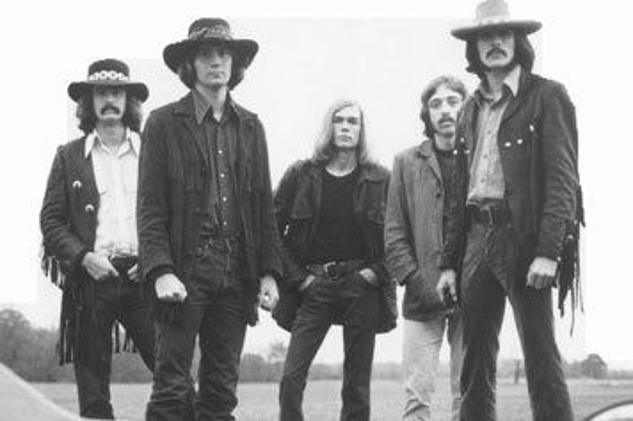
Buffalo Springfield was popular and influential, but the group's membership was volatile, and they broke up in 1968; the last track on their third and final album, Last Time Around, was a song Furay had written for his girlfriend and future wife, "Kind Woman." Wasting no time, Furay and guitarist Jim Messina, who had worked in the studio with Buffalo Springfield, put together a new band with pedal steel guitarist Rusty Young, bassist Randy Meisner, and drummer George Grantham. The band was named Poco, and they made their live debut in November 1968. Epic Records signed the band, and their debut album, Pickin' Up the Pieces, appeared in May 1969. Poco would enjoy moderate success, and Furay would cut five more albums with the group – Poco (1970), Deliverin' (1971), From the Inside (1971), A Good Feelin' to Know (1972), and Crazy Eyes (1973) – before he chose to leave the band. Furay's next project came when David Geffen invited him to join a country-rock supergroup with Chris Hillman (formerly of the Byrds and the Flying Burrito Brothers) and J.D. Souther (a musician and songwriter whose tunes had been hits for Linda Ronstadt and the Eagles). Dubbed the Souther-Hillman-Furay Band, their self-titled debut album was issued by Asylum Records in 1974, and "Fallin' In Love," penned by Furay, became a hit single, while the album went gold. A second Souther-Hillman-Furay Band album, Trouble in Paradise, came out in 1975, but the title proved prophetic – sales and critical response didn't match the debut, and as tensions within the group mounted, they disbanded.
One of the factors behind Furay's decision to leave Souther-Hillman-Furay was a recent spiritual awakening. The group's busy schedule was taking a toll on his marriage, and Al Perkins, a pedal steel guitarist who recorded and toured with the group, started discussing his Christian faith with him. Furay became a devoted Christian and left Los Angeles for Boulder, CO. His first solo album, 1976's I've Got a Reason, was filled with songs informed by his new faith, as were his next two LPs, 1978's Dance a Little Light and 1979's I Still Have Dreams. Furay's first three solo releases were issued by Asylum Records; when the label became disappointed with Furay's sales figures, he struck a new record deal with the Christian label Myrrh, who reissued I've Got a Reason with new artwork in 1981, followed by an album of fresh material, 1982's Seasons of Change. Dissatisfied with the progress of his career and eager to devote himself to his family and his faith, Furay stepped away from music and became a pastor at Calvary Chapel in Broomfield, CO.
Furay performed at church services and local events, but was little heard from outside of his community until 1989, when he rejoined Poco for 1989's Legacy, an album that brought the group's original lineup back together. Furay also took part in Poco's subsequent concert tour, and the album spawned two successful singles, "Call It Love" and "Nothin' to Hide." The reunion was a one-off, but it renewed Furay's interest in performing, and in 1997 he released a new album of Christian music, In My Father's House. 2005's I Am Sure was an album of worship music that included guest appearances from three of his former Poco bandmates – Paul Cotton, Jim Messina, and Rusty Young – as well as Chris Hillman from the Souther-Hillman-Furay Band. 2006's The Heartbeat of Love was a country rock-flavored set that also featured a number of Furay's old colleagues, among them Neil Young, Stephen Stills, Timothy B. Schmit, and Kenny Loggins.
In 2011, Furay joined forces with Neil Young and Stephen Stills for a Buffalo Springfield reunion tour. Young dropped out before they could record a new album, but some songs Furay was writing in anticipation of a new Springfield project appeared on 2015's Hand in Hand, which also featured a new recording of "Kind Woman" with Neil Young and Kenny Loggins on backing vocals. On November 16, 2018, Furay and his band played a special show at the Troubadour in Los Angeles, where Poco got their start, to honor the 50th anniversary of Poco's live album Deliverin'. The show was recorded, and 2021's Return to the Troubadour was a two-CD set that gave fans outside of California a chance to hear the concert. Furay signed with BMG Rights Management for 2022's In the Country, in which he covered a dozen of his favorite country songs, including numbers made famous by Garth Brooks, Keith Urban, Alabama, John Denver, and Buddy & Julie Miller. ~ Mark Deming, Rovi
Viberate is a music analytics platform built for A&Rs, artist managers, labels, booking agents, marketers, and artists.
It helps music professionals track artist growth, analyze audience data, monitor playlist activity, compare artists, follow song performance, and identify opportunities across the music market.
Public artist pages provide a free preview of selected artist data. Paid plans provide access to deeper analytics, historical data, charts, comparisons, playlist tools, exports, alerts, reports, and additional professional features.
Yes. Public Viberate artist pages provide selected artist analytics and music data for free.
Viberate also offers a 7-day free trial of the full platform. A credit card is required to start the trial. The trial includes access to the complete product so users can test deeper artist analytics, historical views, playlist insights, comparisons, charts, exports, alerts, and reporting features before choosing a paid plan.
Viberate provides artist analytics across streaming, playlists, social media, video, radio airplay, songs, and audience markets.
Users can analyze Spotify performance, Spotify and Apple Music playlists, YouTube activity, TikTok and Instagram growth, radio spins, song performance, audience locations, demographics, rankings, and overall artist momentum.
Artist profiles also connect to music charts, similar artists, and comparison tools, helping users benchmark performance and evaluate artists in context.
Viberate updates key artist and track data daily.
For followed artists and tracks, selected data is refreshed multiple times per day. This helps teams monitor playlist changes, streaming movement, audience growth, releases, and campaign performance with more current data.
Update frequency can vary depending on the metric and data source.
Yes. Viberate lets users compare up to five artists side by side across streaming, social media, audience, and engagement metrics.
Users can compare fanbase growth, audience demographics, locations, Spotify performance, social metrics, and other artist data over selected time periods.
Artist comparison can be used for A&R scouting, benchmarking, booking decisions, campaign planning, and evaluating artists with similar audiences or market positions.