Reinhard Keiser

Classical
Opera
 Viberate Rank: 690458
 Viberate Rank: 690458
 Monthly ListenersFollowers
 Subscribers
 Followers
 Followers
 FansTop Spotify Songs
| Track | 7-Day Streams | |
|---|---|---|
1 | 170 | |
2 | 149 | |
3 | 61 | |
4 | 43 | |
5 | 31 |
Top YouTube VideosMonthly ListenersFeatured in Playlists| Playlist | Followers | |
|---|---|---|
1 | 60bpm Baroque Study Tan | 4.99K |
2 |  SACRED MUSIC MUSICA SACRA CHORAL joselupelozano | 3.48K |
3 |  Classical Gems 🎻 - Archive Jonathan Ruben | 2.31K |
4 |  The Best Opera Playlist Ever Emilio José Gómez Rodríguez | 2.10K |
5 | Rustige Bach woutverhoek | 1.08K |
Audience| City | Monthly Listeners | |
|---|---|---|
1 | | 30 |
2 |  | 25 |
3 | | 24 |
4 | | 22 |
5 | | 20 |
See full performance history, audience data, playlist activity, rankings, comparisons, and more in Viberate music analytics. Start with a free trial, then continue with a paid plan.
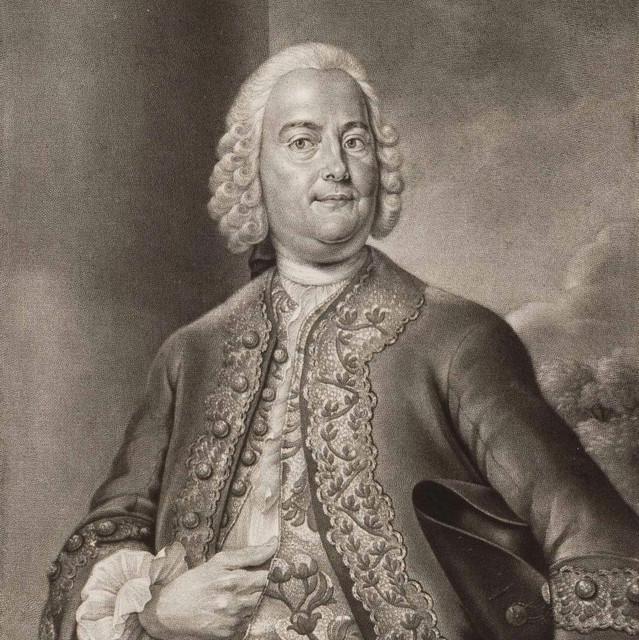
Reinhard Keiser’s Spotify BioReinhard Keiser was, to his contemporaries, the preeminent German composer of opera of the late seventeenth and early eighteenth centuries. Although he did not create a truly German national opera, the quality of his compositions raised German operatic art to a new, higher level. He was known especially for his prolific melodic inspiration, his adventuresome orchestrations, and his versatility as a composer and dramatist. He composed music in many genres, including sacred music, chamber music, and French ballet, but opera was his first love, and he devoted most of his energies to dramatic vocal works. He composed operas on all kinds of subjects, including pastoral, comic, biblical, romantic, historical, and mythological. One of his finest works was an operatic character study of the Neapolitan revolutionary Masagniello, and he also set a story based on the escapades of two Hamburg pirates. He treated each of his subjects individually, changing his musical approach to fit the dramatic… content of the libretti. His view of opera was that the music should express the changing emotions and motivations of the characters of the drama. To this end, he made a study of musical declamation, and turned his recitatives into highly expressive lines reflective of the oratorical and rhetorical nature of the texts. Mattheson and Scheibe both considered him the finest and most original of the contemporary German composers, and Handel pirated Keiser's scores repeatedly, using Keiser's smooth, graceful melodies in countless of his own operas and oratorios. Earlier musicologists numbered Keiser's operas in the hundreds, and there were also numerous occasional works, ballets, and serenatas. Only a portion of these works survives today.
Keiser's personality was both extravagant and self-indulgent, while his work habits were exacting. His later operas show increasingly the influence of Italian opera on his own works; he adapted aria forms, scenic structures, and much of his musical language from the Italians. He introduced, in the 1720s and 1730s, the practice of interpolating into his German operas, pre-composed Italian arias. Because Italian music was so popular and well loved in Hamburg, this soon became a standard practice with all German composers. The interpolations were many, but the other composers were always acknowledged in the libretti.
Born in Teuchern, near Weißenfels, Reinhard Keiser was the son of the organist and composer Gottfried Keiser. His father abandoned his mother and her two sons while Reinhard was still a youth. Reinhard studied music at the Thomasschule with Johann Schelle and may have also studied composition with Johann Kuhnau. His first formal position was as a court composer in Brunswick. Johann Kusser was in charge of the Brunswick opera, and it was due to his early influence that Keiser began having operas produced for the theaters in Brunswick and Hamburg. By 1697, Keiser had already written several operas for the Hamburg stage, and moved there permanently. In 1703 he began to manage the Hamburg Opera House, also known as the Gänsemarkt Theater of Hamburg, but financial difficulties soon followed, supposedly due to his own extravagances. Between the years 1705 and 1718, he produced countless new works. But when management changed hands, he was dropped as musical director, and did not again work steadily for any theater until 1722. He was brought back to the Gänsemarkt under Telemann, and the two composers worked side by side, with Keiser the dominant force in operatic composition and production. On 28 December 1728, Keiser became the Kantor of the Hamburg Cathedral, and retired from operatic composition altogether. He died on 12 September 1729.
Viberate is a music analytics platform built for A&Rs, artist managers, labels, booking agents, marketers, and artists.
It helps music professionals track artist growth, analyze audience data, monitor playlist activity, compare artists, follow song performance, and identify opportunities across the music market.
Public artist pages provide a free preview of selected artist data. Paid plans provide access to deeper analytics, historical data, charts, comparisons, playlist tools, exports, alerts, reports, and additional professional features.
Yes. Public Viberate artist pages provide selected artist analytics and music data for free.
Viberate also offers a 7-day free trial of the full platform. A credit card is required to start the trial. The trial includes access to the complete product so users can test deeper artist analytics, historical views, playlist insights, comparisons, charts, exports, alerts, and reporting features before choosing a paid plan.
Viberate provides artist analytics across streaming, playlists, social media, video, radio airplay, songs, and audience markets.
Users can analyze Spotify performance, Spotify and Apple Music playlists, YouTube activity, TikTok and Instagram growth, radio spins, song performance, audience locations, demographics, rankings, and overall artist momentum.
Artist profiles also connect to music charts, similar artists, and comparison tools, helping users benchmark performance and evaluate artists in context.
Viberate updates key artist and track data daily.
For followed artists and tracks, selected data is refreshed multiple times per day. This helps teams monitor playlist changes, streaming movement, audience growth, releases, and campaign performance with more current data.
Update frequency can vary depending on the metric and data source.
Yes. Viberate lets users compare up to five artists side by side across streaming, social media, audience, and engagement metrics.
Users can compare fanbase growth, audience demographics, locations, Spotify performance, social metrics, and other artist data over selected time periods.
Artist comparison can be used for A&R scouting, benchmarking, booking decisions, campaign planning, and evaluating artists with similar audiences or market positions.