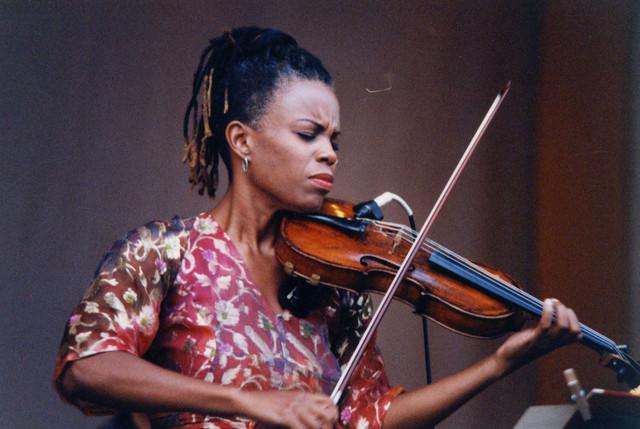
Regina Carter

Jazz
Big band Jazz
Smooth Jazz
 Viberate Rank: 144205
 Viberate Rank: 144205
 Monthly ListenersFollowers
 Subscribers
 Followers
 Followers
 FansTop Spotify Songs
| Track | 7-Day Streams | |
|---|---|---|
1 | 2.20K | |
2 | 1.02K | |
3 | 897 | |
4 | 861 | |
5 | 746 |
Top YouTube VideosMonthly ListenersFeatured in Playlists| Playlist | Followers | |
|---|---|---|
1 |  Jazz Meets Classical Spotify | 321.61K |
2 |  Jazz Playlist. Filtr Éxitos | 124.16K |
3 | Jazz Manouche 115648840 | 24.23K |
4 | Gypsy jazz David Michielsen | 21.58K |
5 | Jazz Standards Playlist tmorral22 | 19.75K |
Audience| City | Monthly Listeners | |
|---|---|---|
1 | | 196 |
2 |  | 186 |
3 |  | 182 |
4 | | 163 |
5 | | 135 |
See full performance history, audience data, playlist activity, rankings, comparisons, and more in Viberate music analytics. Start with a free trial, then continue with a paid plan.
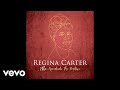
Regina Carter’s Spotify BioViolinist Regina Carter is a highly original soloist whose sophisticated technique and rich, lush tone took the jazz world by pleasant surprise when she arrived in New York from her native Detroit. And jazz fans weren't the only people who heard that mercurial quality in her playing: artists as diverse as Faith Evans, Elliot Sharp, and Mary J. Blige have employed her talents on their recordings, as has filmmaker Ken Burns on his soundtrack for The Civil War. Add this to an extremely long list of jazzers who include Tom Harrell, Wynton Marsalis, and Oliver Lake. Carter began playing her instrument at age four and attended Detroit's prestigious Cass Technical High School. Upon graduating, she departed for the new England Conservatory of Music, only to return to Michigan to join the all-female jazz quartet Straight Ahead. After two recordings for the Atlantic label, Carter left the band in 1994 in search of a solo career. She had already been doing session work in the city and sought to… make the move permanent. Carter found herself working with Max Roach, the String Trio of New York, and the Uptown String Quartet before recording her self-titled debut recording on Atlantic in 1995. Its mixture of R&B, pop, and jazz confused jazz fans and delighted pop critics. It sold well enough for her to record Something for Grace, which leaned in a jazz direction though it featured an R&B sheen in its production. Carter left Atlantic for Verve in 1998 and recorded two more outings under her own name, the last of which, Motor City Moments, is her finest session.
In 2001, Carter recorded a duet session with Kenny Barron that has been universally acclaimed for its lyrical qualities and stunning range of dynamics and harmonic invention. She has since released the classically influenced Paganini: After a Dream in 2003 and the American songbook album I'll Be Seeing You: A Sentimental Journey in 2006 as a tribute to her late mother. She won a MacArthur Foundation Fellowship in September of that year.
After much time spent touring and a sojourn in Africa, Carter emerged with Reverse Thread in 2010 on the E1 imprint. The album is comprised mainly of African folk tunes from countries as diverse as Mali, Uganda, and Senegal, among others. Her sidemen on this recording include accordionists Will Holshouser and Gary Versace, guitarist Adam Rogers, acoustic bassist Chris Lightcap, electric bassist Mamadou Ba, kora master Yocouba Sissoko, and drummer Alvester Garnett. Using many of the same musicians, Carter furthered her investigation of earlier musics on Southern Comfort, which explored in detail as well as in concept the roots of American music. It was released in March of 2014.
The following year, she stayed busy contributing to a stylistically varied set of projects, including albums by Terri Lyne Carrington, Joe Jackson and Will Downing. In 2017, Carter returned to her solo work with her second album for Okeh Records, the Ella Fitzgerald-inspired Ella: Accentuate the Positive. Along with featuring Fitzgerald's former pianist and musical director Mike Wofford, the album also included guest appearances from bassist Ben Williams, vocalist Charenee Wade, and vocalist Carla Cook. ~ Thom Jurek, Rovi
Viberate is a music analytics platform built for A&Rs, artist managers, labels, booking agents, marketers, and artists.
It helps music professionals track artist growth, analyze audience data, monitor playlist activity, compare artists, follow song performance, and identify opportunities across the music market.
Public artist pages provide a free preview of selected artist data. Paid plans provide access to deeper analytics, historical data, charts, comparisons, playlist tools, exports, alerts, reports, and additional professional features.
Yes. Public Viberate artist pages provide selected artist analytics and music data for free.
Viberate also offers a 7-day free trial of the full platform. A credit card is required to start the trial. The trial includes access to the complete product so users can test deeper artist analytics, historical views, playlist insights, comparisons, charts, exports, alerts, and reporting features before choosing a paid plan.
Viberate provides artist analytics across streaming, playlists, social media, video, radio airplay, songs, and audience markets.
Users can analyze Spotify performance, Spotify and Apple Music playlists, YouTube activity, TikTok and Instagram growth, radio spins, song performance, audience locations, demographics, rankings, and overall artist momentum.
Artist profiles also connect to music charts, similar artists, and comparison tools, helping users benchmark performance and evaluate artists in context.
Viberate updates key artist and track data daily.
For followed artists and tracks, selected data is refreshed multiple times per day. This helps teams monitor playlist changes, streaming movement, audience growth, releases, and campaign performance with more current data.
Update frequency can vary depending on the metric and data source.
Yes. Viberate lets users compare up to five artists side by side across streaming, social media, audience, and engagement metrics.
Users can compare fanbase growth, audience demographics, locations, Spotify performance, social metrics, and other artist data over selected time periods.
Artist comparison can be used for A&R scouting, benchmarking, booking decisions, campaign planning, and evaluating artists with similar audiences or market positions.