Ray Drummond

Jazz
Smooth Jazz
Free Jazz
 Viberate Rank: 371941
 Viberate Rank: 371941
 Monthly ListenersFollowers
 Subscribers
 Followers
 Followers
 FansTop Spotify Songs
| Track | 7-Day Streams | |
|---|---|---|
1 | 1.78K | |
2 | 1.15K | |
3 | 532 | |
4 | 367 | |
5 | 241 |
Top YouTube VideosMonthly ListenersFeatured in Playlists| Playlist | Followers | |
|---|---|---|
1 |  High Quality Audiophile Music Jujubegamer | 20.14K |
2 | Swing Music for Dancers jquinlanspotify | 14.57K |
3 |  Real Book - Jazz standards/classics Anders Garbom Bjørklund | 13.79K |
4 |  Fast Jazz! Filip Grbović | 10.84K |
5 |  The Sound of Free Jazz The Sounds of Spotify | 10.46K |
Audience| City | Monthly Listeners | |
|---|---|---|
1 |  | 39 |
2 | | 25 |
3 |  | 25 |
4 |  | 22 |
5 | | 20 |
See full performance history, audience data, playlist activity, rankings, comparisons, and more in Viberate music analytics. Start with a free trial, then continue with a paid plan.
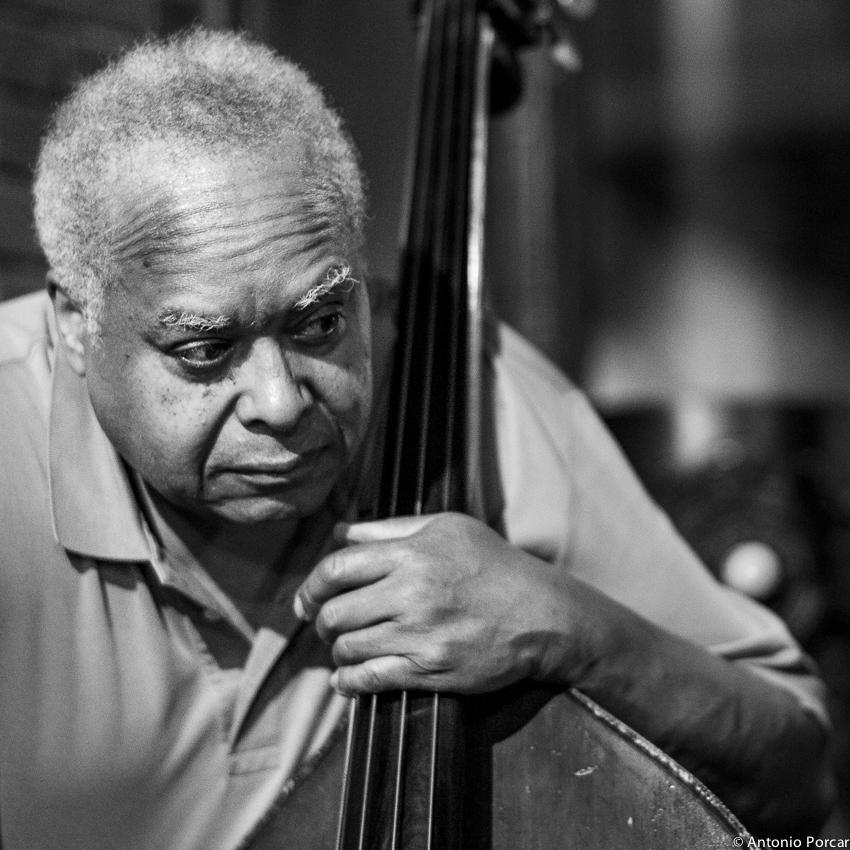
Ray Drummond’s Spotify BioRay "Bulldog" Drummond is one of jazz's busiest session players. His deep, smooth bass playing has been heard on more than 300 albums, including recordings by Art Farmer, David Murray, Houston Person, Stan Getz, Kenny Burrell, Kevin Mahogany, Toots Thielemans, Benny Golson, and Ray Bryant. On his own, Drummond has led three bands -- Excursion, featuring David Sanchez, Craig Handy, Stephen Scott, Mor Thiam, and Billy Hart; the Ray Drummond Quintet, with Hart, Handy, and Stephen Scott, and a duo, One on One, shared with Bill Mays. He continues to co-lead the Drummonds, with his brother, Billy, and Renee Rosnes.
The son of an army colonel, Drummond attended 14 schools around the world as a youngster. Although he played trumpet from the age of eight, and French horn, a high-school music teacher encouraged him to switch to the bass. Briefly settling in northern California, he earned a Bachelor degree in political science at Claremont Men's College in June 1968. Continuing his education at… the Stanford Business School, he earned a Masters degree in business administration. While in San Francisco, he played with Bobby Hutcherson, Michael White, Ed Kelly, Tom Harrell, Eddie Marshall, and Lester Young's niece, Martha Young. He taught at Monterey Peninsula College of Music in 1975.
Moving to New York in 1977, Drummond worked as a session bass player for Betty Carter, the Thad Jones/Mel Lewis Orchestra,Wynton Marsalis, Woody Shaw, Hank Jones, Jon Faddis, Milt Jackson, Johnny Griffin, Kenny Barron, Pharoah Sanders, and George Coleman.
In addition to working as a sideman and leading his own bands, Drummond has continued to teach. He currently serves as an assistant professor of jazz theory and practice at California State University and has conducted master classes at the Berklee College of Music, Purdue University, the University of Massachusetts, and the Sibelius Academy of Music in Helsinki, Finland. ~ Craig Harris, Rovi
Viberate is a music analytics platform built for A&Rs, artist managers, labels, booking agents, marketers, and artists.
It helps music professionals track artist growth, analyze audience data, monitor playlist activity, compare artists, follow song performance, and identify opportunities across the music market.
Public artist pages provide a free preview of selected artist data. Paid plans provide access to deeper analytics, historical data, charts, comparisons, playlist tools, exports, alerts, reports, and additional professional features.
Yes. Public Viberate artist pages provide selected artist analytics and music data for free.
Viberate also offers a 7-day free trial of the full platform. A credit card is required to start the trial. The trial includes access to the complete product so users can test deeper artist analytics, historical views, playlist insights, comparisons, charts, exports, alerts, and reporting features before choosing a paid plan.
Viberate provides artist analytics across streaming, playlists, social media, video, radio airplay, songs, and audience markets.
Users can analyze Spotify performance, Spotify and Apple Music playlists, YouTube activity, TikTok and Instagram growth, radio spins, song performance, audience locations, demographics, rankings, and overall artist momentum.
Artist profiles also connect to music charts, similar artists, and comparison tools, helping users benchmark performance and evaluate artists in context.
Viberate updates key artist and track data daily.
For followed artists and tracks, selected data is refreshed multiple times per day. This helps teams monitor playlist changes, streaming movement, audience growth, releases, and campaign performance with more current data.
Update frequency can vary depending on the metric and data source.
Yes. Viberate lets users compare up to five artists side by side across streaming, social media, audience, and engagement metrics.
Users can compare fanbase growth, audience demographics, locations, Spotify performance, social metrics, and other artist data over selected time periods.
Artist comparison can be used for A&R scouting, benchmarking, booking decisions, campaign planning, and evaluating artists with similar audiences or market positions.