Rakim

Hip Hop
Boom Bap
 Viberate Rank: 10103
 Viberate Rank: 10103
 Monthly ListenersFollowers
 Subscribers
 Followers
 Followers
 FansTop Spotify Songs
| Track | 7-Day Streams | |
|---|---|---|
1 | 287.65K | |
2 | 206.46K | |
3 | 148.71K | |
4 | 125.30K | |
5 | 115.09K |
Top YouTube VideosMonthly ListenersFeatured in Playlists| Playlist | Followers | |
|---|---|---|
1 |  I Love My '90s Hip-Hop Spotify | 9.39M |
2 |  I Love My '00s R&B Spotify | 4.81M |
3 |  mid:nite storm Spotify | 1.00M |
4 |  clubbing like it's the 2000's kass !! | 981.12K |
5 |  Best Rap Songs of All Time IndieMassive Hits | 510.81K |
Audience| City | Monthly Listeners | |
|---|---|---|
1 |  | 19.30K |
2 | | 16.15K |
3 |  | 16.07K |
4 |  | 16.04K |
5 |  | 14.91K |
See full performance history, audience data, playlist activity, rankings, comparisons, and more in Viberate music analytics. Start with a free trial, then continue with a paid plan.
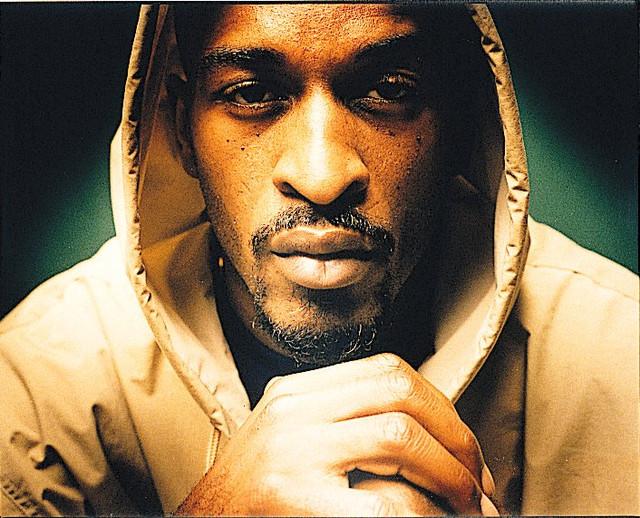
Rakim’s Spotify BioRakim is widely acknowledged as one of the greatest rappers of all time. In terms of how he delivers his lyrics -- most of which assert his skills, wisdom, and Islamic faith -- the Long Island native is virtually unparalleled. His flow is smooth and liquid, imposing yet conversational, inflected with jazz rhythms and an air of effortless cool. As one-half of Eric B. & Rakim in the '80s and early '90s, Rakim raised the bar for MC technique and helped to pioneer the use of internal rhyme schemes. Where many contemporaries developed their approach through improvisational battles, Rakim was among the first to demonstrate the possibilities of intricately crafted lyrics packed with clever word choices and metaphors. The four albums Rakim recorded with Eric B., highlighted by the platinum debut Paid in Full (1987) and two subsequent gold sellers, still sound fresh and exceptionally powerful. Rakim's infrequent solo recordings since then, starting with the Top Ten full-length The 18th Letter… (1997), and continuing through the typically lean and hard-hitting G.O.Ds Network - Reb7rth (2024), have only added to his legend.
Rakim was born William Griffin, Jr. on January 28, 1968, in the Long Island suburb of Wyandanch. The nephew of '50s R&B legend Ruth Brown, Griffin was surrounded by music from day one, and was interested in rap almost from its inception. At age 16, he converted to Islam, adopting the Muslim name Rakim Allah. In 1985, he met Queens DJ Eric B., whose intricately constructed soundscapes made an excellent match for Rakim's more cerebral presence on the mike. With the release of their debut single, "Eric B. Is President," in 1986, Eric B. & Rakim became a sensation in the hip-hop community, and their reputation kept growing as they issued classic tracks like "I Ain't No Joke" and "Paid in Full." Their first two full-length albums, 1987's Paid in Full and 1988's Follow the Leader, are still regarded as all-time hip-hop classics; Rakim's work set out a blueprint for other, similarly progressive-minded MCs to follow, and helped ensure that even after the rise of other fertile scenes around the country, East Coast rap would maintain a reputation as the center of innovative lyrical technique. The last two Eric B. & Rakim albums, 1990's darker Let the Rhythm Hit 'Em and 1992's jazzier Don't Sweat the Technique, likewise contained many quotable lines.
Unfortunately, the duo's legacy stopped at four albums. Both Eric B. and Rakim expressed interest in recording solo albums to one another, but the former, fearful of being abandoned by his partner when their contract was up, refused to sign the release. That led to their breakup in 1992, and Rakim spent a substantial amount of time in the courts, handling the legal fallout between himself, his ex-partner, and their ex-label, MCA. His only solo output for a number of years was the track "Heat It Up," featured on the 1993 soundtrack to the Mario Van Peebles film Gunmen. Moreover, a reshuffling at MCA effectively shut down production on Rakim's solo debut, after he'd recorded some preliminary demos. Finally, Rakim got a new contract with Universal, and toward the end of 1997 he released his first solo record, The 18th Letter (early editions contained the bonus disc Book of Life, a fine Eric B. & Rakim retrospective). Anticipation for The 18th Letter turned out to be surprisingly high, especially for a veteran rapper whose roots extended so far back into hip-hop history; yet thanks to Rakim's legendary reputation, and production from the likes of DJ Premier, Pete Rock, and DJ Clark Kent, it entered the Billboard 200 at number four. His follow-up, The Master, landed in 1999 and registered at number 72. An even larger cast -- with Premier and Kent joined by the likes of the 45 King and Jaz-O -- assisted Rakim in its making.
Rakim signed with Dr. Dre's Aftermath label in 2001, and the MC and Dre began recording a new album early the next year with the prospective title of Oh My God. In the meantime, to help heighten anticipation for the summit between the two legends, Rakim guested on the single "Addictive" by Aftermath labelmate Truth Hurts; "Addictive" hit the Top Ten in 2002, marking the first time Rakim had visited that territory since he and Eric B. appeared on Jody Watley's "Friends" in 1989. Disagreements between Ra and Dre, however, prevented Oh My God from seeing the light of day, though the rapper was able to retain the tracks he had made with the producer. For the next couple years, Rakim continued to talk about the record, since retitled The Seventh Seal, even going so far as to promise a release on July 7, 2007. The date came and went, though, in early 2008, The Archive: Live, Lost & Found, a mostly live album that also contained four new previously unreleased songs, hit shelves. The Seventh Seal finally did arrive a year later on the SMC label. Needlz, Nottz, Jake One, and Nick Wiz were among the crew of producers. Destiny Griffin, Rakim's daughter, sang the hook on "Message in the Song," while the finale "Euphoria" featured Busta Rhymes, Jadakiss, Styles P, and Cocoa Chanelle.
Rakim releases were increasingly rare in the 2010s, limited to collaborations such as "Don't Call Me" (with DMX and Shontelle), "Guilty All the Same" (headlined by Linkin Park), and "Walk" (with Orion Peace). In July 2024, Rakim returned with G.O.Ds Network - Reb7rth, a seven-track EP on which he was joined by over two dozen fellow MCs. Posthumous appearances were made by Prodigy, DMX, and Nipsey Hussle, and another guest, Chino XL, died two days after the EP's release. Kurupt and Masta Killa joined forces with Ra on the lead single "Be Ill," and the likes of Kool G Rap, Snoop Dogg, and Method Man appeared elsewhere. ~ Steve Huey & Andy Kellman, Rovi
Viberate is a music analytics platform built for A&Rs, artist managers, labels, booking agents, marketers, and artists.
It helps music professionals track artist growth, analyze audience data, monitor playlist activity, compare artists, follow song performance, and identify opportunities across the music market.
Public artist pages provide a free preview of selected artist data. Paid plans provide access to deeper analytics, historical data, charts, comparisons, playlist tools, exports, alerts, reports, and additional professional features.
Yes. Public Viberate artist pages provide selected artist analytics and music data for free.
Viberate also offers a 7-day free trial of the full platform. A credit card is required to start the trial. The trial includes access to the complete product so users can test deeper artist analytics, historical views, playlist insights, comparisons, charts, exports, alerts, and reporting features before choosing a paid plan.
Viberate provides artist analytics across streaming, playlists, social media, video, radio airplay, songs, and audience markets.
Users can analyze Spotify performance, Spotify and Apple Music playlists, YouTube activity, TikTok and Instagram growth, radio spins, song performance, audience locations, demographics, rankings, and overall artist momentum.
Artist profiles also connect to music charts, similar artists, and comparison tools, helping users benchmark performance and evaluate artists in context.
Viberate updates key artist and track data daily.
For followed artists and tracks, selected data is refreshed multiple times per day. This helps teams monitor playlist changes, streaming movement, audience growth, releases, and campaign performance with more current data.
Update frequency can vary depending on the metric and data source.
Yes. Viberate lets users compare up to five artists side by side across streaming, social media, audience, and engagement metrics.
Users can compare fanbase growth, audience demographics, locations, Spotify performance, social metrics, and other artist data over selected time periods.
Artist comparison can be used for A&R scouting, benchmarking, booking decisions, campaign planning, and evaluating artists with similar audiences or market positions.