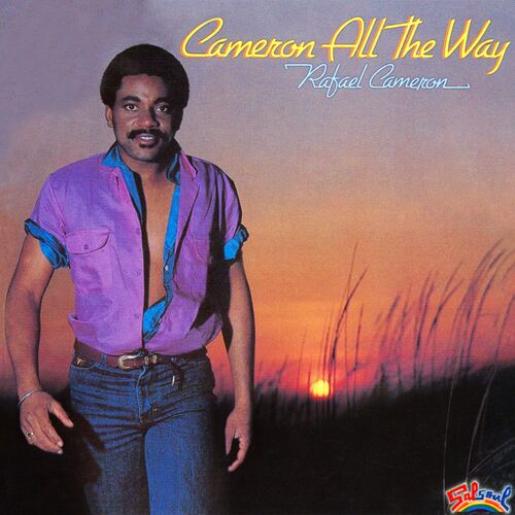
Rafael Cameron

R&B
Funk
Disco house
Soul
 Viberate Rank: 271750
 Viberate Rank: 271750
 Monthly ListenersFollowers
 Subscribers
 Followers
 Followers
 FansTop Spotify Songs
| Track | 7-Day Streams | |
|---|---|---|
1 | 840 | |
2 | 743 | |
3 | 743 | |
4 | 344 | |
5 | 285 |
Top YouTube VideosMonthly ListenersFeatured in Playlists| Playlist | Followers | |
|---|---|---|
1 |  Old School Lowrider Funk Rick Plant | 64.17K |
2 |  80s Boogie Spotify | 46.39K |
3 |  Larry Levan at Paradise Garage Honey-K | 29.29K |
4 | LE MEILLEUR DE LA FUNK Loïc Favre | 14.08K |
5 |  THIS IS THE REFLEX 💪 thereflexmusic | 9.12K |
Audience| City | Monthly Listeners | |
|---|---|---|
1 |  | 137 |
2 | | 129 |
3 |  | 120 |
4 |  | 95 |
5 | | 67 |
See full performance history, audience data, playlist activity, rankings, comparisons, and more in Viberate music analytics. Start with a free trial, then continue with a paid plan.
Rafael Cameron’s Spotify BioRandy Muller of '70s disco/funk band Brass Construction ("Movin'") produced Georgetown, Guyana, native Rafael Cameron's biggest early-'80s hits, "Magic of You (Like the Way)" and "Funtown U.S.A." Initially recording as Cameron, his silky tenor proved to be the perfect counterpoint to Muller's brassy funk-driven production style.
Born Rafael Cameron in 1951, he sang in bands while growing up. In the early '70s, he moved to America to further his education. Meeting Muller while performing in the active New York City music scene, the two didn't start to record together until a few years later. Muller's own band was later signed to the United Artists Records distributed label, Roadshow Records. Their self-titled LP was produced by Jeff Lane (B.T. Express) and spawned "Movin'" -- which went to number one R&B and number 14 pop -- in 1976.
Muller produced the band Skyy, who was having hits ("First Time Around," "Call Me," "High," "Skyyzoo," "Superlove") for the Cayre Brothers' Salsoul Records,… so he shopped the young singer to the label. Cameron was the name of his gold Salsoul 1980 debut LP which yielded several hits: the squishy, funny, funky "Magic of You (Like the Way)," "Funkdown," and "Feelin'."
Cameron continued having hits, including "Funtown U.S.A." and "Boogie's Gonna Get Ya'" from the album Cameron's in Love, and "Desires" and "Shake It Down" from Cameron All the Way. "Let's Get It Off" was a disco hit from Cameron; it sports the most Brass Construction influence and can be found on the flip side of "Magic of You (Like the Way)" and its own 12" single with a short version on one side and an extended, slightly faster Larry Levan remix on the other. In 1983, Salsoul became dormant when the Cayre Brothers decided to concentrate on their newly created First Choice Home Video division. Without a recording contract, Cameron faded into private life. Becoming a born-again Christian, he resurfaced in the mid-'90s recording gospel music. A reactivated Salsoul Records reissued his records on CD in the '90s. ~ Ed Hogan, Rovi
Viberate is a music analytics platform built for A&Rs, artist managers, labels, booking agents, marketers, and artists.
It helps music professionals track artist growth, analyze audience data, monitor playlist activity, compare artists, follow song performance, and identify opportunities across the music market.
Public artist pages provide a free preview of selected artist data. Paid plans provide access to deeper analytics, historical data, charts, comparisons, playlist tools, exports, alerts, reports, and additional professional features.
Yes. Public Viberate artist pages provide selected artist analytics and music data for free.
Viberate also offers a 7-day free trial of the full platform. A credit card is required to start the trial. The trial includes access to the complete product so users can test deeper artist analytics, historical views, playlist insights, comparisons, charts, exports, alerts, and reporting features before choosing a paid plan.
Viberate provides artist analytics across streaming, playlists, social media, video, radio airplay, songs, and audience markets.
Users can analyze Spotify performance, Spotify and Apple Music playlists, YouTube activity, TikTok and Instagram growth, radio spins, song performance, audience locations, demographics, rankings, and overall artist momentum.
Artist profiles also connect to music charts, similar artists, and comparison tools, helping users benchmark performance and evaluate artists in context.
Viberate updates key artist and track data daily.
For followed artists and tracks, selected data is refreshed multiple times per day. This helps teams monitor playlist changes, streaming movement, audience growth, releases, and campaign performance with more current data.
Update frequency can vary depending on the metric and data source.
Yes. Viberate lets users compare up to five artists side by side across streaming, social media, audience, and engagement metrics.
Users can compare fanbase growth, audience demographics, locations, Spotify performance, social metrics, and other artist data over selected time periods.
Artist comparison can be used for A&R scouting, benchmarking, booking decisions, campaign planning, and evaluating artists with similar audiences or market positions.