Peter Nero

Jazz
Jazz Fusion
Indie Pop
 Viberate Rank: 142589
 Viberate Rank: 142589
 Monthly ListenersFollowers
 Subscribers
 Followers
 Followers
 FansTop Spotify Songs
| Track | 7-Day Streams | |
|---|---|---|
1 | 6.08K | |
2 | 1.70K | |
3 | 1.45K | |
4 | 1.45K | |
5 | 1.26K |
Top YouTube VideosMonthly ListenersFeatured in Playlists| Playlist | Followers | |
|---|---|---|
1 |  Bee Gees Greatest Hits DJ Dijk | 120.42K |
2 |  Crooners And Cocktails 1862drybar | 18.34K |
3 | Audiophile High End René Scheilen | 17.64K |
4 |  Living In My Headphones James Lavelle (UNKLE) | 16.04K |
5 |  FIP Radio (en live) Matthou | 13.31K |
Audience| City | Monthly Listeners | |
|---|---|---|
1 |  | 1.33K |
2 |  | 430 |
3 |  | 411 |
4 |  | 287 |
5 | | 284 |
See full performance history, audience data, playlist activity, rankings, comparisons, and more in Viberate music analytics. Start with a free trial, then continue with a paid plan.
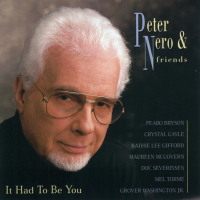
Peter Nero’s Spotify BioPeter Nero (born Bernard Nierow, 1934, Brooklyn) was a pianist and New York native who started with Paul Whiteman, then moved up to symphony until the early '60s, when RCA Victor signed him and successfully promoted him into a pop music interpreter. He won the 1961 Grammy for Best New Artist. His lush orchestrated albums continued through the early '70s, when he returned to a harder jazz format, recording with a trio.
Nierow began playing piano as child, learning the instrument quite rapidly; by the age of 11, he was playing Haydn concertos. However, he was restless and quickly grew tired of classical music, becoming infatuated with jazz as a teenager. In fact, after Nierow finished studying music at Brooklyn College, he became a jazz pianist. However, instead of playing straight jazz, he created a swinging hybrid of jazz and classical music.
Nierow didn't have much success as a performer, which meant he had to take a gig as a saloon pianist in a New York club called the Hickory House.… Unsatisfied with the comprimises he was making at the club, he headed out to Las Vegas, where he didn't find much success. He returned to New York, taking a lesser job at the Hickory House. For several years, he played New York's club circuit before he came to the attention of Stan Greeson, an executive at RCA Records. Convinced that Nierow had star potential, Greeson signed the pianist and had him change his name to Peter Nero; he also persuaded Nero to add pop songs like "Over the Rainbow" to his repertoire.
Piano Forte, Peter Nero's first album, was released in 1961 and he began touring the country. That same year, he won the Grammy for Best New Artist. Nero's popularity continued to rise throughout the early '60s; his jazzy hybrid of pop, classical, swing, and bop became one of the most popular mainstream sounds of the era. Eventually, he became the musical director of the Philadelphia Pops Orchestra, where he frequently performed classical arrangements of pop songs. In the '70s, he returned to playing jazz in trios, though he still made orchestral records occasionally. Peter Nero died on July 6, 2023; he was 89 yeatrs of age. ~ Cub Koda, Rovi
Viberate is a music analytics platform built for A&Rs, artist managers, labels, booking agents, marketers, and artists.
It helps music professionals track artist growth, analyze audience data, monitor playlist activity, compare artists, follow song performance, and identify opportunities across the music market.
Public artist pages provide a free preview of selected artist data. Paid plans provide access to deeper analytics, historical data, charts, comparisons, playlist tools, exports, alerts, reports, and additional professional features.
Yes. Public Viberate artist pages provide selected artist analytics and music data for free.
Viberate also offers a 7-day free trial of the full platform. A credit card is required to start the trial. The trial includes access to the complete product so users can test deeper artist analytics, historical views, playlist insights, comparisons, charts, exports, alerts, and reporting features before choosing a paid plan.
Viberate provides artist analytics across streaming, playlists, social media, video, radio airplay, songs, and audience markets.
Users can analyze Spotify performance, Spotify and Apple Music playlists, YouTube activity, TikTok and Instagram growth, radio spins, song performance, audience locations, demographics, rankings, and overall artist momentum.
Artist profiles also connect to music charts, similar artists, and comparison tools, helping users benchmark performance and evaluate artists in context.
Viberate updates key artist and track data daily.
For followed artists and tracks, selected data is refreshed multiple times per day. This helps teams monitor playlist changes, streaming movement, audience growth, releases, and campaign performance with more current data.
Update frequency can vary depending on the metric and data source.
Yes. Viberate lets users compare up to five artists side by side across streaming, social media, audience, and engagement metrics.
Users can compare fanbase growth, audience demographics, locations, Spotify performance, social metrics, and other artist data over selected time periods.
Artist comparison can be used for A&R scouting, benchmarking, booking decisions, campaign planning, and evaluating artists with similar audiences or market positions.