Per Nørgård

Classical
Orchestral
Neoclassical
Other Electronic Music
 Viberate Rank: 449503
 Viberate Rank: 449503
 Monthly ListenersFollowers
 Subscribers
 Followers
 Followers
 FansTop Spotify SongsTop YouTube VideosMonthly ListenersFeatured in Playlists
| Playlist | Followers | |
|---|---|---|
1 |  NPR Classical NPR Music | 14.44K |
2 |  Headphone Burn In cyanid303 | 3.28K |
3 |  ECM Records: 2001 - 2603 Ulysses' Classical | 2.92K |
4 | HISTORIA DE LA MÚSICA (El Barroquista) Miguel Ángel | 2.12K |
5 |  New Age Music Disc Guide // Ambient, Minimalism, Balearic, Fourth World, Kankyo Ongaku Tsunaki Kadowaki 🐾 | 1.89K |
Audience| City | Monthly Listeners | |
|---|---|---|
1 | | 83 |
2 |  | 66 |
3 |  | 58 |
4 | | 31 |
5 |  | 28 |
See full performance history, audience data, playlist activity, rankings, comparisons, and more in Viberate music analytics. Start with a free trial, then continue with a paid plan.
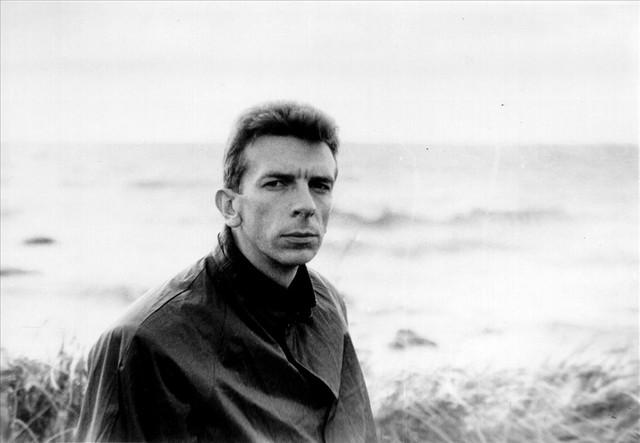
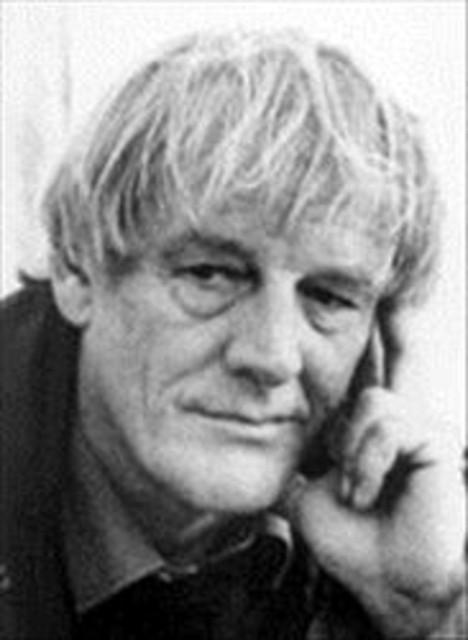
Per Nørgård’s Spotify BioPer Nørgård (pronounced "Pair Ner-gore") has emerged as perhaps the most important Danish composer since Nielsen. His music has paralleled and contributed to avant-garde developments in European music since the 1950s, evolving from a Nordic Romanticism derived from Vagn Holmboe and Jean Sibelius, through a short period in the later 1950s when he used collage and other then-fashionable techniques, into a period in the 1960s and 1970s during which Nørgård invented the forward-looking "infinity row." He became a professor of music at the Royal Academy of Music in Aarhus in 1965, and has been influential as a teacher; through the work of his students (Hans Abrahamsen is perhaps the most famous), Nørgård inspired the Danish "New Simplicity" movement in the 1960s. Since the late 1970s, Nørgård has been inspired by the writings and drawings of the troubled Swiss artist Adolf Wölfli (d. 1930). Nørgård is extremely prolific and has written in every genre, from the major classical forms to… amateur choral music.
Nørgård studied theory, music history, and composition at the Royal Danish Conservatory from 1952 to 1955, and continued his composition studies in Paris with Nadia Boulanger in 1956 and 1957. His early music shows the strong influence of the Finnish composer Jean Sibelius, and especially of Sibelius' characteristic working-out of motives. The Symphony No. 1 and Constellations are highlights of this period. After brief experiments with collage in the later 1950s, Nørgård in 1960 developed the infinity row, a way of generating a constantly expanding melody from an initial two-note motive. Infinity row melodies are self-similar (for example, the second, third, and fourth pitches return as the fifth, ninth, and thirteenth pitches), and Nørgård uses self-similarity to create a hierarchical structure: a piece may be divided into four large sections of 1024 notes each, then into sections of 256 notes, and so on. Nørgård's early pieces using the infinity row (such as Voyage Through the Golden Screen are essentially orchestrations of an infinity row melody. However, in later pieces, Nørgård extended the technique to generate harmony as well.
Nørgård abruptly changed direction in the late 1970s under the influence of the writings, paintings, and musical ideas of Wölfli, who spent the last 35 years of his life in a Swiss asylum. One of the first results was the Symphony No. 4: Indischer Roosengaarten und Chineesischer Hexensee ("Indian Rose-Garden and Chinese Witch-Sea" -- Wölfli was fond of doubling vowels). Though Nørgård continued to use the infinity row, his obsession with Wölfli has to some extent colored all his works since 1980. The Wölfli music, in contrast to the slowly changing textures of Nørgård's earlier infinity row music, is marked, in the terms Nørgård has used to describe Wölfli's art, by abrupt shifts "between idyll and catastrophe."
In the 1990s, Nørgård explored the idea of interference (the pattern that results when two or more regular patterns are played together or otherwise combined) through the use of thickly layered rhythmic and melodic patterns. This period has also been marked by the writing of many concertos, from works for each of the main stringed instruments to the Concerto in Due Tempi (1996) for piano and orchestra, and Bach to the Future (1997) for percussion and orchestra. In 1996, the premiere of Nuit des hommes, an hour-long "opera(torium)" based on poems by Apollinaire, marked an attempt to create a new kind of opera, without dramatic tension. The work exemplified the two forces which have driven Nørgård's music: a use of very eclectic sources (from Babylonian myth in the ritualistic opera Gilgamesh (1972) to the Beatles, in Doing (1968)), and a need for constant self-reinvention.
Viberate is a music analytics platform built for A&Rs, artist managers, labels, booking agents, marketers, and artists.
It helps music professionals track artist growth, analyze audience data, monitor playlist activity, compare artists, follow song performance, and identify opportunities across the music market.
Public artist pages provide a free preview of selected artist data. Paid plans provide access to deeper analytics, historical data, charts, comparisons, playlist tools, exports, alerts, reports, and additional professional features.
Yes. Public Viberate artist pages provide selected artist analytics and music data for free.
Viberate also offers a 7-day free trial of the full platform. A credit card is required to start the trial. The trial includes access to the complete product so users can test deeper artist analytics, historical views, playlist insights, comparisons, charts, exports, alerts, and reporting features before choosing a paid plan.
Viberate provides artist analytics across streaming, playlists, social media, video, radio airplay, songs, and audience markets.
Users can analyze Spotify performance, Spotify and Apple Music playlists, YouTube activity, TikTok and Instagram growth, radio spins, song performance, audience locations, demographics, rankings, and overall artist momentum.
Artist profiles also connect to music charts, similar artists, and comparison tools, helping users benchmark performance and evaluate artists in context.
Viberate updates key artist and track data daily.
For followed artists and tracks, selected data is refreshed multiple times per day. This helps teams monitor playlist changes, streaming movement, audience growth, releases, and campaign performance with more current data.
Update frequency can vary depending on the metric and data source.
Yes. Viberate lets users compare up to five artists side by side across streaming, social media, audience, and engagement metrics.
Users can compare fanbase growth, audience demographics, locations, Spotify performance, social metrics, and other artist data over selected time periods.
Artist comparison can be used for A&R scouting, benchmarking, booking decisions, campaign planning, and evaluating artists with similar audiences or market positions.