Augusta Read Thomas

Classical
Classical Crossover
 Viberate Rank: 708876
 Viberate Rank: 708876
 Monthly ListenersFollowers
 Subscribers
 Followers
 Followers
 FansTop Spotify Songs
| Track | 7-Day Streams | |
|---|---|---|
1 | 29 | |
2 | 18 | |
3 | 17 | |
4 | 11 | |
5 | 10 |
Top YouTube Videos| Video | 7-Day Views | |
|---|---|---|
1 | 5 |
Monthly ListenersFeatured in Playlists| Playlist | Followers | |
|---|---|---|
1 | WAVR.AI | 18.83K |
2 | 1200 Years of Women Composers Ulysses' Classical | 14.93K |
3 |  NPR Classical NPR Music | 14.43K |
4 |  Neo Classicals Alen Golpashin | 7.79K |
5 |  Alex Ross's The Rest is Noise aidanosu | 2.70K |
Audience| City | Monthly Listeners | |
|---|---|---|
1 | | 18 |
2 | | 13 |
3 |  | 10 |
4 |  | 10 |
5 | | 10 |
See full performance history, audience data, playlist activity, rankings, comparisons, and more in Viberate music analytics. Start with a free trial, then continue with a paid plan.
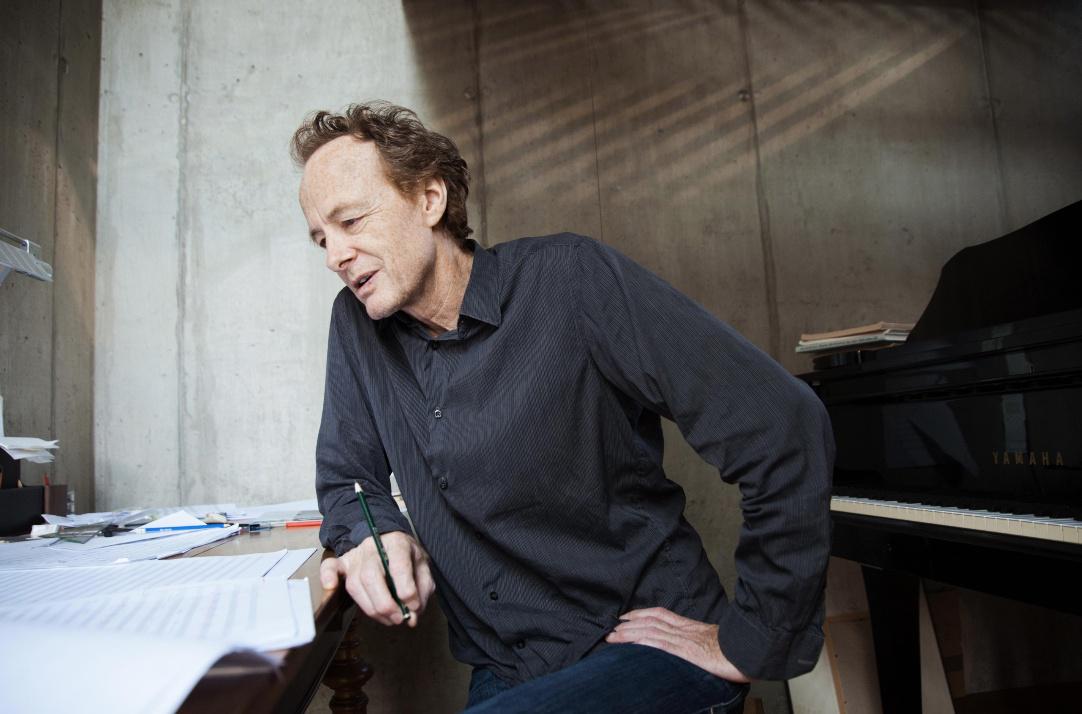
Augusta Read Thomas’ Spotify BioAugusta Read Thomas is, in the best sense, an artist thrice obsessed. First, she must compose: writing music is no vocation, no following, but a physiological need. She's been doing it since she was four, and at this point, it sustains her being as much as breath and sleep. Second, Thomas must communicate: her music is only one side of a story involving two parties, and in its lucent colors and brazen gestures, one can almost sense what kind of listener she has in mind. Yet, another obsession fortifies Thomas and her work, a consistent, burning vision that seems to materialize in that space exactly between making and sharing music, in "the music itself," and this vision is perhaps best articulated not by musical discussions but by the words of one poet on another. In a beautiful essay on Shelley, W.B. Yeats imagined that "voices would have told him how there is for every man some one scene, some one adventure, some one picture that is the image of his secret life." Yeats' imagined… scene was meant to invoke a certain literary temperament, the lyric poet, but his words give a near-perfect portrait of Thomas' art as well. What is Thomas' "some one scene"? Like most good music, hers tends to elude description, but if one had to take a leap, one could describe it as a soliloquy that splays into the light and line of many voices or an imploring recitative -- that musical tone that insists "I must speak" -- that draws on its own implications and echoes until it kindles its own vigorous polyphony. In this process, the violin concerto Spirit Musings is an ideal archetype.
Augusta Read Thomas was born in Glen Cove, near New York City, in 1964, into a musical household; she recounts a childhood overflowing with sounds, the Beatles in one room and Bach in another. Beginning to compose early, she also studied trumpet and eventually enrolled at Northwestern University, studying under William Karlins and Alan Stout. She continued at Yale with Jacob Druckman and then in England at the Royal Academy of Music. In 1989, shortly after graduating from the Academy, Thomas was awarded the Guggenheim Fellowship. Since returning to the U.S., her career has enjoyed consistent growth, including a professorship at the Eastman School of Music from 1993 until 2001 and an extended tenure as Composer-in-Residence with the Chicago Symphony Orchestra from 1997 to 2006. Early in this residency, she helped establish the orchestra's MusicNOW series. Some of Thomas' most brilliant orchestral works -- Words of the Sea, Orbital Beacons, Ceremonial, the piano concerto Aurora -- were all composed for the Chicago Symphony.
Thomas' The Rub of Love and Love Songs were included on the 1999 album Colors of Love by Chanticleer, which earned a Grammy Award. Another work commissioned by the Chicago Symphony, 2005's Astral Canticle, was a finalist for the 2007 Pulitzer Prize in Music. Upon reaching tenure at Eastman, Thomas taught at Northwestern University from 2001 until 2006. She has continued her affiliation with the school as a member of the advisory board for the Dean of Music. In 2010, she was named University Professor of Composition at the University of Chicago, only the 16th University Professor to be named by the school. A champion for new music in the Chicago area, Thomas created the Chicago Center for Contemporary Composition at the University of Chicago and the Ear Taxi Festival in 2016, a six-day event to celebrate the city's new music scene. For these, Thomas was named that year's Chicagoan of the Year. She is a member of the American Academy of Arts and Letters as well as the American Academy of Arts and Sciences. Bell Illuminations, a collection of Thomas' works, was issued on the Nimbus label in 2022. ~ Seth Brodsky & Keith Finke, Rovi
Viberate is a music analytics platform built for A&Rs, artist managers, labels, booking agents, marketers, and artists.
It helps music professionals track artist growth, analyze audience data, monitor playlist activity, compare artists, follow song performance, and identify opportunities across the music market.
Public artist pages provide a free preview of selected artist data. Paid plans provide access to deeper analytics, historical data, charts, comparisons, playlist tools, exports, alerts, reports, and additional professional features.
Yes. Public Viberate artist pages provide selected artist analytics and music data for free.
Viberate also offers a 7-day free trial of the full platform. A credit card is required to start the trial. The trial includes access to the complete product so users can test deeper artist analytics, historical views, playlist insights, comparisons, charts, exports, alerts, and reporting features before choosing a paid plan.
Viberate provides artist analytics across streaming, playlists, social media, video, radio airplay, songs, and audience markets.
Users can analyze Spotify performance, Spotify and Apple Music playlists, YouTube activity, TikTok and Instagram growth, radio spins, song performance, audience locations, demographics, rankings, and overall artist momentum.
Artist profiles also connect to music charts, similar artists, and comparison tools, helping users benchmark performance and evaluate artists in context.
Viberate updates key artist and track data daily.
For followed artists and tracks, selected data is refreshed multiple times per day. This helps teams monitor playlist changes, streaming movement, audience growth, releases, and campaign performance with more current data.
Update frequency can vary depending on the metric and data source.
Yes. Viberate lets users compare up to five artists side by side across streaming, social media, audience, and engagement metrics.
Users can compare fanbase growth, audience demographics, locations, Spotify performance, social metrics, and other artist data over selected time periods.
Artist comparison can be used for A&R scouting, benchmarking, booking decisions, campaign planning, and evaluating artists with similar audiences or market positions.