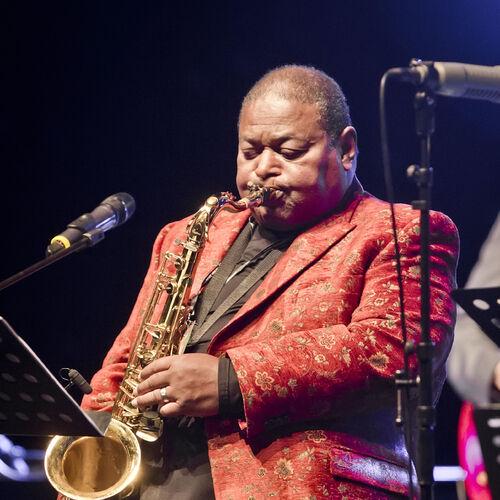
Pee Wee Ellis

R&B
Funk
Jazz Fusion
 Viberate Rank: 223472
 Viberate Rank: 223472
 Monthly ListenersFollowers
 Subscribers
 Followers
 Followers
 FansTop Spotify Songs
| Track | 7-Day Streams | |
|---|---|---|
1 | 6.04K | |
2 | 3.91K | |
3 | 1.70K | |
4 | 452 | |
5 | 241 |
Top YouTube VideosMonthly ListenersFeatured in Playlists| Playlist | Followers | |
|---|---|---|
1 |  All Funked Up Spotify | 389.84K |
2 |  Boom Bap Classics Ville Kyyny | 60.44K |
3 |  This Is De La Soul Spotify | 47.37K |
4 |  Big Tigger's Taste Spotify | 43.23K |
5 | The Morning Spring 2023 Playlist nytimes | 30.66K |
Audience| City | Monthly Listeners | |
|---|---|---|
1 |  | 149 |
2 |  | 80 |
3 |  | 77 |
4 | | 70 |
5 | | 65 |
See full performance history, audience data, playlist activity, rankings, comparisons, and more in Viberate music analytics. Start with a free trial, then continue with a paid plan.
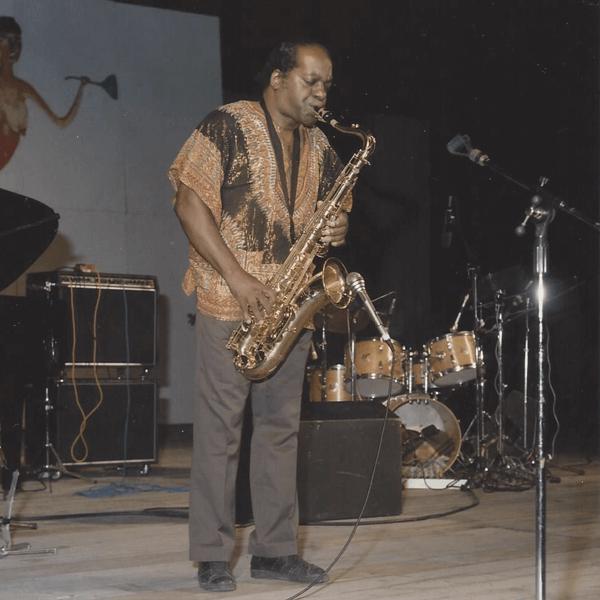
Pee Wee Ellis’ Spotify BioWith his warm, throaty sound, saxophonist Pee Wee Ellis was the architect of James Brown's era-defining soul classics of the late '60s, introducing the dynamic arrangements and punishing rhythms that would define the emerging language of funk. As a core member of the J.B. Horns, Ellis played with the James Brown band throughout the latter half of the 1960s, co-writing and arranging such funk classics as "Licking Stick," "Cold Sweat," and "Say It Loud, I'm Black and I'm Proud." He also began a decades-long association with Van Morrison in 1979, and recorded with other soul-jazz artists like Jack McDuff, George Benson, Leon Thomas, and others. He kept a close association with former Brown comrades, including Fred Wesley and Clyde Stubblefield, and released a slew of well-received jazz albums under his own name, including 1992's Blues Mission, 2002's Live and Funky, and 2011's Tenoration. While he remained rooted in funk and R&B, he had a deep grasp of standards and the jazz tradition as… heard on his 2018 Duke Ellington-homage In My Ellington Mood. Prior to his passing in 2021, Ellis lived in England for over 30 years, where he continued to work, touring with Ginger Baker and fellow Brown alum Maceo Parker, as well as leading his own groups like the Pee Wee Ellis Assembly.
Born Alfred Ellis in Bradenton, Florida, on April 21, 1941, he was raised in Lubbock, Texas, and was playing professionally by the time he reached middle school. In 1955, his family relocated to Rochester, New York, where he collaborated with classmates (and fledgling jazzmen) Chuck Mangione and Ron Carter. Ellis spent the summer of 1957 under the tutelage of sax giant Sonny Rollins, and after graduating high school he returned to Florida to form his own R&B combo, Dynamics Incorporated. The experience honed his skills as a writer, arranger, and multi-instrumentalist, and after a brief stint with the Sonny Payne Trio he joined the James Brown Revue in 1965.
Assigned alto sax and organ duties, Ellis quickly proved himself an invaluable contributor to arrangements and horn charts as well, and when Nat Jones quit the lineup in early 1967, Brown named Ellis his new musical director, resulting in significant refinements to the Godfather of Soul's sound. Ellis channeled the lessons of his jazz background to strip Brown's music to its bare essentials, showcasing bold, precise horns and repetitive rhythms with a minimum of melodic embellishment -- hits like "Cold Sweat," "Licking Stick-Licking Stick," and "Funky Drummer" redefined the sound and scope of soul, pointing the way for its transformation to funk.
Ellis went on to co-write and arrange a series of James Brown smashes, including "Say It Loud, I'm Black and I'm Proud" and "Mother Popcorn," as well as issuing a handful of solo singles on Brown's label King, among them "Little Green Apples" and "In the Middle." He resigned from Brown's band in the autumn of 1969, and after settling in New York City he signed to the Nashville-based Sound Stage 7 label and issued the rare groove classic "Moonwalk." Ellis also emerged as a sought-after session player, contributing to dates headlined by everyone from soul-jazz great Brother Jack McDuff to a latter-day blues-rock incarnation of the Blues Magoos. He then served as musical director and arranger for the CTI label's influential fusion imprint Kudu, overseeing sessions for Esther Phillips, George Benson, and Hank Crawford.
Ellis next teamed with the studio group Gotham to record the LP Pass the Butter for Motown's Natural Resources subsidiary before resuming his solo career with his first-ever full-length effort, the 1976 Savoy release Home in the Country. After relocating to San Francisco, Ellis formed a short-lived fusion quintet with soprano saxophonist Dave Liebman, also playing on and producing Liebman's 1977 A&M release Light'n Up Please! With 1979's Into the Music, he was named arranger for blue-eyed soul mystic Van Morrison, a collaboration that spanned until 1986 and included a series of well-regarded albums including Common One and Inarticulate Speech of the Heart.
Ellis spent much of the late '80s touring behind longtime Brown backing vocalist Bobby Byrd in tandem with fellow J.B.'s alums Fred Wesley and Maceo Parker as the JB Horns, debuting on disc with the 1990 release Pee Wee, Fred and Maceo. Subsequent efforts include I Like It Like That and Funky Good Time/Live. After the JB Horns went on hiatus in 1992, Ellis reunited with another Brown alum, drummer Clyde Stubblefield, for the album Blues Mission. He then returned to his jazz roots with 1993's acclaimed Twelve and More Blues, a live set cut in Köln, Germany, with bassist Dwayne Dolphin and drummer Bruce Cox. That summer, Ellis also headlined a week of sold-out dates at Ronnie Scott's in London, an experience that shaped both his movement into acid jazz with 1994's Sepia Tonality and subsequent relocation to western England.
With the move overseas, Ellis also resumed his partnership with Van Morrison on the latter's 1995 effort Days Like This, serving as musical director of Morrison's studio and stage crew for years to follow; Ellis also formed his own band, the Pee Wee Ellis Assembly, for 1996's A New Shift. The group remained active in concert and on record for years to follow, confining most of its activities to Europe and pursuing a direction Ellis dubbed "smunk" -- i.e., smooth funk. In 2001, he released the gospel-infused Riding Mighty High. The following year, Live and Funky found him in concert with Fred Wesley and Fred Ross. He also showcased his instrumental prowess on the 2011 double-album Tenoration. Along with a 2012 tour with former Cream drummer Ginger Baker, Ellis remained visible in his later years, and was bestowed with an honorary doctorate by Bath Spa University in 2014. In 2018, he released the Duke Ellington tribute album In My Ellingtonian Mood. Pee Wee Ellis died at the age of 80 on September 23, 2021 due to heart problems. ~ Jason Ankeny, Rovi
Viberate is a music analytics platform built for A&Rs, artist managers, labels, booking agents, marketers, and artists.
It helps music professionals track artist growth, analyze audience data, monitor playlist activity, compare artists, follow song performance, and identify opportunities across the music market.
Public artist pages provide a free preview of selected artist data. Paid plans provide access to deeper analytics, historical data, charts, comparisons, playlist tools, exports, alerts, reports, and additional professional features.
Yes. Public Viberate artist pages provide selected artist analytics and music data for free.
Viberate also offers a 7-day free trial of the full platform. A credit card is required to start the trial. The trial includes access to the complete product so users can test deeper artist analytics, historical views, playlist insights, comparisons, charts, exports, alerts, and reporting features before choosing a paid plan.
Viberate provides artist analytics across streaming, playlists, social media, video, radio airplay, songs, and audience markets.
Users can analyze Spotify performance, Spotify and Apple Music playlists, YouTube activity, TikTok and Instagram growth, radio spins, song performance, audience locations, demographics, rankings, and overall artist momentum.
Artist profiles also connect to music charts, similar artists, and comparison tools, helping users benchmark performance and evaluate artists in context.
Viberate updates key artist and track data daily.
For followed artists and tracks, selected data is refreshed multiple times per day. This helps teams monitor playlist changes, streaming movement, audience growth, releases, and campaign performance with more current data.
Update frequency can vary depending on the metric and data source.
Yes. Viberate lets users compare up to five artists side by side across streaming, social media, audience, and engagement metrics.
Users can compare fanbase growth, audience demographics, locations, Spotify performance, social metrics, and other artist data over selected time periods.
Artist comparison can be used for A&R scouting, benchmarking, booking decisions, campaign planning, and evaluating artists with similar audiences or market positions.