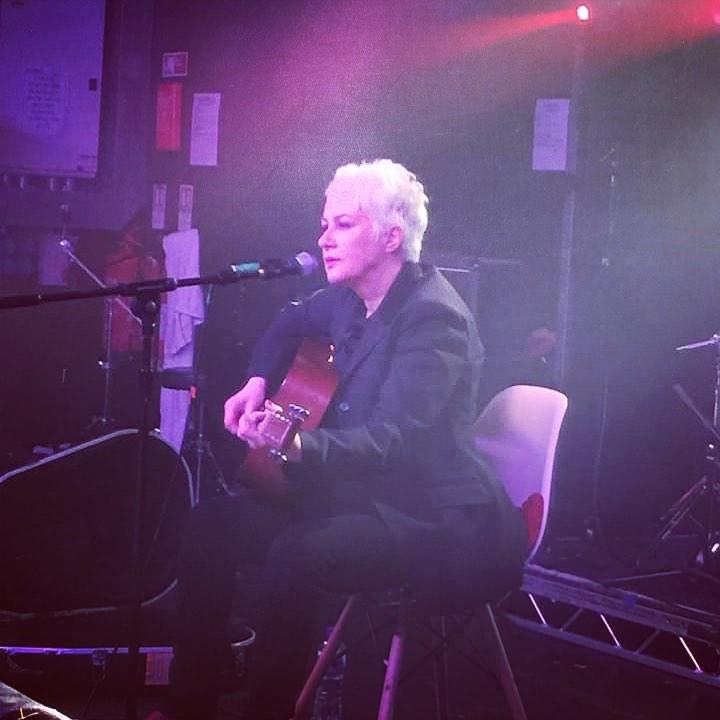
Pauline Murray

Rock
Alternative Rock
Post Punk
 Viberate Rank: 375321
 Viberate Rank: 375321
 Monthly ListenersFollowers
 Subscribers
 Followers
 Followers
 FansTop Spotify Songs
| Track | 7-Day Streams | |
|---|---|---|
1 | 138 | |
2 | 127 | |
3 | 77 | |
4 | 33 | |
5 | 29 |
Top YouTube VideosMonthly ListenersFeatured in Playlists| Playlist | Followers | |
|---|---|---|
1 |  Ben Watt's SpinCycle Ben Watt | 23.17K |
2 |  The John Peel Sessions Sebastien Vanblaere | 12.11K |
3 |  Truly Nice Music Patrick Holland | 7.99K |
4 |  Off Your Face anton newcombe | 5.86K |
5 |  80's NEW WAVE : Dark gothic / sinth pop / post punk / new romantic Edoardo Gramigna | 5.58K |
Audience| City | Monthly Listeners | |
|---|---|---|
1 | | 33 |
2 | | 22 |
3 |  | 15 |
4 | | 13 |
5 | | 13 |
See full performance history, audience data, playlist activity, rankings, comparisons, and more in Viberate music analytics. Start with a free trial, then continue with a paid plan.
Pauline Murray’s Spotify BioBorn in the small northeast England university town of Durham on March 8, 1958, Pauline Murray was exactly the right age and in exactly the right place to get caught up in the first flush of punk, circa 1976. Along with her hometown friends Neale Floyd (guitar), Robert Blamire (bass), Fred Purser (guitar and keyboards), and Gary Smallman (drums), Murray formed Penetration in early 1977, and by the end of the year, the group had signed with Virgin Records and released one of the great punk singles of the era, "Don't Dictate." The usual difficulties of being a young and inexperienced band intervened, and Penetration's debut album, Moving Targets, didn't come out until nearly a year later. In another sadly typical punk scenario, Penetration's second album, 1979's Coming Up for Air, was an over-produced (by Steve Lillywhite), underwritten mess with little of the debut's energy, and with the release of an officially sanctioned live-and-demos bootleg, Race Against Time, Penetration split up… in late 1979.
In most cases, that would be that, discounting the possibility of a '90s punk nostalgia reunion tour, but Pauline Murray was just getting started. Moving from Newcastle to the more artistically friendly climate of Manchester, Murray hooked up with producer Martin Hannett and began a solo career. Hannett matched Murray up with his own group, the Invisible Girls, which had previously backed Mancunian poet John Cooper Clarke. With Hannett on guitar and bass, Vini Reilly (who was pursuing a concurrent solo career as the Durutti Column) and Dave Rowbotham on guitar, Murray's ex-Penetration bandmate Blamire on bass, Steve Hopkins on keyboards, and Buzzcock John Maher on drums, Murray moved 180 degrees from Penetration's buzzsaw punk roots. Under Hannett's direction, Murray & the Invisible Girls made ethereal, occasionally beautiful pop records that in retrospect sound like a possible influence on the Cocteau Twins, Everything but the Girl, and nearly everything that came out on the Cherry Red label between 1981 and 1987. The mysterious, lovely "Dream Sequences" single was released in August 1980, with the Pauline Murray & the Invisible Girls album following the next month and the non-LP "Mr. X" single in November of the same year. The Searching for Heaven EP came out in April of 1981, providing Murray with the biggest hit of her career, but the breakneck pace couldn't be maintained. Hampered by an increasingly severe heroin addiction that would contribute to his death in 1991, Hannett broke up the Invisible Girls, leaving Murray to reconstruct her musical career on her own.
Retaining her boyfriend Blamire on guitar, bass, and keyboards, Murray returned in the mid-'80s as Pauline Murray & the Storm. Only two singles were released, a cover of Big Star's doomy "Holocaust" in 1984 and original composition "New Age" in 1986. Confusingly, tracks from both those singles, plus some new material, came out in February 1987 on the EP Hong Kong, credited to Pauline Murray & the Saint. Murray then ditched the band names entirely for her next two releases, the This Thing Called Love EP and the album Storm Clouds, both released in 1989. Engagingly brooding, albeit extremely similar to mid-period Siouxsie and the Banshees, Storm Clouds was Murray's recording farewell; she and Blamire retired from the music business at the dawn of the '90s. ~ Stewart Mason, Rovi
Viberate is a music analytics platform built for A&Rs, artist managers, labels, booking agents, marketers, and artists.
It helps music professionals track artist growth, analyze audience data, monitor playlist activity, compare artists, follow song performance, and identify opportunities across the music market.
Public artist pages provide a free preview of selected artist data. Paid plans provide access to deeper analytics, historical data, charts, comparisons, playlist tools, exports, alerts, reports, and additional professional features.
Yes. Public Viberate artist pages provide selected artist analytics and music data for free.
Viberate also offers a 7-day free trial of the full platform. A credit card is required to start the trial. The trial includes access to the complete product so users can test deeper artist analytics, historical views, playlist insights, comparisons, charts, exports, alerts, and reporting features before choosing a paid plan.
Viberate provides artist analytics across streaming, playlists, social media, video, radio airplay, songs, and audience markets.
Users can analyze Spotify performance, Spotify and Apple Music playlists, YouTube activity, TikTok and Instagram growth, radio spins, song performance, audience locations, demographics, rankings, and overall artist momentum.
Artist profiles also connect to music charts, similar artists, and comparison tools, helping users benchmark performance and evaluate artists in context.
Viberate updates key artist and track data daily.
For followed artists and tracks, selected data is refreshed multiple times per day. This helps teams monitor playlist changes, streaming movement, audience growth, releases, and campaign performance with more current data.
Update frequency can vary depending on the metric and data source.
Yes. Viberate lets users compare up to five artists side by side across streaming, social media, audience, and engagement metrics.
Users can compare fanbase growth, audience demographics, locations, Spotify performance, social metrics, and other artist data over selected time periods.
Artist comparison can be used for A&R scouting, benchmarking, booking decisions, campaign planning, and evaluating artists with similar audiences or market positions.