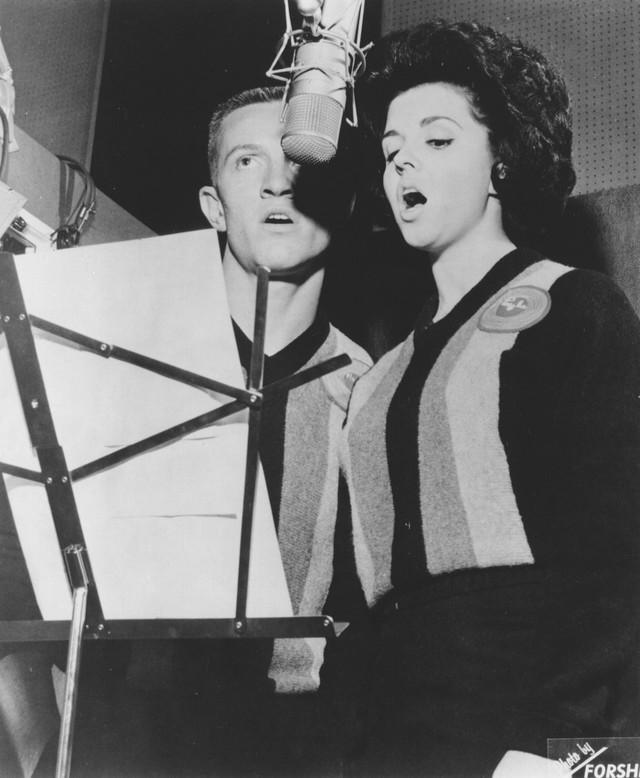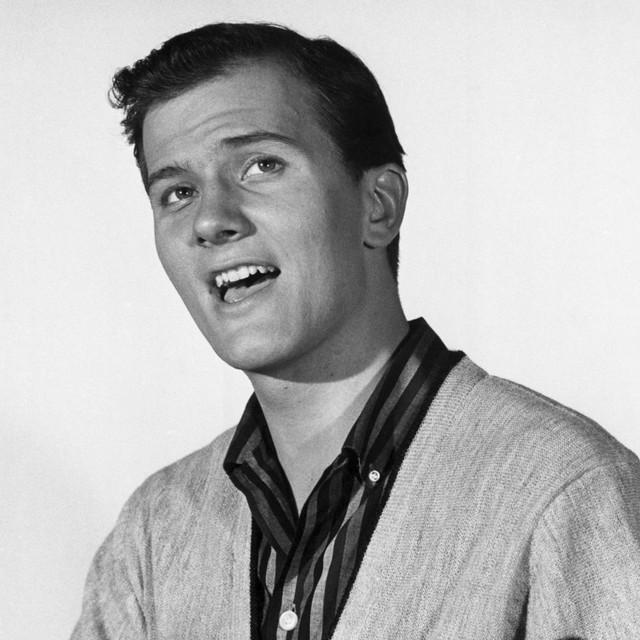
Pat Boone

Pop
Indie Pop
Christian Music
Contemporary Country
 Viberate Rank: 18265
 Viberate Rank: 18265
 Monthly ListenersFollowers
 Subscribers
 Followers
 Followers
 FansTop Spotify Songs
| Track | 7-Day Streams | |
|---|---|---|
1 | 118.48K | |
2 | 73.75K | |
3 | 64.81K | |
4 | 64.81K | |
5 | 62.11K |
Top YouTube VideosMonthly ListenersFeatured in Playlists| Playlist | Followers | |
|---|---|---|
1 |  All Out 50s Spotify | 1.89M |
2 |  Soft 50s Spotify | 546.13K |
3 |  60s Party Spotify | 344.25K |
4 |  Fallout Radio Spotify | 297.39K |
5 |  Easy 50s Spotify | 179.41K |
Audience| City | Monthly Listeners | |
|---|---|---|
1 |  | 5.39K |
2 |  | 5.31K |
3 | | 5.05K |
4 | | 4.04K |
5 |  | 3.71K |
See full performance history, audience data, playlist activity, rankings, comparisons, and more in Viberate music analytics. Start with a free trial, then continue with a paid plan.
Pat Boone’s Spotify BioPat Boone served as an antidote to the hedonism of rock & roll during the genre's birth in the 1950s. Effectively functioning as the anti-Elvis Presley, Boone sanitized raucous blues and R&B for pop audiences, taming the rhythm and intent of hit singles from Fats Domino ("Ain't That a Shame") and Little Richard ("Tutti Frutti," "Long Tall Sally"), among other Black rockers. For a while, this was a booming business for Boone: he was second only to Presley in terms of commercial success in the late 1950s and early '60s. Boone dabbled in country but he gravitated toward easy listening while demonstrating a penchant for novelties such as "Speedy Gonzales," which was his last Top Ten hit in 1962. Boone's hits had already slowed by the time the British Invasion arrived in 1964 but the rise of the Beatles and the Rolling Stones ushered the crooner out of the spotlight. He'd make the occasional return to pop, such as 1997's ballyhooed "metal" project In a Metal Mood: No More Mr. Nice Guy or… 2023's Country Jubilee, yet he sustained a career for the rest of his life by concentrating on Christian music.
Charles Eugene Patrick Boone was born June 1, 1934, in Jacksonville, Florida, a descendant of American frontier hero Daniel Boone. He attended high school in Nashville, and was voted student body president. After graduating, Boone married Shirley Foley, the daughter of country star Red Foley, and after a period at Nashville's David Lipscomb College, he transferred to North Texas State University. There, after taking top honors at a local talent show, he appeared on the The Ted Mack Amateur Hour, leading to a year-long tenure on The Arthur Godfrey Show. In 1954, Boone made his first recordings for the small Republic label, followed a year later by his Dot Records debut, "Two Hearts, Two Kisses." As 1955 drew to a close, he notched his first number one hit, a sedate rendition of Fats Domino's aforementioned "Ain't That a Shame." In the years to come he would record numerous cover versions of songs first credited to Black performers, among them Little Richard, the El Dorados, the Flamingos, and Ivory Joe Hunter -- indeed, to the chagrin of purists -- many of Boone's recordings remain better-known than the originals.
Between 1956 and 1963, Boone made some 54 chart appearances, many of them with two-sided hits; his biggest smashes included the number one records "Don't Forbid Me," "Love Letters in the Sand," and "April Love," all three issued in 1957. That year he also began hosting his own ABC television series, The Pat Boone-Chevy Showroom. He also conquered film, starring in 15 features including 1957's Bernadine and April Love. Although his TV program ceased production in 1960, Boone remained a major star as the new decade dawned, and in 1961 he again topped the charts with "Moody River." He even became an author, writing a series of self-help books for adolescents including Twixt Twelve and Twenty, Between You, Me and the Gatepost, and The Care and Feeding of Parents. Although the rise of Beatlemania put the brakes on Boone's run as a teen idol -- after 1962, he failed to crack the Top 40 again -- he continued recording for Dot through the late '60s, and in his live performances he regularly appeared with his wife and their four daughters, further reinforcing his family-friendly image.
By the '70s, Boone had shifted almost exclusively to recording gospel material, although he later scored a handful of country hits (on, of all labels, Motown); in 1977, his daughter Debby topped the charts with a smash of her own, the wedding perennial "You Light Up My Life." In 1981, Boone published Pray to Win, and in 1983 he began hosting a long-lived contemporary Christian syndicated radio show, all in addition to his extensive charity work. While his recording career continued to taper off, he did issue "Let Me Live," which became an anthem for the anti-choice movement. By and large, Boone spent much of the '80s and '90s out of the secular media spotlight, but in 1997 he made a splash with the LP No More Mr. Nice Guy, a tongue-in-cheek collection of covers of heavy metal tunes like "Smoke on the Water" and "Stairway to Heaven." Much of the singer's Christian contingent failed to get the joke, however, and after Boone appeared at the American Music Awards clad in black leather and sporting temporary tattoos, he was dismissed from his Trinity Broadcasting Network program Gospel America.
The new century brought a regular if not prolific release schedule from the vocalist. A diverse batch of albums that included Christmas songs, patriotic standards, a tribute to the Ink Spots, an album of classic R&B tunes, and 2015's Pat Boone's Favorite Bible Stories & Sing-Along Songs appeared amid his continued charitable endeavors and advocacy of conservative politics.
Boone's next major project was Country Jubilee, a 2023 album that spliced old country cuts with new recordings, including a version of Crystal Gayle and Eddie Rabbitt's early 1980s hit "You and I" recorded with Gayle herself, plus the novelty single "Grits" that featured Ray Stevens, the Gatlin Brothers, and Lorrie Morgan. ~ Jason Ankeny, Rovi
Viberate is a music analytics platform built for A&Rs, artist managers, labels, booking agents, marketers, and artists.
It helps music professionals track artist growth, analyze audience data, monitor playlist activity, compare artists, follow song performance, and identify opportunities across the music market.
Public artist pages provide a free preview of selected artist data. Paid plans provide access to deeper analytics, historical data, charts, comparisons, playlist tools, exports, alerts, reports, and additional professional features.
Yes. Public Viberate artist pages provide selected artist analytics and music data for free.
Viberate also offers a 7-day free trial of the full platform. A credit card is required to start the trial. The trial includes access to the complete product so users can test deeper artist analytics, historical views, playlist insights, comparisons, charts, exports, alerts, and reporting features before choosing a paid plan.
Viberate provides artist analytics across streaming, playlists, social media, video, radio airplay, songs, and audience markets.
Users can analyze Spotify performance, Spotify and Apple Music playlists, YouTube activity, TikTok and Instagram growth, radio spins, song performance, audience locations, demographics, rankings, and overall artist momentum.
Artist profiles also connect to music charts, similar artists, and comparison tools, helping users benchmark performance and evaluate artists in context.
Viberate updates key artist and track data daily.
For followed artists and tracks, selected data is refreshed multiple times per day. This helps teams monitor playlist changes, streaming movement, audience growth, releases, and campaign performance with more current data.
Update frequency can vary depending on the metric and data source.
Yes. Viberate lets users compare up to five artists side by side across streaming, social media, audience, and engagement metrics.
Users can compare fanbase growth, audience demographics, locations, Spotify performance, social metrics, and other artist data over selected time periods.
Artist comparison can be used for A&R scouting, benchmarking, booking decisions, campaign planning, and evaluating artists with similar audiences or market positions.