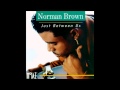
Norman Brown

Jazz
Smooth Jazz
Contemporary R&B
 Viberate Rank: 29581
 Viberate Rank: 29581
 Monthly ListenersFollowers
 Subscribers
 Followers
 Followers
 FansTop Spotify Songs
| Track | 7-Day Streams | |
|---|---|---|
1 | 86.06K | |
2 | 69.04K | |
3 | 64.58K | |
4 | 54.83K | |
5 | 48.66K |
Top YouTube VideosMonthly ListenersFeatured in Playlists| Playlist | Followers | |
|---|---|---|
1 |  Smooth Jazz Chill Spotify | 477.46K |
2 |  Smooth Jazz Spotify | 463.66K |
3 |  Smooth Jazz Classics Spotify | 194.30K |
4 |  Romantic Smooth Jazz Spotify | 176.27K |
5 |  Just Jazz Spotify | 173.61K |
Audience| City | Monthly Listeners | |
|---|---|---|
1 | | 6.11K |
2 | | 5.90K |
3 | | 5.64K |
4 | | 5.28K |
5 | | 5.28K |
See full performance history, audience data, playlist activity, rankings, comparisons, and more in Viberate music analytics. Start with a free trial, then continue with a paid plan.
Norman Brown’s Spotify BioKnown for his mellow, romantic style, guitarist Norman Brown is an award-winning performer whose sound straddles the line between contemporary jazz and R&B. He initially rose to fame with 1992's Just Between Us, earning comparisons to his idols George Benson and Wes Montgomery. He has regularly reached the top echelon of Billboard's Contemporary Jazz Albums chart, issuing albums like 1994's After the Storm, 2002's Grammy-winning Just Chillin', and 2012's 24/7 with Gerald Albright. He scored two consecutive number one albums on the chart with 2017's Let It Go and 2019's Highest Act of Love. Along with his solo work, Brown is also a member of the smooth jazz supergroup BWB along with Kirk Whalum and Rick Braun. In 2022, he paid homage to Montgomery on Let's Get Away and returned in 2024 with It Hits Different.
Born in Shreveport, Louisiana in 1970 and raised in Kansas City, Brown first became interested in the guitar at age eight, when he grew fond of his brother's acoustic six-string. He… was initially influenced by such guitar-based acts as Jimi Hendrix and the Isley Brothers, but once he discovered one of his father's favorite guitarists, Wes Montgomery, everything changed. He began exploring contemporary jazz tunes and standards. After high school, he moved to Los Angeles where, in the mid-'80s, he studied formally at the Musician's Institute in Hollywood. Following his graduation, he taught briefly and signed to Motown's Mo Jazz label, where he splashed onto the soul-jazz scene with 1992's Just Between Us. Suddenly critics drew comparisons to other astonishing jazz guitarists from the past such as George Benson and Wes Montgomery, and Brown became the toast of the soul-jazz crowd.
It was Brown's sophomore album, however, 1996's After the Storm, that found him breaking through to the top echelon of smooth jazz artists. Both Gavin and Soul Train named it Jazz Album of the Year, and After the Storm remained on the charts for over two years. On the heels of his remarkable success, Brown continued to wow jazz listeners. His eagerly awaited follow-up, Better Days Ahead, won the 1997 American Jazz Award for contemporary guitar and the album's title track became the most-added single in NAC history until that point.
Following his flurry of successes at Mo Jazz, Brown moved to Warner Bros. and released several more well-received albums, including 1999's Celebration and 2002's Grammy Award-winning Just Chillin'. Also in 2002, Brown debuted his smooth jazz supergroup with saxophonist Kirk Whalum and trumpeter Rick Braun, BWB, with the album Groovin'. He then returned to his solo work with 2004's West Coast Coolin', followed two years later by Stay with Me on the Peak label.
Brown then signed with longtime jazz label Concord and released 2010's Sending My Love. Two years later, he paired with saxophonist Gerald Albright for the Concord release 24/7. Also in 2013, he rejoined BWB for Human Nature.
In 2016, Brown released his third album with BWB, and delivering his first solo effort for the Shanachie label, the number one contemporary jazz-charting Let It Go. The Highest Act of Love followed in 2019 and included guest spots from Deniece Williams, Baby Lee, as well as longtime producer Paul Brown. It also peaked at number one on the Billboard Contemporary Jazz Albums chart. He again collaborated with Brown on 2020's Heart to Heart, which also included appearances by guitarist Peter White, pianist Jeff Lorber, keyboardist Chris "Big Dog" Davis, and saxophonist David Mann. Another Paul Brown production, Let's Get Away, arrived in 2022 and included the Wes Montgomery tribute "Wes Side Story." In 2024, the guitarist returned with his 14th album, It Hits Different, which included the single "Anything," and featured guest appearances by Wirlie Morris, Lil' John Roberts, Tom Schuman, and Paul Brown, among others. ~ Matt Collar & Jason Birchmeier, Rovi
Viberate is a music analytics platform built for A&Rs, artist managers, labels, booking agents, marketers, and artists.
It helps music professionals track artist growth, analyze audience data, monitor playlist activity, compare artists, follow song performance, and identify opportunities across the music market.
Public artist pages provide a free preview of selected artist data. Paid plans provide access to deeper analytics, historical data, charts, comparisons, playlist tools, exports, alerts, reports, and additional professional features.
Yes. Public Viberate artist pages provide selected artist analytics and music data for free.
Viberate also offers a 7-day free trial of the full platform. A credit card is required to start the trial. The trial includes access to the complete product so users can test deeper artist analytics, historical views, playlist insights, comparisons, charts, exports, alerts, and reporting features before choosing a paid plan.
Viberate provides artist analytics across streaming, playlists, social media, video, radio airplay, songs, and audience markets.
Users can analyze Spotify performance, Spotify and Apple Music playlists, YouTube activity, TikTok and Instagram growth, radio spins, song performance, audience locations, demographics, rankings, and overall artist momentum.
Artist profiles also connect to music charts, similar artists, and comparison tools, helping users benchmark performance and evaluate artists in context.
Viberate updates key artist and track data daily.
For followed artists and tracks, selected data is refreshed multiple times per day. This helps teams monitor playlist changes, streaming movement, audience growth, releases, and campaign performance with more current data.
Update frequency can vary depending on the metric and data source.
Yes. Viberate lets users compare up to five artists side by side across streaming, social media, audience, and engagement metrics.
Users can compare fanbase growth, audience demographics, locations, Spotify performance, social metrics, and other artist data over selected time periods.
Artist comparison can be used for A&R scouting, benchmarking, booking decisions, campaign planning, and evaluating artists with similar audiences or market positions.