Natalia Gutman

Classical
Chamber Music
 Viberate Rank: 490993
 Viberate Rank: 490993
 Monthly ListenersFollowers
 Subscribers
 Followers
 Followers
 FansTop Spotify Songs
| Track | 7-Day Streams | |
|---|---|---|
1 | 445 | |
2 | 268 | |
3 | 231 | |
4 | 166 | |
5 | 113 |
Top YouTube VideosMonthly ListenersFeatured in Playlists| Playlist | Followers | |
|---|---|---|
1 |  Classical Music by Russian Composers Özlem Değirmenci | 6.38K |
2 |  Haydn - Best of Deutsche Grammophon (DG) | 3.81K |
3 |  Classical Cello Kassy | 3.11K |
4 |  Music from the films of Werner Herzog Luca Giovanardi | 1.51K |
5 |  russian literature vibes Marco Bermudez | 1.47K |
Audience| City | Monthly Listeners | |
|---|---|---|
1 |  | 56 |
2 |  | 31 |
3 |  | 24 |
4 | | 22 |
5 |  | 19 |
See full performance history, audience data, playlist activity, rankings, comparisons, and more in Viberate music analytics. Start with a free trial, then continue with a paid plan.
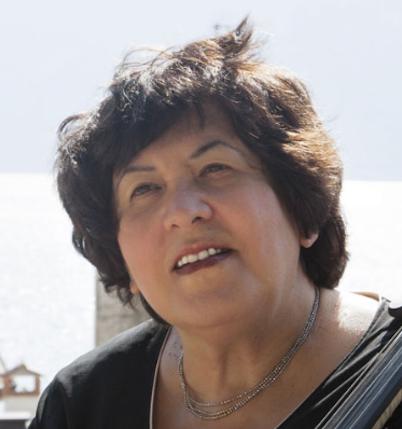
Natalia Gutman’s Spotify BioNatalia Gutman came from a musical family. She was born in Kazan, Kazakhstan, at a time when the city was packed with the many Russian intelligentsia and artists who had been evacuated before the advance of Hitler's troops. Her family included a long line of musicians: Her grandfather, Anisim Berlin, was a violinist who had been taught by the great pedagogue Leopold Auer; her grandmother was also a violinist and studied not only with Auer but also with Joachim; and her stepfather, Roman Sapozhnikov, is a cellist and well-known in Russia for his studies in teaching repertoire for the instrument.
She overheard her stepfather's pupils take their lessons when she was a very small girl. When she received a small-size cello for her fifth birthday, she took to it right away. Her father initially taught her, but in a short time her progress was so rapid that she was accepted into the Gnessin Music School, one of the leading music institutions for youngsters in Russia. Her first teacher was… Sergei Aslamazyan. After three years, she graduated to Galina Kosolupova, one of the Institute's finest teachers. After another year, Gutman went on to the Moscow Conservatory, but retained Kosolupova as her teacher for the entire five years, which she considers especially important in her development. After graduation, she had an additional four years of post-graduate work with the great cellist Mstislav Rostropovich. As she was finishing her schooling, she started making prestigious concert appearances and entered major competitions. She won the first prizes in Moscow's Tchaikovsky Competition and the Dvorák Competition in Prague.
For a considerable period of time, her concert appearances in the West were rare; she tended to stay home while her husband, the famous violinist Oleg Kagan, did more touring. In 1980, the two of them played the Brahms Double Concerto at the Edinburgh Festival with the London Symphony Orchestra conducted by Evgeny Svetlanov, which was her British debut.
Beginning with the end of the 1980s she stepped up her international appearances, and has regularly attended the Crystal Palace Cello festivals. In 1985 she was particularly praised for a London performance of Prokofiev's Sinfonia Concertante for cello and orchestra; Robert Henderson of the Daily Telegraph said that not even Rostropovich could have surpassed it.
Gutman has an interest in the modern repertoire, including the Lutoslawski concerto and music of Alfred Schnittke. She considers extensive, regular, and thorough practice sessions to be essentials and unfailingly repeats the standard scale exercises. She does this with concentration, learned of necessity when her three children were young. She and her husband frequently perform chamber music and were frequently joined by eminent pianist Sviatoslav Richter until his death. She finds chamber music to be the most rewarding aspect of her life as a cellist.
Viberate is a music analytics platform built for A&Rs, artist managers, labels, booking agents, marketers, and artists.
It helps music professionals track artist growth, analyze audience data, monitor playlist activity, compare artists, follow song performance, and identify opportunities across the music market.
Public artist pages provide a free preview of selected artist data. Paid plans provide access to deeper analytics, historical data, charts, comparisons, playlist tools, exports, alerts, reports, and additional professional features.
Yes. Public Viberate artist pages provide selected artist analytics and music data for free.
Viberate also offers a 7-day free trial of the full platform. A credit card is required to start the trial. The trial includes access to the complete product so users can test deeper artist analytics, historical views, playlist insights, comparisons, charts, exports, alerts, and reporting features before choosing a paid plan.
Viberate provides artist analytics across streaming, playlists, social media, video, radio airplay, songs, and audience markets.
Users can analyze Spotify performance, Spotify and Apple Music playlists, YouTube activity, TikTok and Instagram growth, radio spins, song performance, audience locations, demographics, rankings, and overall artist momentum.
Artist profiles also connect to music charts, similar artists, and comparison tools, helping users benchmark performance and evaluate artists in context.
Viberate updates key artist and track data daily.
For followed artists and tracks, selected data is refreshed multiple times per day. This helps teams monitor playlist changes, streaming movement, audience growth, releases, and campaign performance with more current data.
Update frequency can vary depending on the metric and data source.
Yes. Viberate lets users compare up to five artists side by side across streaming, social media, audience, and engagement metrics.
Users can compare fanbase growth, audience demographics, locations, Spotify performance, social metrics, and other artist data over selected time periods.
Artist comparison can be used for A&R scouting, benchmarking, booking decisions, campaign planning, and evaluating artists with similar audiences or market positions.