Nanci Griffith

Country
Americana/Alt Country
Folk
 Viberate Rank: 60295
 Viberate Rank: 60295
 Monthly ListenersFollowers
 Subscribers
 Followers
 Followers
 FansTop Spotify Songs
| Track | 7-Day Streams | |
|---|---|---|
1 | 51.14K | |
2 | 35.28K | |
3 | 22.85K | |
4 | 11.80K | |
5 | 11.04K |
Top YouTube VideosMonthly ListenersFeatured in Playlists| Playlist | Followers | |
|---|---|---|
1 |  Classic Acoustic Spotify | 2.63M |
2 |  Essential Folk Spotify | 831.87K |
3 |  Women of Folk Spotify | 336.54K |
4 |  Americana Icons Spotify | 241.64K |
5 |  #1: A Cross Country Mosaic💫 Delilah Isabel | 46.88K |
Audience| City | Monthly Listeners | |
|---|---|---|
1 |  | 3.59K |
2 |  | 3.34K |
3 | | 3.17K |
4 |  | 3.13K |
5 | | 3.03K |
See full performance history, audience data, playlist activity, rankings, comparisons, and more in Viberate music analytics. Start with a free trial, then continue with a paid plan.
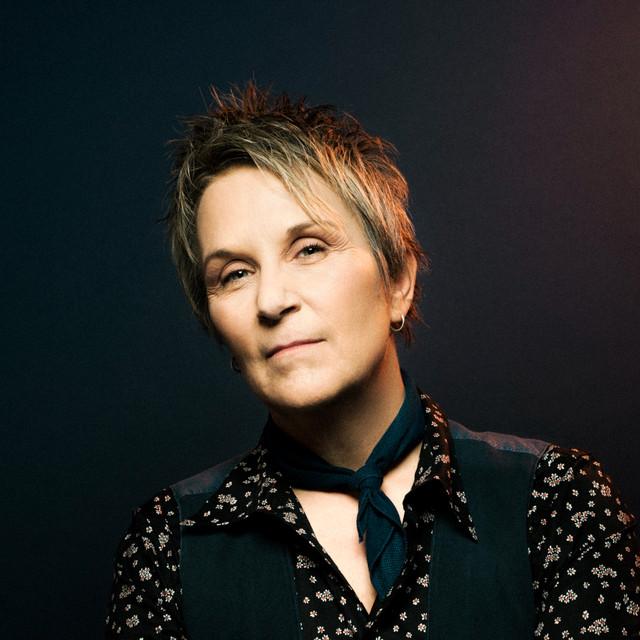
Nanci Griffith’s Spotify BioOne of the most celebrated singer/songwriters of her generation, Nanci Griffith had a gift for writing songs that were literate and emotionally complex while also sounding thoroughly universal, even when they most often reflected small-town Texas life. A proud daughter of the Lone Star State, Griffith liked to call her music "folkabilly," reflecting her influences in folk, country, early rock & roll, and the Texas songwriting community that for her was both an inspiration and a home base. Though her music was steeped in tales of ordinary lives, she wasn't afraid to speak her mind about social and political matters, and injected a progressive sound and feeling into music that embraced traditionalism. 1984's Once in a Very Blue Moon, her third album, was the creative breakthrough where she hit her stride as a songwriter and performer, 1993's Other Voices, Other Rooms was a celebration of her influences and was a critical and commercial success, and 2004's Hearts in Mind was an ambitious… collection of politically oriented songs.
Nanci Griffith was born in Seguin, Texas on July 6, 1953 into a family with a creative bent -- her father, who worked in publishing, sang in a barbershop quartet in his spare time, and her mother was a real estate agent who dabbled in acting. Her family soon moved to Austin, the focal point of Texas' cultural and bohemian communities, and after her parents divorced when she was seven, Griffith developed an interest in music. She was a passionate fan of the Everly Brothers, Buddy Holly, Loretta Lynn (a woman who played guitar and wrote songs, not yet common in country music), and Odetta. Her father introduced her to the noted folk singer Carolyn Hester, who encouraged her to express herself through music, and took her to see the iconic Texas songwriter Townes Van Zandt, whose music spoke to her on a deeply personal level. Her accumulated influences began to take root, and at the age of 12 she was writing original material and performing at local coffeehouses. While music was Griffith's passion, she opted to study education at the University of Texas in Austin. After graduating she took a job teaching Kindergarten. She devoted evenings and weekends to playing clubs and coffeehouses, where she shared stages with a number of other rising singer/songwriters, among them Lyle Lovett and Lucinda Williams. In 1976, Griffith married fellow songwriter Eric Taylor, and two years later, she won the New Folk Competition, a prize for promising singer/songwriters presented as part of the prestigious Kerrville Folk Festival. Her victory earned her enough attention in the Southwestern folk scene that she was able to leave teaching behind and make music her job.
In the wake of winning the New Folk Competition, Griffith signed with Philo Records, an established folk music label distributed by Rounder Records. Her first two albums for Philo, 1978's There's a Light Beyond These Woods and 1982's Poet in My Window, were modestly successful, but 1984's Once in a Very Blue Moon was the work of a more accomplished and nuanced performer, and it caught the attention of critics, as well as country radio, where the title song grazed the lower reaches of the country singles charts. (It also included her gender-switched version of Lyle Lovett's "If I Were the Man You Wanted" two years before he would issue his debut album.) 1986's The Last of the True Believers was similarly well-received, and included the song "Love at the Five and Dime," which became a major hit when Kathy Mattea brought out a cover of the tune the same year. As Griffith's star rose, she was signed to MCA Records, and her first album for her new label, Lone Star State of Mind, arrived in 1987. The title track was Griffith's first single to break into the Country Top 40, and her recording of Julie Gold's "From a Distance" (later a major American hit for Bette Midler) became a surprise smash in Ireland, and she developed a devoted following in the United Kingdom, enough so that she maintained an apartment in Dublin for several years.
Though Griffith was earning rave reviews and the respect of her peers, the gentle feel of her voice and the personal, folk-influenced tone of her songs didn't always fit the demands of country radio, though "I Knew Love" from 1988's Little Love Affairs did edge into the Country Top 40. Griffith and MCA decided to take a different approach for her next LP. 1988's Storms was produced by Glyn Johns -- who had previously worked with the Who, the Rolling Stones, and the Eagles -- and was eagerly embraced by her audience in Ireland and England. She moved even further into pop on 1991's Late Night Grande Hotel, but it was her final studio album for MCA, and she struck a new deal with the traditionally artist-friendly Elektra Records. Her first project for the label was a journey back to Griffith's roots in folk music; 1993's Other Voices, Other Rooms saw her interpreting 17 classic songs that had inspired her in her youth, and included guest appearances from Bob Dylan, John Prine, Alison Krauss, and Emmylou Harris. It earned Griffith her first gold record in the United States, and won the Grammy Award for Best Contemporary Folk Album.
After the success of Other Voices, Other Rooms, Griffith's next project was a set dominated by original material, 1994's Flyer, another star-dappled release that included appearances from Adam Clayton and Larry Mullen, Jr. of U2, Peter Buck of R.E.M., Adam Duritz of Counting Crows, and Mark Knopfler of Dire Straits. The album rose to number 48 on the Top 200 albums chart, the highest placement of her career, and on 1997's Blue Roses from the Moon, she got to fulfill a longtime dream of recording with Buddy Holly's Crickets, who also accompanied her on her supporting concert tour. However, this period saw Griffith facing some major personal challenges. In 1996, she was diagnosed with breast cancer, and while she responded well to treatment, she developed cancer in her thyroid in 1998. While fighting the disease, she brought out a follow-up to Other Voices, 1998's Other Voices, Too (A Trip Back to Bountiful). It was not as well-received as the original, and in response to some poor reviews, she wrote a scathing letter to several Texas publications who she felt were not supportive of her work, which made for uneasy relationships with some of her former colleagues, as well as causing concern among her fans. (In an interview with Texas Monthly regarding the controversy, she revealed she had been living with depression for some time, and that her thyroid condition exacerbated the condition.)
Griffith took creative detours with her next two albums; The Dust Bowl Symphony featured new recordings of songs from her back catalog, this time with orchestral arrangements, and 2001's Clock Without Hands moved away from "folkabilly" in favor of an approach informed by contemporary adult alternative pop. The albums were the last under her contract with Elektra, and 2004's Hearts in Mind, a set of songs informed by the American invasion of Iraq, was initially released only in the United Kingdom. Griffith teamed with Rounder Records to issue 2006's Ruby's Torch, a set of torch songs that was a long-simmering passion project for her. After battling writer's block, she composed another batch of political and social commentary for 2009's The Loving Kind. She was once again forced to confront health problems when she was diagnosed with Dupuytren’s contracture, which caused the skin on her hands to thicken, making it difficult for her to play guitar. Pete and Maura Kennedy of the folk group the Kennedys had been serving double duty in Griffith's band, and as she prepared to cut another album, they disassembled their home recording studio, set it up in Griffith's home in Nashville, and used the gear to record 2012's Intersection. After touring in support of the album, Griffith, who generally shied away from discussing her personal life, gradually retreated from the spotlight, and quietly retired from music. On August 13, 2021, Nanci Griffith died in Nashville at the age of 68. ~ Mark Deming, Rovi
Viberate is a music analytics platform built for A&Rs, artist managers, labels, booking agents, marketers, and artists.
It helps music professionals track artist growth, analyze audience data, monitor playlist activity, compare artists, follow song performance, and identify opportunities across the music market.
Public artist pages provide a free preview of selected artist data. Paid plans provide access to deeper analytics, historical data, charts, comparisons, playlist tools, exports, alerts, reports, and additional professional features.
Yes. Public Viberate artist pages provide selected artist analytics and music data for free.
Viberate also offers a 7-day free trial of the full platform. A credit card is required to start the trial. The trial includes access to the complete product so users can test deeper artist analytics, historical views, playlist insights, comparisons, charts, exports, alerts, and reporting features before choosing a paid plan.
Viberate provides artist analytics across streaming, playlists, social media, video, radio airplay, songs, and audience markets.
Users can analyze Spotify performance, Spotify and Apple Music playlists, YouTube activity, TikTok and Instagram growth, radio spins, song performance, audience locations, demographics, rankings, and overall artist momentum.
Artist profiles also connect to music charts, similar artists, and comparison tools, helping users benchmark performance and evaluate artists in context.
Viberate updates key artist and track data daily.
For followed artists and tracks, selected data is refreshed multiple times per day. This helps teams monitor playlist changes, streaming movement, audience growth, releases, and campaign performance with more current data.
Update frequency can vary depending on the metric and data source.
Yes. Viberate lets users compare up to five artists side by side across streaming, social media, audience, and engagement metrics.
Users can compare fanbase growth, audience demographics, locations, Spotify performance, social metrics, and other artist data over selected time periods.
Artist comparison can be used for A&R scouting, benchmarking, booking decisions, campaign planning, and evaluating artists with similar audiences or market positions.