Moscow Symphony Orchestra

Classical
Orchestral
 Viberate Rank: 120587
 Viberate Rank: 120587
 Monthly ListenersFollowers
 Subscribers
 Followers
 Followers
 FansTop Spotify SongsTop YouTube VideosMonthly ListenersFeatured in Playlists
| Playlist | Followers | |
|---|---|---|
1 |  This Is Tchaikovsky Spotify | 371.43K |
2 |  Easy Listening Classical For Study, Work, Relaxing, Chillout, Anything But Serious Listening Ulysses' Classical | 99.23K |
3 |  Ancient Egyptian Music Oscar Lindström | 46.06K |
4 | Seyed MNezhad | 22.04K |
5 |  Classical Ballet Variations Merlyn | 15.54K |
Audience| City | Monthly Listeners | |
|---|---|---|
1 |  | 730 |
2 |  | 662 |
3 |  | 404 |
4 | | 371 |
5 |  | 293 |
See full performance history, audience data, playlist activity, rankings, comparisons, and more in Viberate music analytics. Start with a free trial, then continue with a paid plan.
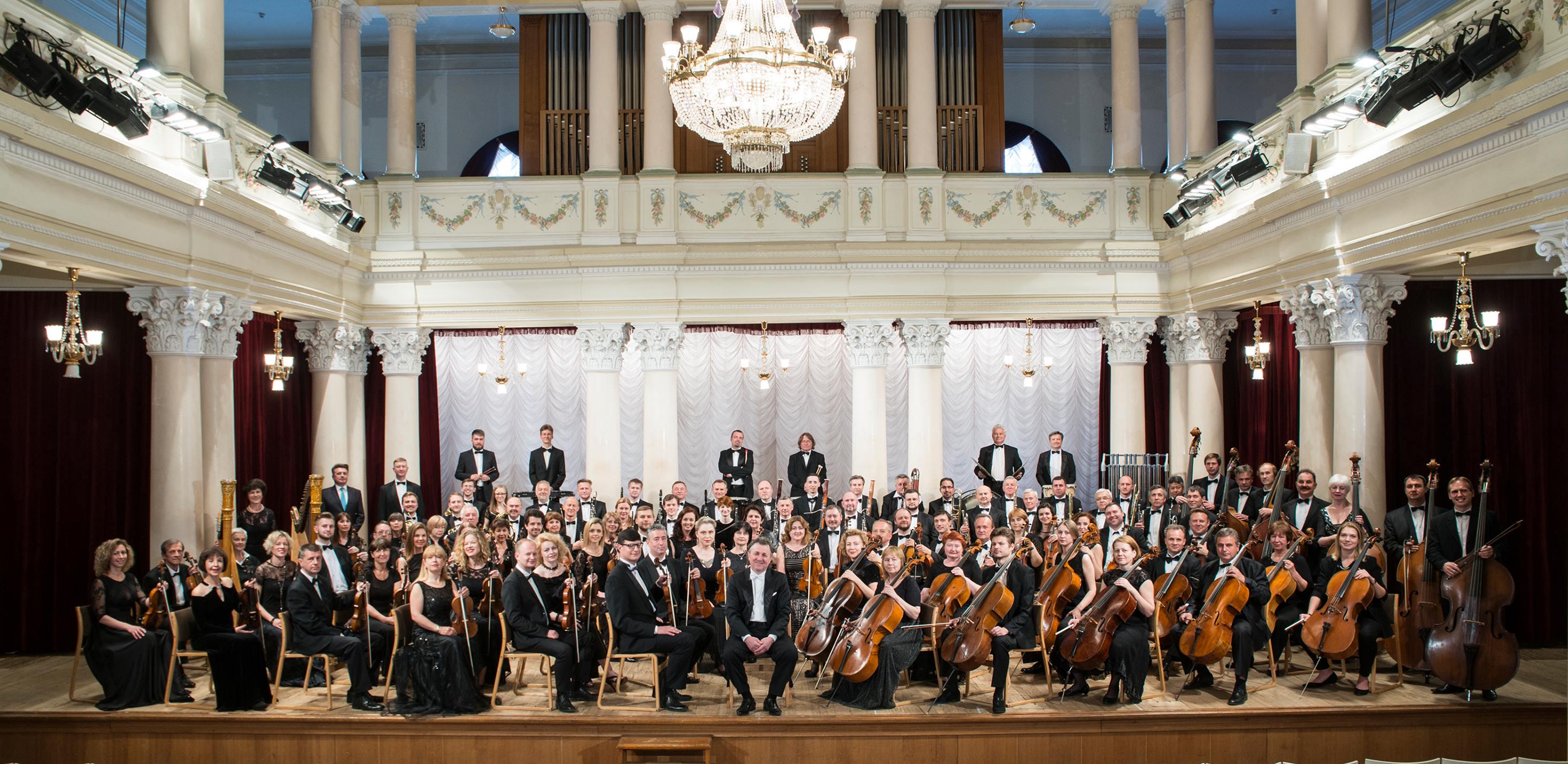
Moscow Symphony Orchestra’s Spotify BioThe establishment of the Moscow Symphony Orchestra coincided with the crumbling of the former Soviet Union. The orchestra was founded in 1989 by Ellen and Marina Levine, who had both spent a number of years in the United States working in the fields of advertising and marketing. When political changes occurred, the two felt positive about a return to Russia and made moved back to their native country. The orchestra's director was the French conductor Antonio de Almeida (1928 - 1997), who initiated a subscription series in Moscow's Great Hall and presided over the recording of more than 20 CDs with the orchestra. Almeida's training (he studied with Ginastera, Hindemith, Koussevitzky, and Szell) and international experience (France, Portugal, and the United States) tended to assure that the orchestra would be exposed to music coming from sources beyond Russian borders.
In assembling the Moscow Symphony Orchestra, the Levines pulled together players who were graduates of Russia's most… distinguished conservatories (Leningrad, Moscow, and Kiev), many of them prize winners in Russian and international music competitions. These orchestra members had performed under many of the Soviet Union's best-known conductors, including Mravinsky, Rozhdestvensky, and Svetlanov. A tour to Finland and England in 1991 found the orchestra performing together with a famous rock band, evidence of the flexibility and willingness to work in a variety of genres that would subsequently result in the recording of a broad spectrum of musical styles and nationalities. In 1993, the orchestra made a tour of Spain that resulted in acclaim and positive reviews. With a joint British and Japanese commission, the ensemble was able to produce a 12-program television series intended for international distribution.
By 2001, the orchestra's recordings numbered well over 100, three-quarters of those for Naxos and its sister label Marco Polo. By then under the leadership of Vladimir Ziva (1961 - ), the Moscow Symphony Orchestra had amassed a remarkable range of music, from a Glazunov series to collections devoted to American film classics. Most of the latter have been conducted by William T. Stromberg. Other conductors who have led the orchestra on multiple occasions include Alexander Anissimov, Igor Golovschin, Frederic Devreese (in music by twentieth-century Flemish composer Marcel Poot), and Kerry Stratton. Also represented on disc with this orchestra are works by the Belgian violinist and composer Gottfried Devreese, father of Frederic. The orchestra's training in performing multiple styles has been especially important in the recording of American film scores. Several important movie composers are represented in the orchestra's recording catalogue, among them Bernard Hermann, Max Steiner, Franz Waxman, and Erich Korngold, and mastery of the idiom is much in evidence throughout these performances.
Several other rather obscure composers are represented in the Moscow Symphony Orchestra discography. Almeida recorded the symphonies of French composer Henri Sauguet (1901 - 1989) while Guatemalan composer Ricardo Castillo (1891 - 1966) is represented by a disc containing his ballet, Paal Kaba. Still other composers previously underrepresented include the Italian Gian Francesco Malipiero (1882 - 1973) whose symphonies were recorded under Almeida's direction, and the Frenchman Charles Tournemire (1870 - 1939).
Among other distinctions for the Moscow Symphony Orchestra has been the presence as an ensemble member of cellist Scott Brady, the first American to have played in a professional Russian orchestra.
Viberate is a music analytics platform built for A&Rs, artist managers, labels, booking agents, marketers, and artists.
It helps music professionals track artist growth, analyze audience data, monitor playlist activity, compare artists, follow song performance, and identify opportunities across the music market.
Public artist pages provide a free preview of selected artist data. Paid plans provide access to deeper analytics, historical data, charts, comparisons, playlist tools, exports, alerts, reports, and additional professional features.
Yes. Public Viberate artist pages provide selected artist analytics and music data for free.
Viberate also offers a 7-day free trial of the full platform. A credit card is required to start the trial. The trial includes access to the complete product so users can test deeper artist analytics, historical views, playlist insights, comparisons, charts, exports, alerts, and reporting features before choosing a paid plan.
Viberate provides artist analytics across streaming, playlists, social media, video, radio airplay, songs, and audience markets.
Users can analyze Spotify performance, Spotify and Apple Music playlists, YouTube activity, TikTok and Instagram growth, radio spins, song performance, audience locations, demographics, rankings, and overall artist momentum.
Artist profiles also connect to music charts, similar artists, and comparison tools, helping users benchmark performance and evaluate artists in context.
Viberate updates key artist and track data daily.
For followed artists and tracks, selected data is refreshed multiple times per day. This helps teams monitor playlist changes, streaming movement, audience growth, releases, and campaign performance with more current data.
Update frequency can vary depending on the metric and data source.
Yes. Viberate lets users compare up to five artists side by side across streaming, social media, audience, and engagement metrics.
Users can compare fanbase growth, audience demographics, locations, Spotify performance, social metrics, and other artist data over selected time periods.
Artist comparison can be used for A&R scouting, benchmarking, booking decisions, campaign planning, and evaluating artists with similar audiences or market positions.